Martinez says Ronaldo’s 2026 World Cup role depends on form
Portugal's coach Roberto Martinez confirmed Cristiano Ronaldo's World Cup selection hinges on current form, not age, citing his consistent performance.
Mehmet Şahinoğlu ·
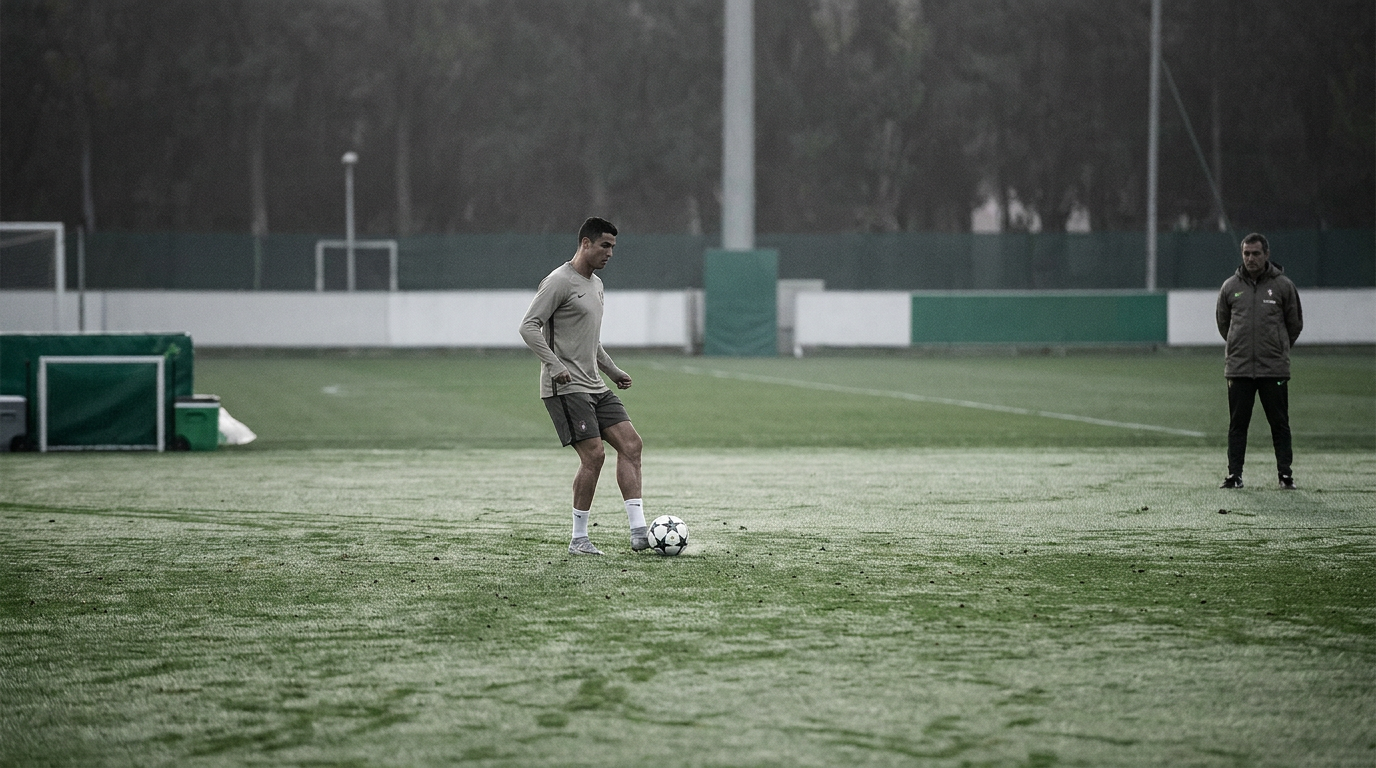
Portugal coach Roberto Martinez said on Thursday in Lisbon that Cristiano Ronaldo will be judged on current form and performance for the 2026 World Cup, not on his age. The tournament in North America is due to kick off in less than a month, which could make this a sixth World Cup for the 41-year-old forward. Martinez stressed that selection standards are identical for every player and are based on what they deliver in training and in matches.
Portugal selection approach for 2026
Martinez pointed to Ronaldo’s output since he took charge, noting the striker’s scoring consistency for the national team. Under his tenure, Ronaldo has produced 25 goals in 30 appearances, giving him a stronger goals-per-game rate than in previous cycles. The coach also underlined the captain’s tactical discipline and movement that creates space for teammates, describing contributions that extend beyond goals.
He rejected the idea that Ronaldo is kept around for ceremonial reasons. Martinez said modern football’s five-substitution rule reduces the distinction between who starts and who finishes, and that different roles can be equally decisive. Every role is earned, he added, and minutes are awarded on merit.
Selection grounded in current performance
The coach framed his process as day-to-day and evidence-led, saying decisions rely on what the staff can measure in training and in games. Age, he reiterated, is a data point only insofar as it relates to performance, not a selection criterion by itself. Ronaldo, like all squad members, is assessed on readiness, tactical fit and contribution to team objectives.
Public debate in Portugal has focused less on whether Ronaldo should be in the squad and more on how he should be used when World Cup margins are fine. Martinez’s view is that roles change with match context, and that the key is how a player executes assigned tasks to help the team win. That approach, he suggested, applies to every position across the pitch.
Managing Ronaldo’s role and impact
Role flexibility and lessons from past tournaments
Questions about accepting a reduced role have lingered since the 2022 World Cup, when Ronaldo was benched for a knockout tie. Martinez declined to draw direct lines from one tournament to another, saying form, style and context evolve. He maintained that the national team is a meritocracy in which places are earned through execution, not reputation.
Beyond the headline numbers, Martinez highlighted off-ball value: runs that split centre backs, disciplined positioning within attacking patterns, and movements that open lanes for others. He said those details are part of the staff’s evaluation alongside finishing, chance creation and pressing.
Martinez also credited Ronaldo’s leadership and professionalism, calling him an important presence in the dressing room. Even so, he emphasised that no role is guaranteed and that the captain’s minutes, like everyone else’s, will be tied to what he delivers.
Portugal are expected to finalise their roster as the tournament nears. How Martinez deploys Ronaldo — as a starter, a finisher, or in a flexible role — will depend on the evidence the staff see in training and competitive minutes in the coming weeks.