Report: DC National Guard Costly, Misses Violent Crime Target
A new report indicates the National Guard deployment in Washington D.C. effectively reduced property crimes but failed to deter violent offenses.
Sophie McAlister ·
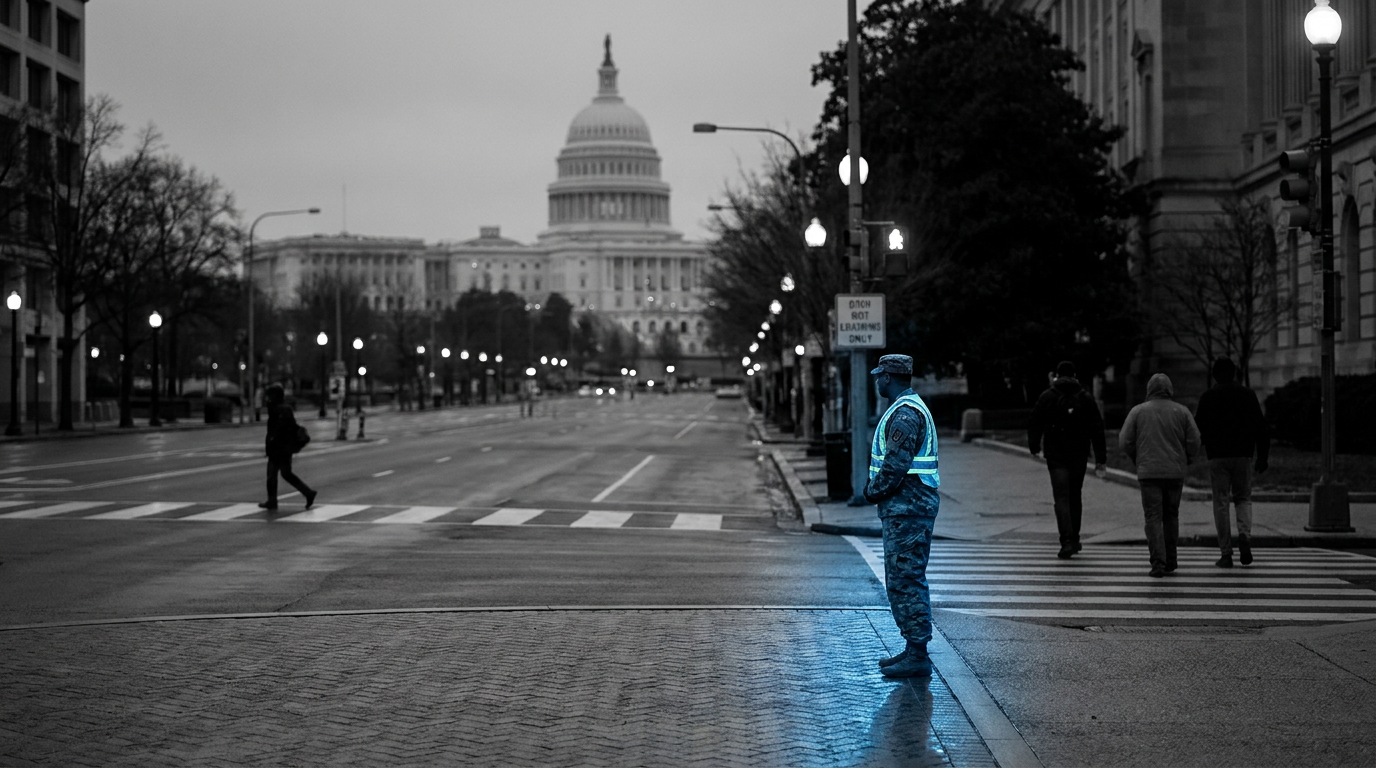
DC National Guard Deployment Reviewed
A recent analysis from the Niskanen Center provides a critical perspective on the National Guard deployment in Washington D.C., suggesting that while it effectively reduced opportunistic property crimes, it had no measurable impact on violent crime rates. The extensive deployment came at a considerable taxpayer expense, averaging $1.5 million daily.
The report's findings surface as President Trump announces plans to significantly expand the deployment to 5,000 troops ahead of America's 250th-anniversary celebrations. This proposed escalation doubles the current daily cost, raising questions about the effectiveness and financial prudence of such a sustained presence.
Impact on Crime Types Varies
Researchers observed a notable 24% decrease in opportunistic property crimes following the August deployment, including a sharp decline in auto thefts and other property-related offenses. This reduction is attributed to the National Guard's presence in high-visibility, tourist-heavy areas, where visible deterrence is most effective.
However, the study found no significant change in the trajectory of violent crimes, including robberies. These offenses were already on a downward trend before the deployment, and the National Guard's presence did not accelerate this decline. This suggests a disconnect between deployment strategy and the nature of violent crime.
Deployment Strategy and Unaddressed Gaps
The Niskanen Center posits that violent crime often stems from complex interpersonal dynamics, social network conflicts, and structural poverty in specific neighborhoods. These areas, which historically suffer from higher rates of violence, largely remained outside the National Guard's primary deployment zones.
Furthermore, the report concluded that the National Guard's presence did not augment local law enforcement capabilities. The tactical footprint of the Metropolitan Police Department (MPD) remained essentially unchanged, meaning D.C. police were not freed up to reallocate resources to high-crime areas as a result of the Guard's deployment.
Cost-Benefit and Future Implications
While acknowledging the deployment was not without merit due to reductions in property crime, the Niskanen Center describes it as an "expensive tool" that could have been implemented with greater precision. The study suggests a more targeted deployment strategy, specifically by the MPD, could have achieved better results at a lower cost to the public.
As discussions continue regarding future National Guard deployments in the District, these findings provide crucial data for policymakers. Focusing resources on evidence-based strategies tailored to specific crime types may yield more effective and fiscally responsible outcomes for Washington D.C. residents and taxpayers.