Renewable Energy Surges as Global Reliance on Fossil Fuels Persists
Renewables reached 33.4% of global power, led by solar at 8.7% after 30.1% growth in 2025, but rising demand keeps fossil use intact.
Atlas Newsdesk ·
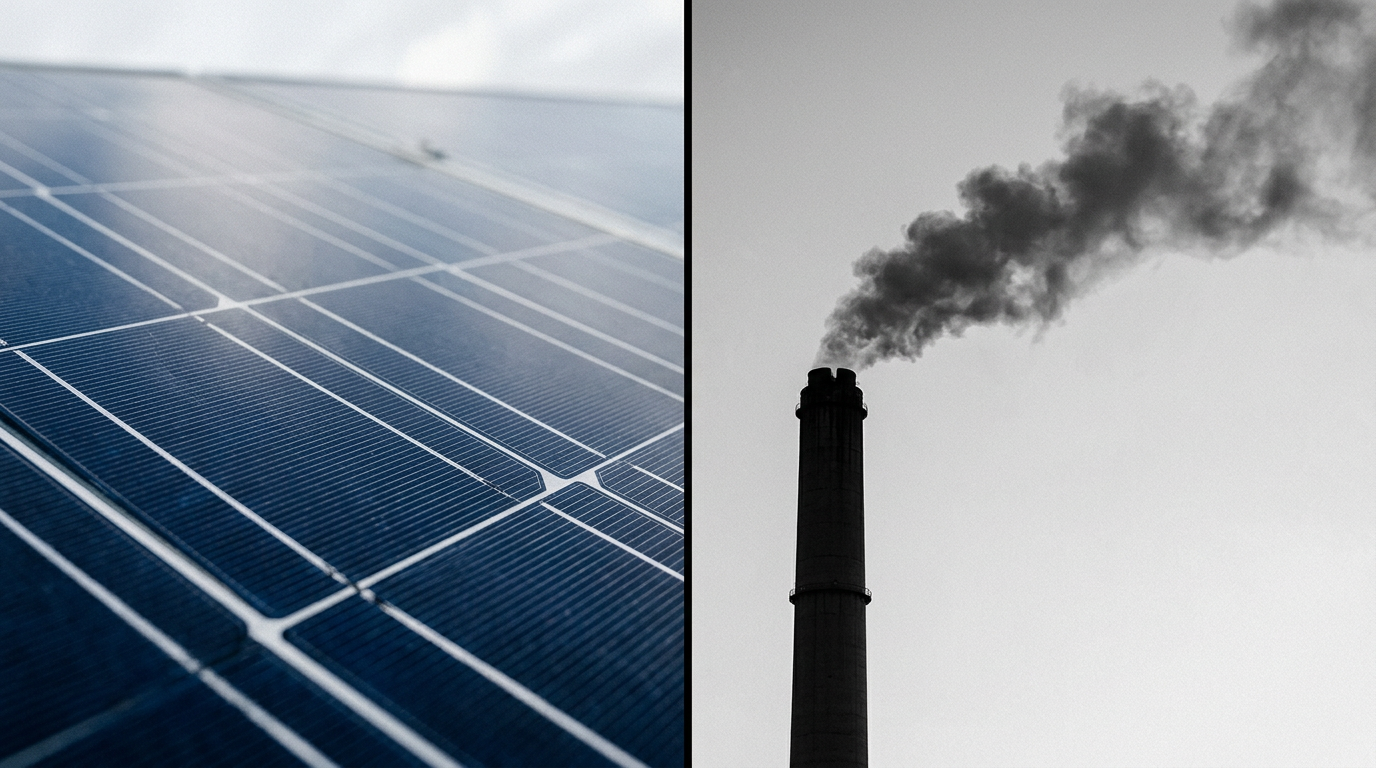
Renewable energy expanded further across the global power sector, reaching 33.4% of worldwide electricity generation, while fossil fuel consumption has not yet been pushed down as a result, according to the latest figures cited in the source material.
Solar power was described as the central force behind this growth. In 2025, solar generation increased by 30.1% and, for the first time, moved ahead of wind power in the global electricity mix, reaching 8.7%.
Solar becomes the leading growth engine
The milestone reflects how rapidly solar is scaling compared with other clean generation sources. The source material frames solar’s performance in 2025 as both a pace indicator and a structural shift, because it overtook wind in contribution to global electricity generation.
China remained the largest single market in this expansion. It accounted for approximately 42% of global solar output, underscoring the extent to which worldwide solar growth is concentrated in one country’s buildout and generation volumes.
Why fossil fuels are not being displaced
Despite the headline growth in renewables, the source material says the current transition is additive rather than substitutive. In other words, new renewable generation is being added on top of an expanding energy system rather than replacing existing fossil-based generation.
Real GDP Growth2
The stated reason is the direction of global demand: overall energy consumption is rising quickly enough that it outpaces the deployment of new renewable capacity. Under these conditions, clean power can be absorbed by incremental demand while carbon-intensive infrastructure continues operating, limiting any net reduction in fossil fuel reliance.
Implications for decarbonization targets
For institutional stakeholders, the source material highlights a gap between renewable growth trajectories and the requirements implied by decarbonization targets. The core issue presented is not a lack of renewable expansion, but that the expansion is not yet large enough to offset demand growth and reduce fossil fuel use at the system level.
The source also characterizes fossil fuel dependence as structurally embedded in today’s global energy system. In practice, this means renewables can grow strongly while the global economy continues to consume fossil fuels, because the additional clean electricity is not automatically matched by retirement of existing carbon-intensive capacity.
The uncertainty emphasized by the source is whether renewable deployment can accelerate sufficiently, relative to demand growth, to move from supplementation to displacement. Until that balance shifts, the energy transition is likely to remain additive as described.