Qatar LNG tanker hit raises Hormuz supply risk again
Security firms said an LNG tanker carrying Qatari cargo was hit near Hormuz, raising supply risk on a key gas route.
Omar Farouk ·
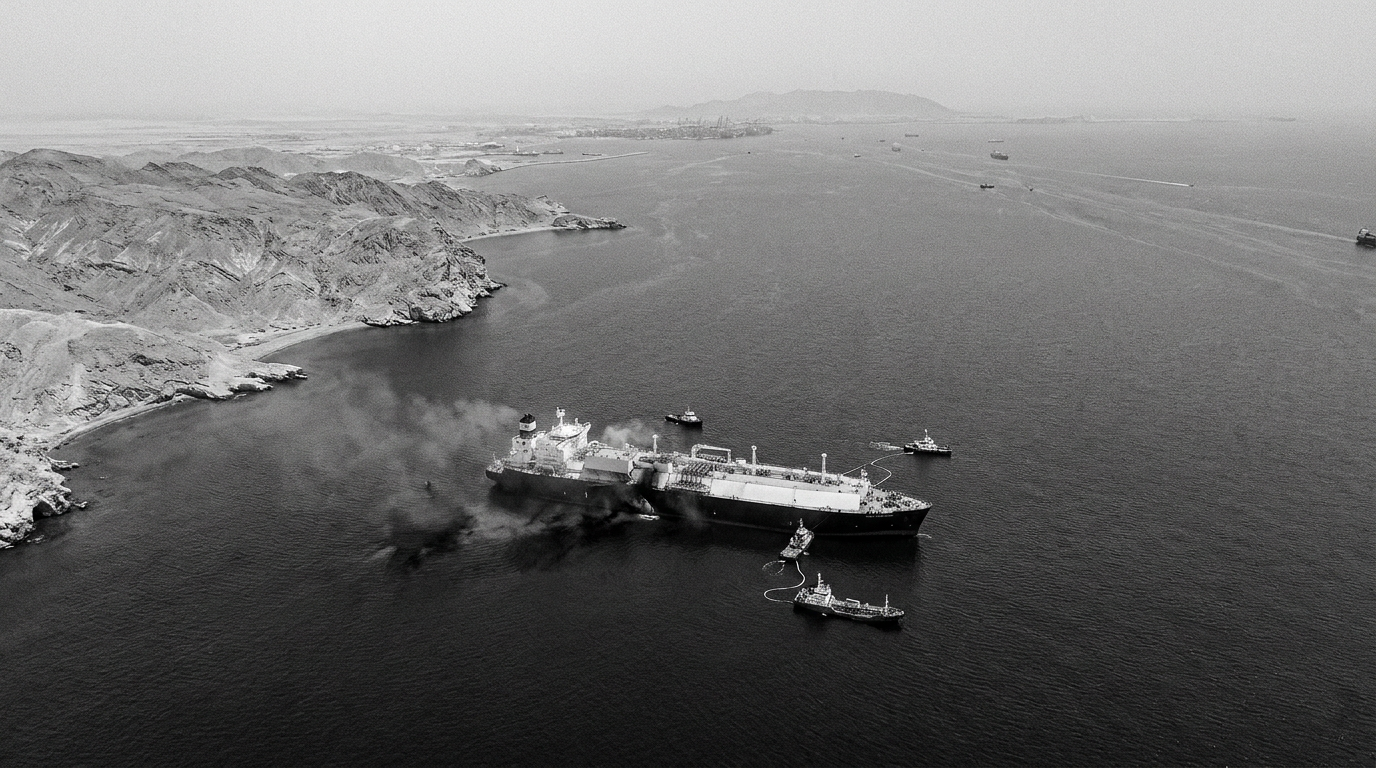
An LNG tanker carrying Qatari fuel was hit near the Strait of Hormuz, raising risk on a key global gas route for energy buyers.
Security consultancies Vanguard Tech and Marisks identified the carrier as Gaslog Shanghai, a vessel managed by Greece-based Gaslog. The UK Maritime Trade Operations said an unnamed ship had been hit overnight in waters near Oman, and said it had not reported environmental damage so far.
Gaslog Shanghai went dark
Ship-tracking data showed the carrier loaded an LNG cargo in Qatar around July 27 before its signal stopped on July 31 near the western approach to Hormuz. The same tracking information indicated the tanker did not appear to be transmitting when it was hit.
Gaslog did not immediately respond to a request for comment outside regular business hours, according to the source information. Without a company statement, the vessel's condition, crew status and commercial schedule remain open questions.
The incident matters because the Strait of Hormuz is one of the most sensitive chokepoints in energy trade. The waterway was described in the source material as a route for about a fifth of global LNG flows, making any interruption relevant far beyond the single vessel involved.
Qatar route faces renewed pressure
The strike follows a difficult month for LNG traffic near Hormuz. In early July, a Qatari LNG tanker was hit near the same waterway, after which Qatar, described in the source information as the world's second-largest LNG exporter, paused shipments through the strait for three weeks.
That earlier pause showed how a security event can turn quickly into a supply-chain problem. LNG cargoes are time-sensitive because buyers schedule deliveries around terminal slots, shipping availability and storage needs; a delay at Hormuz can ripple through loading plans and delivery calendars.
UK Maritime Trade Operations also issued a separate Saturday alert after another tanker reported an explosion in nearby water. That vessel was not damaged, the agency said, but the report adds to a pattern of close-range incidents around one of the main exits from the Gulf.
Energy markets weigh shipping risk
The direct exposure begins with Gaslog Shanghai and its manager, Gaslog. If the carrier is cleared to continue after inspection, the main effect could be a delayed cargo and added scrutiny from insurers, charterers and port authorities.
If attacks continue near Hormuz, the mechanism becomes broader: shipowners may slow transits, pause voyages or demand higher compensation for risk. For the global macro picture, that would raise uncertainty around LNG availability; for Gaslog, it could complicate fleet scheduling; for the wider LNG sector, it could increase security and insurance costs.
If traffic stabilizes and authorities confirm limited damage, the market effect may stay contained to voyage timing rather than supply loss. The key unresolved issues are whether Gaslog Shanghai can proceed, whether Qatar alters shipment plans again, and whether further alerts change how LNG carriers move through the strait.