Public-health labs could gain proactive pathogen forecasts from ancient resistomes
Analyze 18th-century slaughterhouse soils to map the pre-antibiotic resistome using ancient DNA. Discover how this data aids pathogen forecasting.
Edward Mullen ·
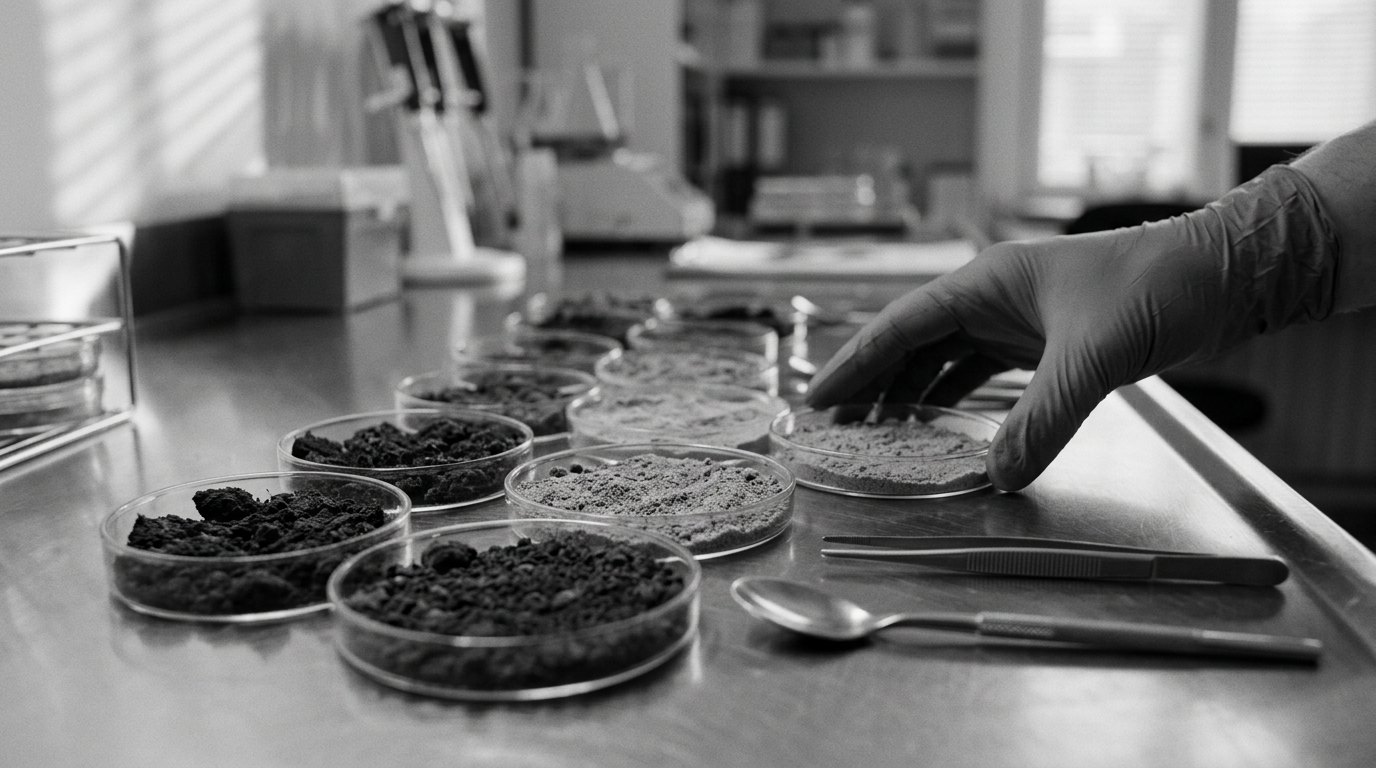
Public-health labs could gain proactive pathogen forecasts from ancient resistomes.
In Turku, Finland, a v1 bioRxiv preprint reports a first-of-its-kind examination of 18th-century slaughterhouse soils to map the pre-antibiotic resistome. The study, described as a preprint on bioRxiv, uses ancient DNA authentication and metagenomic sequencing to identify ancestral variants of clinically relevant resistomes. This framing—an archaeological view of a medical problem—grounds the work in a historical data stream rather than a modern clinical setting.
What the signal shows is straightforward
What the signal shows is straightforward: researchers analyzed 18th-century slaughterhouse soil samples from Turku to characterize the pre-antibiotic era resistome. By applying ancient DNA authentication and metagenomic sequencing, the authors identify ancestral variants of clinically relevant resistomes.
The methodological tone is careful: authentication steps are invoked to distinguish ancient signals from modern contamination, and sequencing aims to capture a breadth of resistance gene backgrounds that may have circulated long before current antibiotic use.
The dominant read is that ancestral resistome data could recalibrate how risk is assessed. The prevailing expectation—articulated by most public-health and surveillance narratives—holds that real-time genomic surveillance remains the gold standard for threat assessment, especially for detecting known threats and recent mutations.
The preprint’s framing challenges that dominance by suggesting a historical lens could reveal resistance pathways not yet observed in contemporary pathogens, offering a form of foresight that could inform early warning and preparedness strategies. In other words, the past might expand the future’s predictive margin—if the data can be scaled and interpreted in a modern context.
If this second-order view is borne out, the health system could see a procurement- and policy-level reallocation. A viable program would entail new funding streams for ancient DNA authentication pipelines, metagenomic assays, and cross-disciplinary labs capable of handling historic samples alongside clinical specimens.
That implies a shift in lab networks, from tightly focused clinical genomic pipelines to hybrid facilities that maintain strict contamination controls, provenance tracking, and data standards for ancient material. It would also require epidemiologists to integrate ancestral resistome signals into risk models alongside current surveillance metrics, creating a more textured, but more complex, threat-scape.
Such a move could reconfigure the cost envelope, potentially increasing upfront capex for specialized sequencing and authentication, while offering the promise of lower marginal risk in the face of uncertain resistance trajectories.
In Turku
A skeptical read remains credible and necessary. Critics will note that translating ancient signals into actionable modern guidance is nontrivial: environments, selective pressures, and host-pathogen dynamics have changed dramatically since the 18th century, potentially limiting predictive value for today’s pathogens.
Real-time surveillance excels at detecting contemporary threats and outbreaks as they unfold; ancestral data may add context but not a substitute for current genomic monitoring. And there is the question of economics: even if the predictive signal exists, the costs of ancient-resistome mapping at scale, plus the required specialized expertise, could constrain routine adoption.
The counterpoint is a reminder that extraordinary claims demand demonstrable links to contemporary outcomes and budgets.
Looking ahead, several concrete signals will determine whether this line of inquiry moves from curiosity to policy. The next six months should reveal: (1) subsequent replication or extension studies in other historical sites, (2) a funding push from public-health bodies to pilot ancient-resistome mapping alongside current AMR surveillance, (3) the development of standards for ancient DNA authentication in public health contexts, (4) any reported changes in per-sample cost or throughput that would affect feasibility, and (5) early case studies showing how ancestral signals might inform interventions for modern resistance threats.
If any of these fail to materialize, the consensus about the practical value of ancient resistome data will face a hard test.