DC Public Service Commission posts public calendar of upcoming meetings
The Public Service Commission of the District of Columbia published its public calendar listing upcoming meetings and hearings.
Sophie McAlister ·
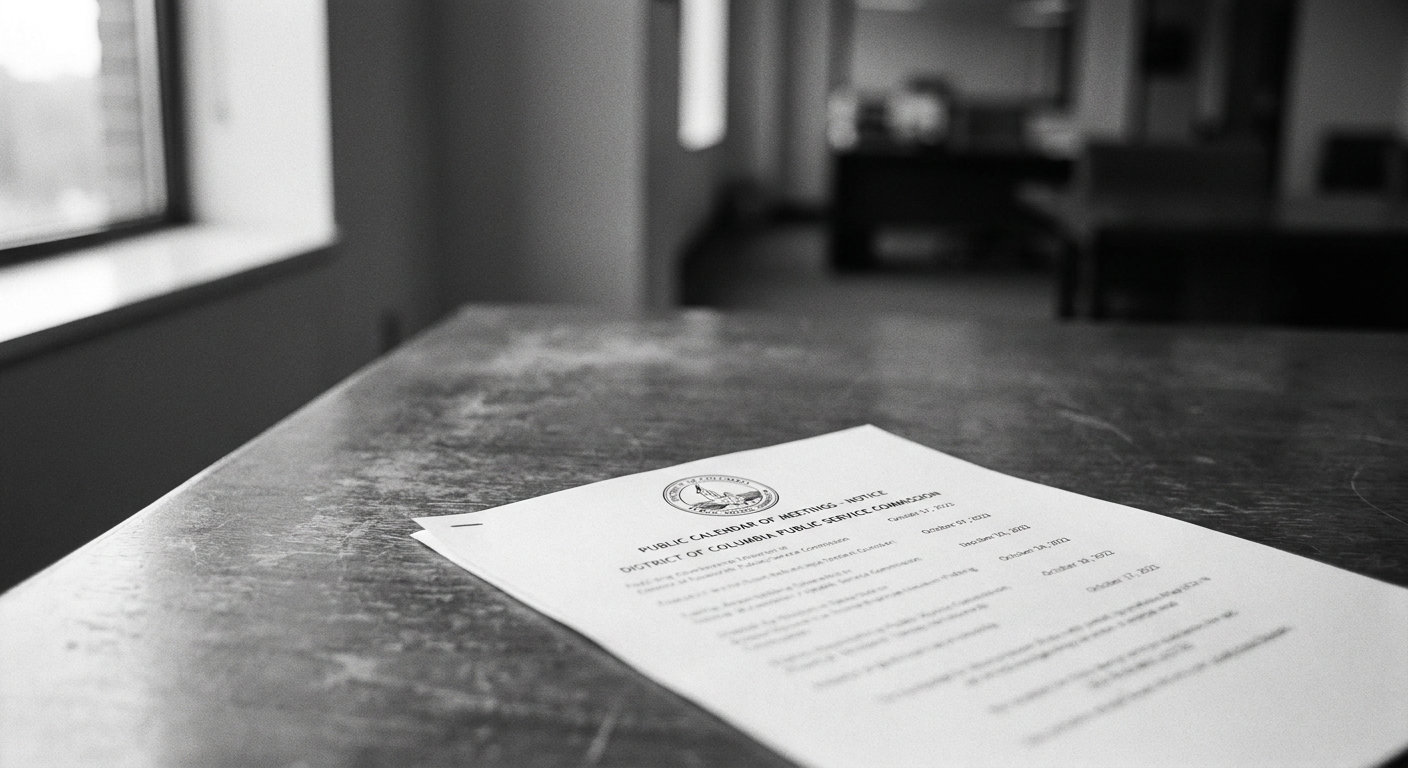
The Public Service Commission of the District of Columbia has posted its public calendar on the agency website, listing upcoming meetings, hearings and other open sessions. The calendar entry is intended to give District residents, businesses and stakeholders advance notice of public proceedings and regulatory events.
The commission is the District's utility regulator, responsible for overseeing electricity, gas, water and communications utilities operating in the city. Its public meetings are where commissioners hear rate cases, service complaints, rulemaking proposals and other matters that can affect customer bills and service levels.
How to find and use the calendar
The calendar page lists dates and basic details for scheduled sessions and typically includes links to agendas, dockets and remote access instructions when those materials are available. Members of the public who follow the calendar can identify opportunities to attend hearings, file comments or monitor contested cases that may have financial or service impacts.
Notices on the commission calendar also serve as formal public record of upcoming activity. Utilities, consumer advocates and local businesses commonly use the calendar to time filings or prepare testimony. Community groups and individual residents rely on the published schedule to plan attendance for matters that concern neighborhood service or rates.
Why the schedule matters for DC neighborhoods
Because the commission's decisions shape the cost and delivery of essential services across the District, public access to meeting dates is a key transparency mechanism for local accountability. The calendar helps ensure that stakeholders can track proceedings that may affect housing costs, commercial operating expenses or infrastructure investments in specific neighborhoods.
For example, a rate case or infrastructure proceeding that begins on the commission's schedule can have downstream effects on residential utility bills and on service reliability in areas served by particular providers. Advance notice allows advocacy groups, affordable housing providers and small-business owners to coordinate testimony or technical input.
Practical steps for residents and businesses
Residents who want to follow a case should check the calendar for docket numbers and agenda links, then use the commission's docket system to find filings and schedules. Many hearings now include remote participation options; the calendar page is the primary place the commission posts access details and any changes to meeting times or formats.
The commission also posts supplemental materials — such as orders, pleadings and evidentiary filings — to its docket service after events are scheduled. Stakeholders who monitor those documents can spot deadlines for public comments, protest filings or motions that shape the timing and outcome of regulatory decisions.
Watch the calendar over the coming weeks for updates to meeting times, agenda postings and links to livestream or remote hearing rooms. Those updates will determine when and how the public can engage with ongoing regulatory matters.