Philippines expands school counselors, shifting teacher roles and training pressures
Healthcare Asia reports the Philippines is boosting school counseling after a string of violent incidents involving minors; the move reallocates labor away…
Edward Mullen ·
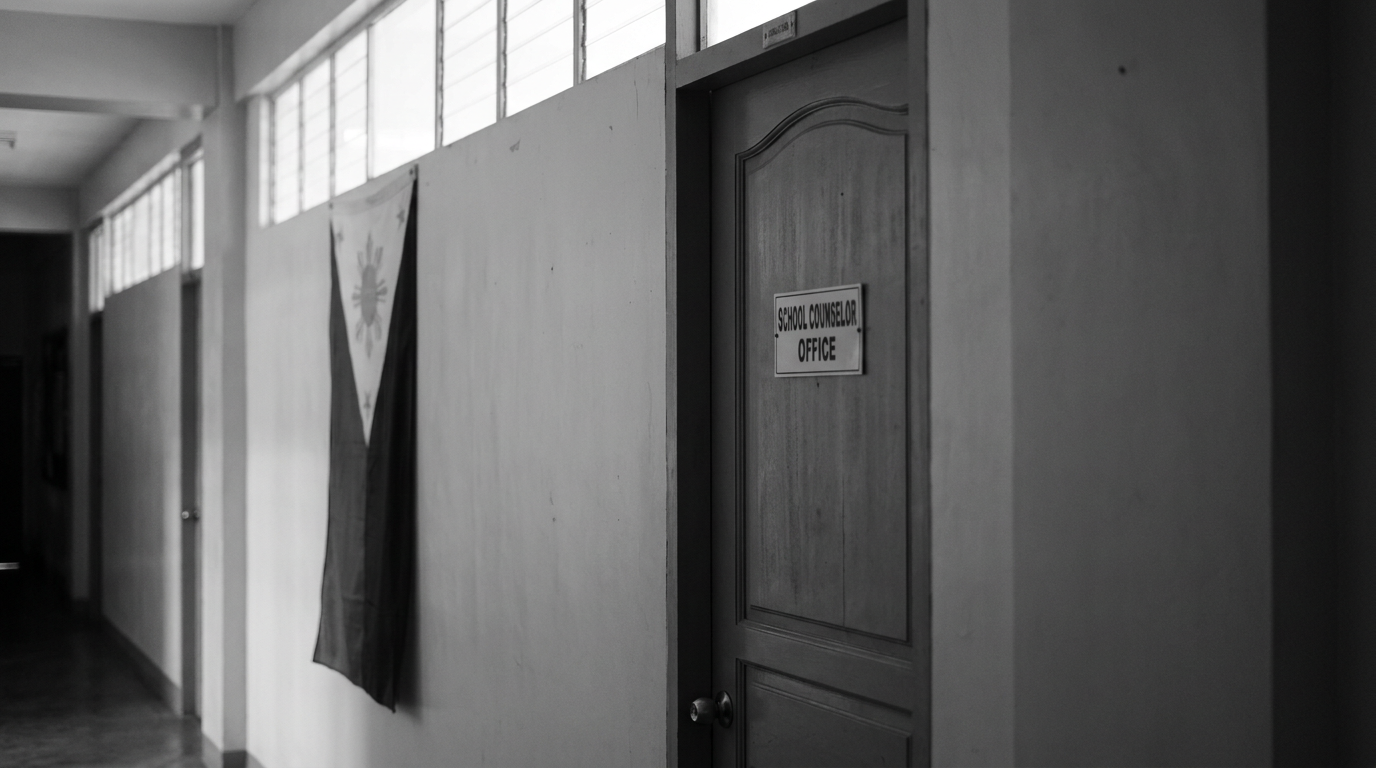
A teacher in a rural Philippine school might once have comforted a distressed student in the absence of specialized staff, adding pastoral care to an already demanding day. New government mandates are changing this ad-hoc system, formalizing student mental health support. This shift redefines roles, moving the burden from generalist educators to a dedicated cohort of school counselors, a transition that will stress existing recruitment and training pipelines.
What Healthcare Asia actually reported and what it did not Healthcare Asia's article lays out the trigger — several violent incidents involving minors have heightened concerns over student mental health — and says the government is responding by strengthening counseling services in schools. The reporting identifies the shortage of guidance counselors as a major operational problem but stops short of describing concrete implementation steps, budgets, or career pathways for these new roles.
The piece is single-publisher reporting; there are no corroborating outlets in the reporting packet.
Why this is an org-chart change, not just an added headcount Shifting mental-health work out of the classroom into a distinct cadre of counselors transforms supervisory lines, performance metrics, and daily schedules inside schools. Where teachers currently absorb pastoral duties alongside instruction, dedicated counselors create parallel reporting chains to education or health ministries, require new referral protocols, and demand different HR practices around licensure and continuing education.
That redistribution alters the work teachers do, what principals evaluate during reviews, and which payroll and professional-development budgets are invoked. The Healthcare Asia report implies the reallocation but offers no operational roadmap for it.
The practical gaps the reporting omits
The most consequential omission in the Healthcare Asia piece is how the government plans to solve supply-side constraints. Training, certifying, and deploying counselors at scale requires accredited programs, clinical supervision, licensing pathways, and stable compensation — none of which the article details.
Rural and island schools already struggle to attract qualified teachers; the same geographic and fiscal frictions will likely apply to counselors. That raises familiar failure modes: vacant posts being filled by underqualified personnel, short-term contract hires, or redeployment of existing teachers into nominal counselor slots without proper upskilling.
The counter-read the packet doesn't answer
A common optimistic reading — that simply increasing counselor headcount will quickly reduce student distress — is undermined by implementation realities the reporting does not confront. Critics would point out that without clear funding lines, career progression, and supervisory capacity, new counselor roles can become administrative checkboxes rather than effective clinical supports.
Because Healthcare Asia provides no on-the-record quotes from officials, clinicians, or school leaders, the article leaves unaddressed whether the expansion is a policy commitment, a pilot, or a short-term political response to public pressure.
What this changes for schools over the next 12–18 months If the initiative proceeds as described, school principals and regional education officers will face immediate HR decisions: reclassify existing staff, open new job postings, or contract external providers. That means procurement and budgeting will move from a largely teacher-centric model toward mixed staffing budgets that combine education and health line items, requiring coordination between ministries.
For teachers, the shift can relieve some pastoral burden but may also erode informal support networks if counselors displace day-to-day student engagement rather than supplement it. The Healthcare Asia article names the problem and the policy intent but omits how inter-ministerial governance will be structured to manage those changes.
Who benefits, who is exposed, and the under-noticed middle Specialist mental-health professionals and NGOs that can provide training stand to gain work and funding if the government follows through; district education offices with hiring flexibility will be advantaged. Exposed are rural schools, underfunded districts, and teachers whose workloads may be reshaped without additional pay or authority.
The under-noticed middle is the cadre of paraprofessionals and school staff who will likely absorb triage responsibilities during implementation — they will determine whether the policy becomes meaningful support or an administrative realignment. Healthcare Asia signals intent but does not trace that middle layer.
Signals to watch in the next six months that would prove this thesis wrong Watch whether the Department of Education or Ministry of Health publishes a detailed staffing and budget plan, whether national or regional hiring notices for certified guidance counselors appear, and whether accredited training programs report scaling admissions tied to government funding; each would undercut the claim that the policy is merely declarative. Conversely, if new roles are created without associated professional-development line items, or if teacher job descriptions are simply relabeled, that would confirm the implementation gaps Healthcare Asia omits.
The reporting packet offers the policy headline but not these operational confirmations.
No one in the reported packet is quoted on the record, and there are no corroborating outlets in the reporting cluster; the piece should be treated as single-thread reporting until budget lines, job postings, or training partnerships surface publicly.