AI triage model targets early mycosis fungoides reads
A multicentre preprint tests a weakly supervised AI triage model for mycosis fungoides vs benign inflammation, aiming to guide pathology workflows.
Edward Mullen ·
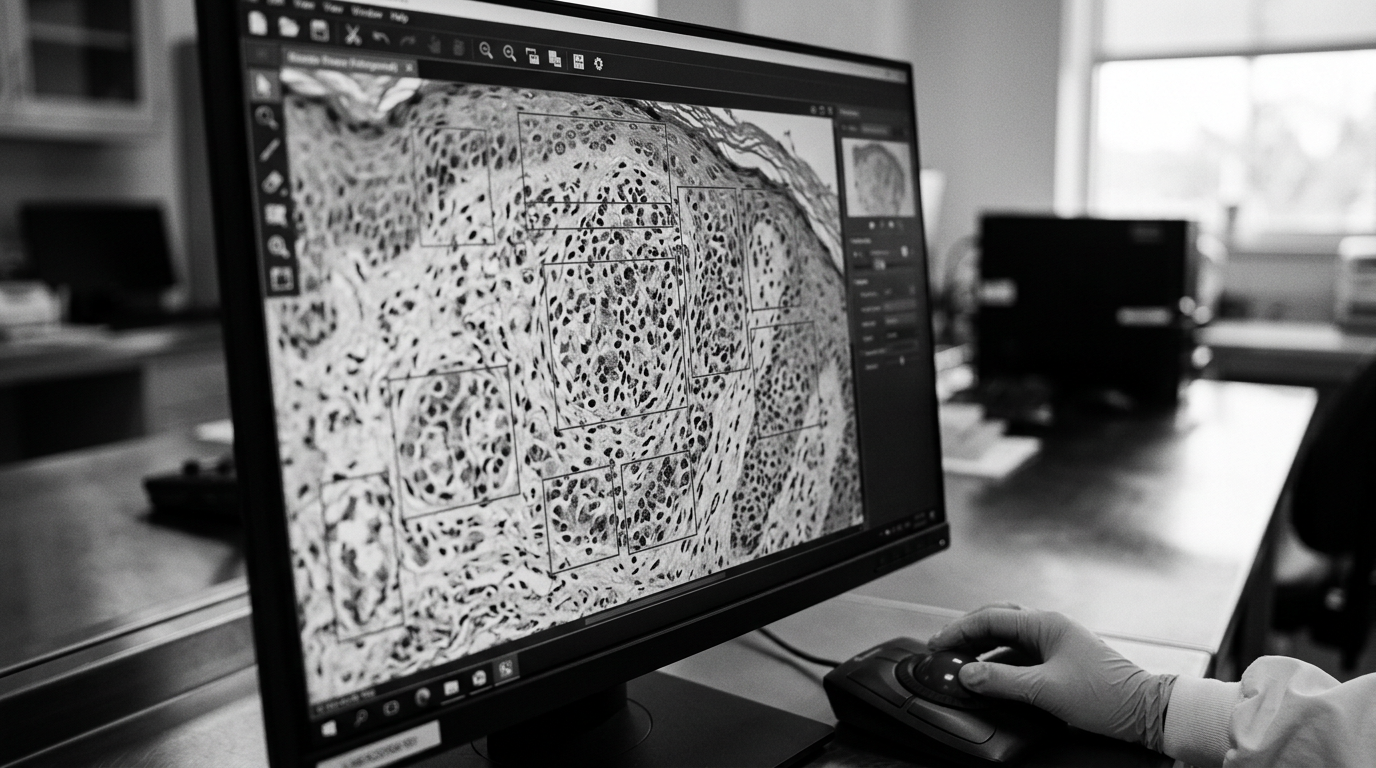
A new multicentre study reports results for a weakly supervised deep learning system designed to triage cases where early-stage mycosis fungoides (MF) can be difficult to separate from benign inflammatory dermatoses (BID) on histopathology slides.
The work evaluates the MIMIC model as a clinical utility tool for digital pathology triage rather than a fully autonomous diagnostic system. The stated aim is to help laboratories prioritize reviews and focus specialist attention where the risk of MF is higher.
In the paper’s logic, this does not remove the role of the human expert. Instead, it moves emphasis from per-case manual effort toward governance tasks that ensure the tool is used safely, consistently, and in a way that aligns with clinical responsibilities.
Costs, accountability, and what remains uncertain The study suggests a potential cost-structure change inside pathology labs: less reliance on mass manual labeling work, paired with recurring operational costs as AI systems run continuously and require supervision. The piece frames this as re-skilling and workflow reallocation in the near term, not headcount reduction.
However, the source material also flags constraints that could slow or limit translation into practice. The work is described as a preprint, and the real-world outcome is presented as contingent on generalizability across MF subtypes, BID presentations, lab hardware differences, and the economics of integrating triage into established workflows.
Officials and named participants are not quoted in the provided material, and the text underscores that regulatory clarity and reimbursement pathways would be pivotal. It describes the results as a promising signal rather than a settled mandate for changing how dermatopathology triage is financed or governed.
Signals to watch as labs consider deployment
The next indicators highlighted are practical rather than purely technical: whether official guidance or policy statements emerge on AI-assisted triage in dermatopathology; whether pilots are reported that demonstrate sustained human oversight alongside AI-driven prioritization; and how vendors position products as assistive tools requiring full review versus more autonomous systems with governance controls.
The source also points to procurement and staffing questions as key determinants of impact. In particular, it calls attention to whether oversight costs rise or fall once AI becomes the gatekeeper for what pathologists review, and how quickly departments upskill staff to manage AI outputs and handle cases where algorithmic signals diverge from clinical judgment.