China Accelerates Reusable Rocket Program to Slash Space Launch Costs
China is accelerating its reusable rocket booster programs, achieving successful land and sea recoveries to reduce launch costs and enhance global competitiveness.
Atlas Newsdesk ·
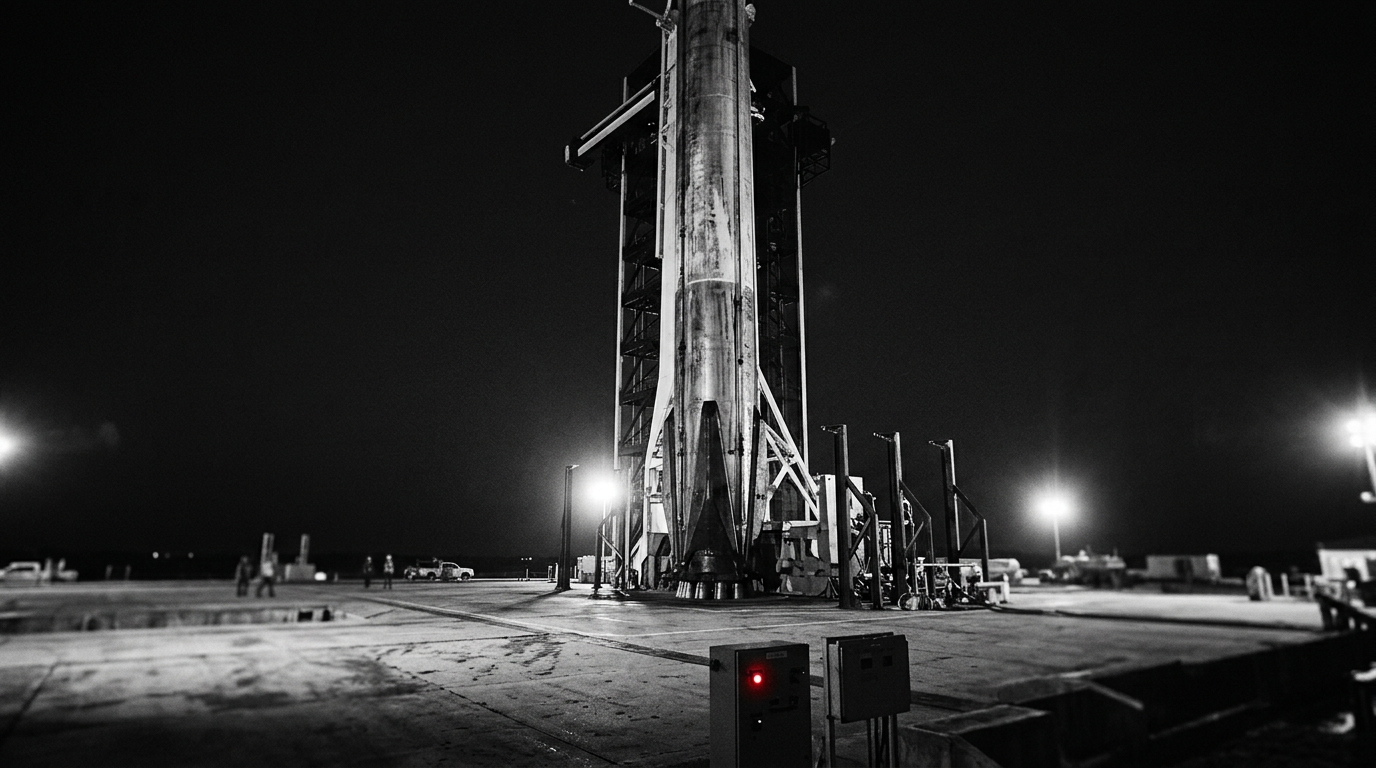
China is making substantial progress in developing reusable rocket booster technology, aiming to significantly reduce the cost of space launches. Recent achievements include successful land-based and sea-based recovery operations for orbital-class vehicles. These developments, part of programs like Zhuque-3 and Long March-10B, represent a strategic national effort to strengthen domestic launch capabilities and decrease operational expenses.
The core strategy involves deploying hardware capable of multiple re-flights, a shift intended to bridge the cost gap between China's current commercial launch services and international benchmarks. Presently, Chinese launches cost between approximately US$8,000 and US$14,000 per kilogram. This figure contrasts sharply with the roughly US$2,700 per kilogram standard maintained by leading global competitors in the space launch market.
Technological Innovations Driving Down Costs
Key technological advancements are fundamental to China's pursuit of cost efficiency. The adoption of methane-liquid oxygen engines marks a crucial step forward, promising enhanced performance and greater reusability. Furthermore, the incorporation of stainless-steel structures into rocket designs is aimed at boosting durability, supporting an ambitious target of at least 20 reuses for each booster.
These material and propulsion choices are essential for sustaining repeated missions and effectively reducing the per-launch cost. Despite these considerable technical gains and successful recovery operations, a noticeable disparity persists in both performance metrics and operational maturity when comparing China's domestic capabilities with those of established global industry leaders. The development of heavy-lift reusable systems, crucial for large-scale commercial and scientific endeavors, remains a long-term objective.
Future Investments and Global Competition
Industry projections suggest that achieving true parity in heavy-lift reusable rocket technology will necessitate continuous and substantial investment in critical areas. These include ongoing research and development efforts, the expansion of advanced manufacturing infrastructure, and the meticulous refinement of operational procedures. Successfully integrating these elements will be indispensable for China to not only lower its launch costs but also to compete effectively on the international stage across a diverse range of space missions.
China's sustained commitment to reusable technology underscores its ambition to become a more dominant and cost-effective participant in the global space economy. While various challenges still exist, the recent successes demonstrate a clear path towards achieving these strategic goals, potentially reshaping the competitive landscape of commercial space launches over the coming decades. This concentrated effort aligns China with a global trend observed among major spacefaring nations and private corporations, indicating a maturation of its space industry from predominantly state-driven projects to commercially viable ventures.
Broader Implications for Space Sector
The global space launch market has seen significant transformation with companies like SpaceX demonstrating the economic advantages of reusable boosters, leading to substantial reductions in launch costs and increased launch frequency. China's focused endeavor is therefore both a response to, and an attempt to lead within, this evolving commercial space environment. The acceleration of these programs could introduce new competitive pressures, potentially driving down costs across the entire sector and opening new opportunities for satellite deployment, space exploration, and in-orbit services for various nations and commercial entities.
The long-term success of these initiatives will depend on sustained investment, continuous innovation, and the ability to scale production and operational efficiency. As China continues to refine its reusable launch capabilities, its role in shaping the future of global space access is expected to grow, impacting international partnerships and technological collaborations.