Rapid Snowmelt in Key River Basins Threatens Summer Water Supplies Across Western States
Western U.S. snowpack is at record lows after a warm winter and hot March, with key basins far below average ahead of dry season.
Ayla Demirhan ·
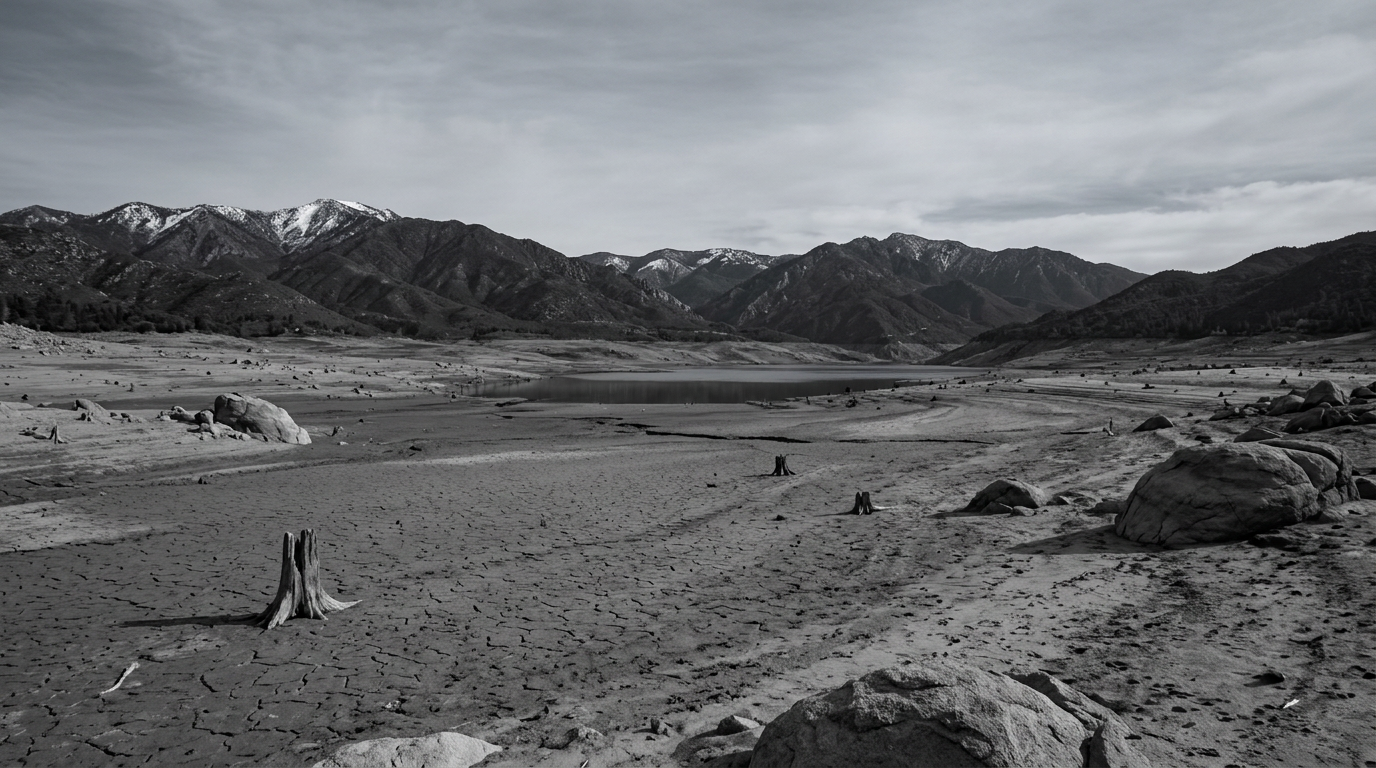
Western U.S. snowpack levels have fallen to record lows after a historically warm winter followed by an exceptionally hot March, raising concerns about water availability heading into the region’s dry season. Measurements taken around April 1 show several major basins entering what officials and experts described as uncharted territory for this point in the year, with snow water equivalent (SWE) far below long-term norms.
The sharp decline has been accelerated by rapid melt-off linked to a March heatwave that broke more than 1,500 monthly high-temperature records. With snow melting earlier than usual, the remaining high-elevation reserves that typically feed rivers and reservoirs through spring and summer have been depleted faster than expected, tightening the outlook for water supplies in the months ahead.
In California, the Sierra Nevada registered just 4.9 inches of SWE, which was reported as 18% of its average. In the Colorado River headwaters, a critical source region for a system that serves more than 40 million people, SWE was slightly over 4 inches, or 24% of average. Experts noted that this headwaters reading is less than half of what had previously been considered the record low for the area, underscoring how unusual the current season has become.
Data from the U.S. Department of Agriculture indicates that snow drought conditions are widespread across the West. The Great Basin was measured at 16% of average, the lower Colorado region at 10%, and the Rio Grande at 8%. These figures point to broad stress across multiple watersheds rather than a localized shortfall, increasing the likelihood that water managers will face difficult trade-offs as runoff diminishes.
Experts said additional snowfall remains possible, but they cautioned it is unlikely to change the overall direction of the season. With the snowpack already heavily reduced, the region could be headed toward one of the earliest melt-offs on record, which would shift runoff earlier in the year and leave less natural storage available for late summer.
The key uncertainty is whether any late-season storms arrive in sufficient volume and at cold enough temperatures to slow losses, though specialists warned the current deficit is large.
Beyond the United States, the situation matters because the American West is a major agricultural and industrial region whose water constraints can influence food supply chains and pricing dynamics. Reduced water availability in a system as significant as the Colorado River can also heighten cross-border and inter-regional coordination pressures, with potential knock-on effects for trade flows and resource planning tied to North American markets.