Oil prices slide as Trump flags fresh Iran talks Monday
Oil prices fell after President Trump said U.S.-Iran talks would resume Monday, easing immediate concerns over Strait of Hormuz access.
Claire Dubois ·
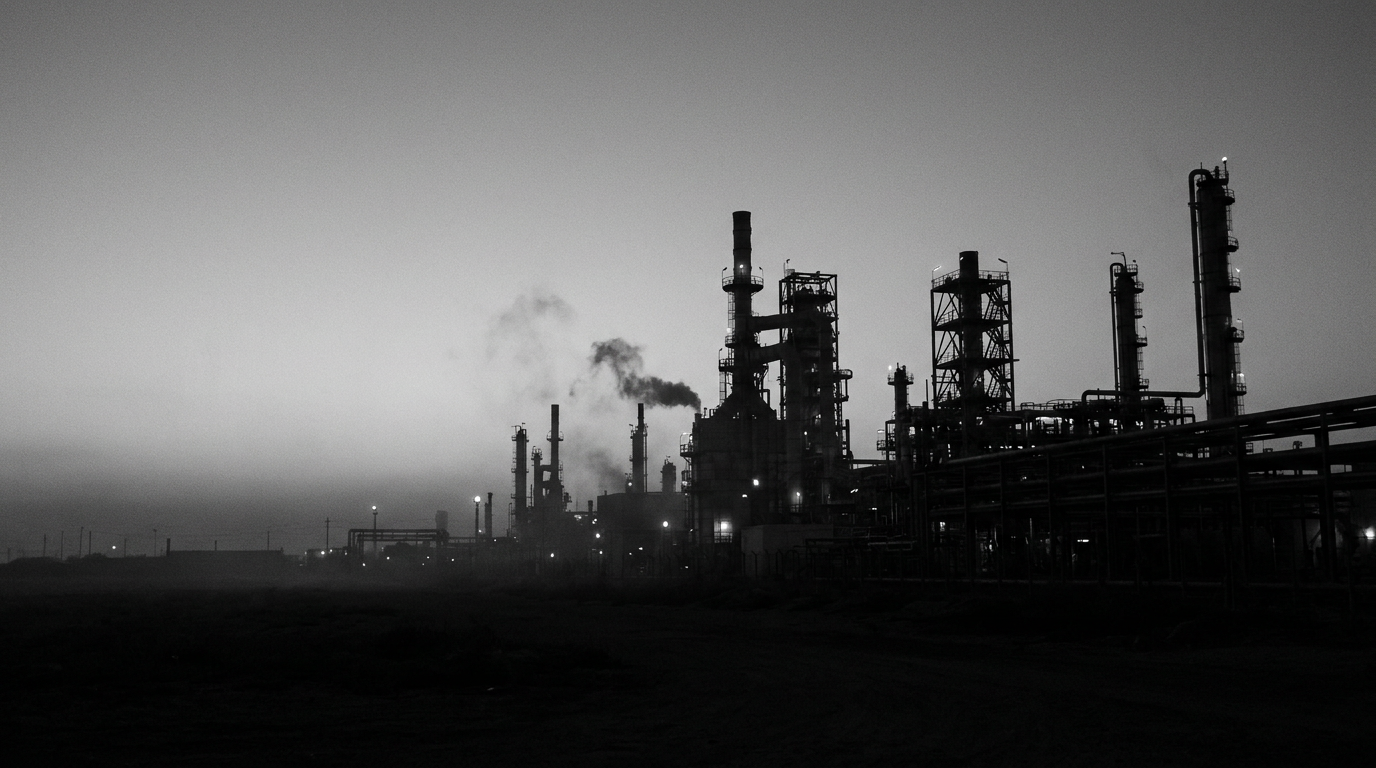
Oil prices fell after President Trump said U.S.-Iran talks would begin Monday. Stock futures rose as traders repriced Strait of Hormuz risk.
October Brent traded down by as much as 7.3%, touching $81.55 a barrel, according to early market pricing. West Texas Intermediate lost 4.5% to $80.88, giving energy markets their first clear relief signal after a week shaped by Middle East tension.
Brent retreat lifts futures
U.S. equity-index futures moved higher as oil retreated. S&P 500 futures rose 0.4%, while Nasdaq 100 contracts gained 0.7%, suggesting traders saw lower energy risk as supportive for growth stocks and inflation-sensitive assets.
The shift also reached currency markets. The Australian dollar, often treated as a risk barometer, rose 0.3% to $0.7043, while the yen weakened 0.3% to 157.84 per dollar as investors watched for further official support for Japan's currency.
President Trump said Sunday that he had agreed not to proceed with a large strike on Iran after regional allies, including Saudi Arabia, urged a diplomatic route. "It would have been the biggest attack since World War II," Trump told reporters on Air Force One. "We're just going to see whether or not we can make a deal."
Hormuz talks reach final stage
The market response centered on the Strait of Hormuz, the narrow waterway between Iran and Oman that is central to global oil shipments. Trump said an agreement on reopening the route may be near and added that he would keep pressing for a way to end Iran's nuclear program.
Iranian Foreign Minister Abbas Araghchi said on Telegram that negotiations between Iran and Oman were in their final stages. His spokesman, Esmail Baghaei, said on Iranian state-run television that the discussions concerned a new route through the strait, not a decision on whether it would be open or closed.
Oil was under added pressure from supply policy. Major OPEC+ producers approved another small increase to production quotas, a move that can soften prices if demand expectations do not rise at the same pace.
The decline followed a tense stretch in which the U.S. had threatened severe action against Iran as the conflict entered its sixth month. Reduced supply linked to the fighting had lifted fuel costs, raising concern that energy could feed a renewed inflation shock across stock, bond and currency markets.
Yen intervention stays in focus
Japan's currency remained a second pressure point for Asian trading. Japan's Ministry of Finance said it carried out a yen-buying operation on July 31, U.S. time, in coordination with the U.S. Department of Treasury and said it would not hesitate to conduct further joint intervention.
President Trump called the action "a signal of friendship." Treasury Secretary Scott Bessent said the U.S. helped counter "disorderly" yen moves and was prepared to continue assisting Japan if needed.
Kyle Rodda, a senior analyst at Capital.com, wrote that "The only dampener on the market last week was escalating geopolitical risk." Elias Haddad, global head of markets strategy at Brown Brothers Harriman, wrote that "History is clear, joint FX intervention packs a punch, and investors should lean with the official flow, not against it."
If the Monday talks produce a credible path for Hormuz access, oil could give back more of its geopolitical premium, easing pressure on global inflation expectations and helping companies exposed to fuel costs. For energy producers, the same mechanism would narrow near-term revenue upside, while refiners, airlines and freight operators would gain from lower input costs.
If talks stall or the strait risk returns, the mechanism reverses: crude would likely regain a risk premium, inflation fears would intensify, and equity markets could face renewed pressure. The open questions are whether Iran and Oman can define a workable route, whether U.S.-Iran discussions expand beyond access issues, and whether Japan and the U.S. keep intervening if the yen weakens again.