Oil Climbs as U.S.-Iran Deal Hopes Meet Fresh Strikes
Oil prices rise Tuesday as U.S. strikes in Iran complicate deal expectations, leaving stocks mixed and investors focused on energy supply risks.
Jason Kwon ·
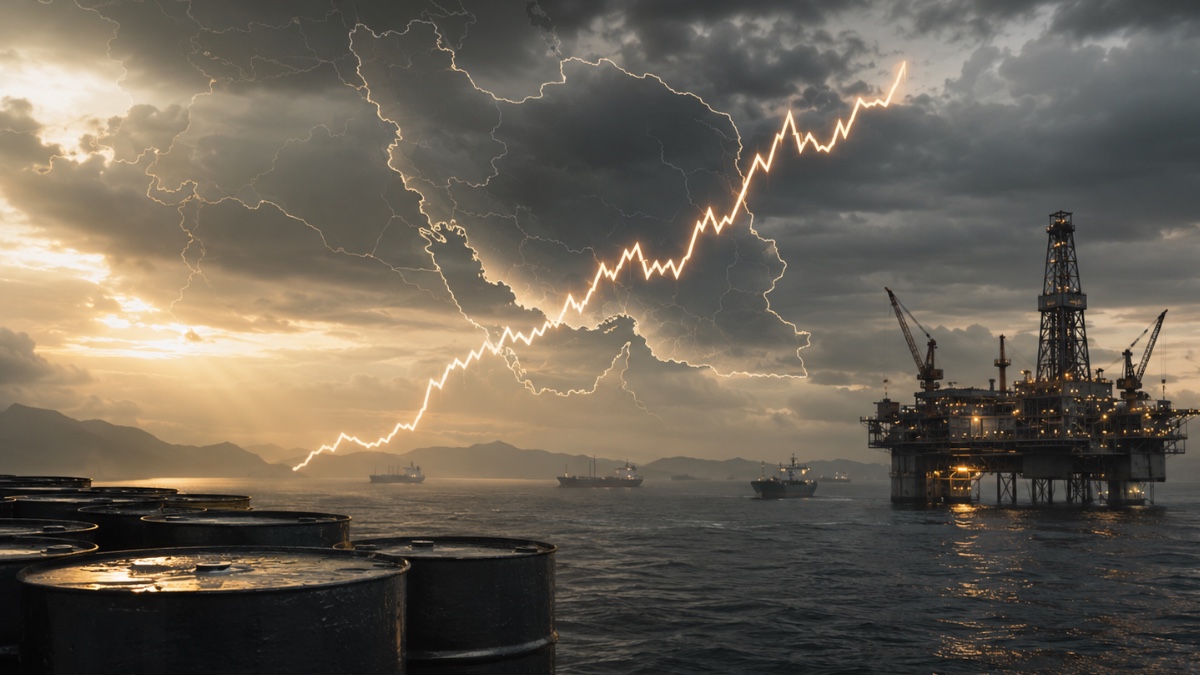
Oil prices advanced Tuesday after fresh U.S. military action in southern Iran undercut hopes that Washington and Tehran were close to ending a three-month war. Brent crude rose more than 2% in Asian trading to $98.21 a barrel, while U.S. West Texas Intermediate traded slightly above Monday’s last price but remained 4.9% below Friday’s close. There was no U.S. settlement Monday because of the Memorial Day holiday. The moves showed investors were not ready to price in a clean diplomatic breakthrough.
Doha Talks Lose Momentum
Iran’s top negotiator and foreign minister were in Doha for discussions with Qatar’s prime minister on a potential agreement with Washington. But U.S. Secretary of State Marco Rubio said any deal with Iran could take “a few days,” cooling expectations that the conflict might end quickly. That timing matters because energy traders are focused less on the existence of talks than on whether they produce immediate relief for supply routes and cargo flows. The gap between diplomacy and execution kept risk premiums alive in crude markets.
Joseph Capurso, a strategist at Commonwealth Bank of Australia, said he remained skeptical about repeated signals that a deal was near. His concern centered on the details: what any agreement would contain, when the Strait of Hormuz might reopen, and how much uncertainty would remain even after a political announcement. The strait is central to market psychology because investors view it as a pressure point for global oil flows. Without clarity there, peace talk headlines may not be enough to calm energy markets.
Global Market Reactions
Equity markets lacked a single direction as traders balanced diplomatic hopes against the economic cost of a longer war. MSCI’s broad index of Asia-Pacific shares outside Japan gained 0.67%, while Japan’s Nikkei slipped 0.14%. U.S. equity futures were firmer, with Nasdaq futures up 0.86% and S&P 500 futures rising 0.66%. In Europe, EUROSTOXX 50 futures fell 0.16%, FTSE futures added 0.2%, and DAX futures declined 0.26%.
Hong Kong stocks rose as gains in chipmaking shares helped offset unease over Beijing’s crackdown on illegal cross-border trading. The Hang Seng Index climbed 0.5%, while China’s CSI300 blue-chip index fell 0.3%. The split reflected a broader pattern across markets: investors were willing to buy selective growth exposure but remained cautious where policy or geopolitical risks were harder to price. That caution was reinforced by the possibility that higher energy costs could squeeze companies and consumers if the conflict drags on.
The dollar steadied as investors returned to safer assets, though it remained below the six-week high reached last week. The euro slipped 0.1% to $1.1633, sterling fell 0.13% to $1.3488, and the dollar was little changed against the yen at 158.94. Bonds were steadier after last week’s selloff, when investors worried that prolonged energy-price pressure could revive inflation and force rate increases in both advanced and emerging economies. The two-year U.S. Treasury yield fell nearly 7 basis points to 4.0573%, while the 10-year yield dropped more than 6 basis points to 4.5083%.
Inflation Risk Remains
Eric Robertsen of Standard Chartered said bond yields may pull back when geopolitical pressure eases, but inflation and fiscal risks could last longer. He warned that commodity disruptions may take months to resolve and that fiscal support could weaken sovereign balance sheets while governments face higher borrowing costs. That is the market’s core risk: even if diplomacy progresses, the economic effects of the war may not disappear quickly. Investors are watching whether talks produce a durable deal, whether Hormuz access becomes clearer, and whether oil prices keep feeding inflation expectations.