NY16:48
    LDN21:48
    HKG04:48
    TYO05:48
    Gold4,064-4.27%
    Bitcoin61,739-0.48%
    Gold4,064-4.3%
    Bitcoin61,739-0.5%
    About
    Beta
    SIGN IN
    Beta
    SIGN IN
    LATEST NEWS
    Video Contradicts Israeli Military Accountabout 1 hourEngland Cricket Captain Suspended Amid Investigationabout 1 hourWorld Cup Faces Extreme North American Summer Heatabout 2 hoursModi-Trump G7 Summit Meeting Possibleabout 2 hoursWashington Signals Hard Stance Against Tehran After Attacksabout 2 hoursAnthropic CEO Urges AI Model Deployment Restrictionsabout 2 hoursPyongyang's Uranium Enrichment Capacity Surges 75%about 2 hoursTrump Signs $70 Billion Immigration Billabout 2 hoursUS Warns Cuba on Military Buildupabout 2 hoursTensions Escalate Between Turkey and Israelabout 2 hoursVideo Contradicts Israeli Military Accountabout 1 hourEngland Cricket Captain Suspended Amid Investigationabout 1 hourWorld Cup Faces Extreme North American Summer Heatabout 2 hoursModi-Trump G7 Summit Meeting Possibleabout 2 hoursWashington Signals Hard Stance Against Tehran After Attacksabout 2 hoursAnthropic CEO Urges AI Model Deployment Restrictionsabout 2 hoursPyongyang's Uranium Enrichment Capacity Surges 75%about 2 hoursTrump Signs $70 Billion Immigration Billabout 2 hoursUS Warns Cuba on Military Buildupabout 2 hoursTensions Escalate Between Turkey and Israelabout 2 hours
    Global Affairs

    Iran Airfield Attack: US Helicopters Destroyed

    U.S. MH-6 helicopters and two MC-130Js were shown destroyed at an improvised airfield in Iran during a rescue mission, imagery suggests.

    Published5 Apr 2026, 16:30:46
    — sign up to use
    Iran Airfield Attack: US Helicopters Destroyed
    A360
    Key Takeaways✦ Atlas AI
    01

    U.S. Little Birds destroyed in Iran.

    02

    Incident during F-15E pilot rescue.

    03

    Highlights rapid deployment capabilities.

    Atlas AI

    Atlas AI

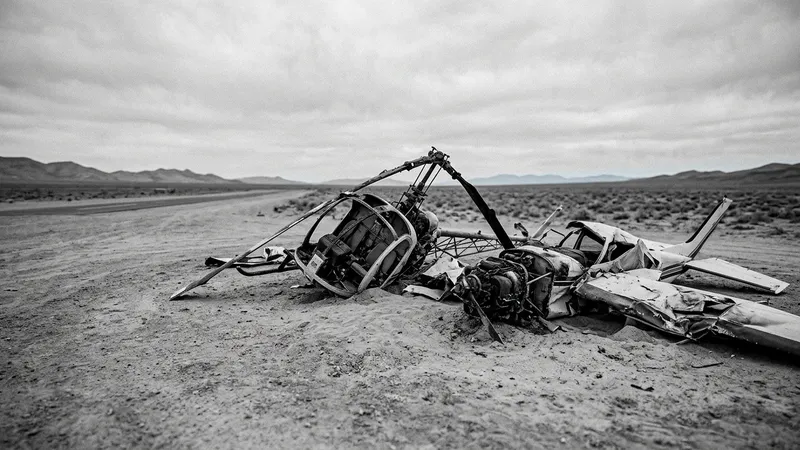
    New imagery indicates two U.S. Army MH-6/AH-6 Little Bird helicopters from the 160th Special Operations Aviation Regiment, known as the Night Stalkers, were destroyed at a forward improvised airfield in Iran. The imagery also shows two MC-130J Commando II transport aircraft demolished at the same site after they were unable to depart. The incident is tied to a rescue mission for a downed F-15E Weapon System Officer, according to the account accompanying the images.


    The location in the imagery was geolocated south of Isfahan, roughly 200 miles from Iran’s coastline. The photographs appear authentic and show burned-out helicopter wreckage positioned near the hulks of the C-130-family aircraft. The combination of aircraft types depicted points to a mission that relied on rapid, forward operations rather than established bases.


    Officials have not confirmed why the helicopters were destroyed, and the source material describes several possibilities. These include damage from enemy fire, insufficient time or space to load the helicopters onto replacement aircraft during a rapid extraction, or fuel-related constraints. One scenario described is that the Little Birds may have flown directly to the site and depended on the MC-130Js for refueling, leaving them stranded when the transports became incapacitated.


    The Little Birds were likely present to provide close air support and force protection, or to assist directly in extracting the downed aircrew member. The MH-6/AH-6 platform is described as highly deployable, with the ability to be offloaded from C-130 aircraft and made operational within minutes. Their appearance in the imagery is presented as evidence of fast planning and the use of specialized assets designed for short-notice missions.


    Destroying specialized aircraft in place is described as a standard procedure when there is a risk that sensitive equipment could be captured. The source material notes that such equipment can include sensors, communications gear, and defensive systems. In this case, the destruction of both the helicopters and the MC-130Js is framed as consistent with denying adversaries access to mission-critical technology.


    What remains unknown is the precise sequence of events that led to multiple aircraft being lost at the same forward site, including whether hostile action, mechanical issues, or operational constraints were decisive. The imagery provides a snapshot of the aftermath, but it does not, by itself, establish the cause. The incident nonetheless highlights the operational complexity of conducting a rescue mission deep inside Iran using aircraft intended for rapid insertion, support, and extraction.


    Share

    Related Articles

    About this story

    Atlas360 covers Global Affairs as part of a broader effort to give international readers fast, source-checked context on global affairs. Our newsroom monitors original reporting from wire services, accredited correspondents and verified eyewitness accounts, then re-summarises the most important facts in clear, plain-language English so that you can understand both what happened and why it matters.

    Every published article on Atlas360 is reviewed for accuracy, balance and timeliness before it reaches the homepage. When new information emerges — for example a correction from an official source, a casualty update, or a clarifying statement from a named spokesperson — we update the story in place and keep the original publication time so readers can track how a developing situation evolves.

    If you want to keep following Global Affairs, you can browse the related coverage at the foot of this page, subscribe to the Atlas360 newsletter for a daily roundup, or open the relevant topic page where every story we have published on the subject is listed in reverse chronological order. Reader signals from the community feed also shape which threads we keep reporting on.