Niger Military Quells Mutiny in Capital Niamey
Niger's military authorities announced control re-established in Niamey on August 30, 2026, after quelling a mutiny by renegade soldiers.
Lauren Collins ·
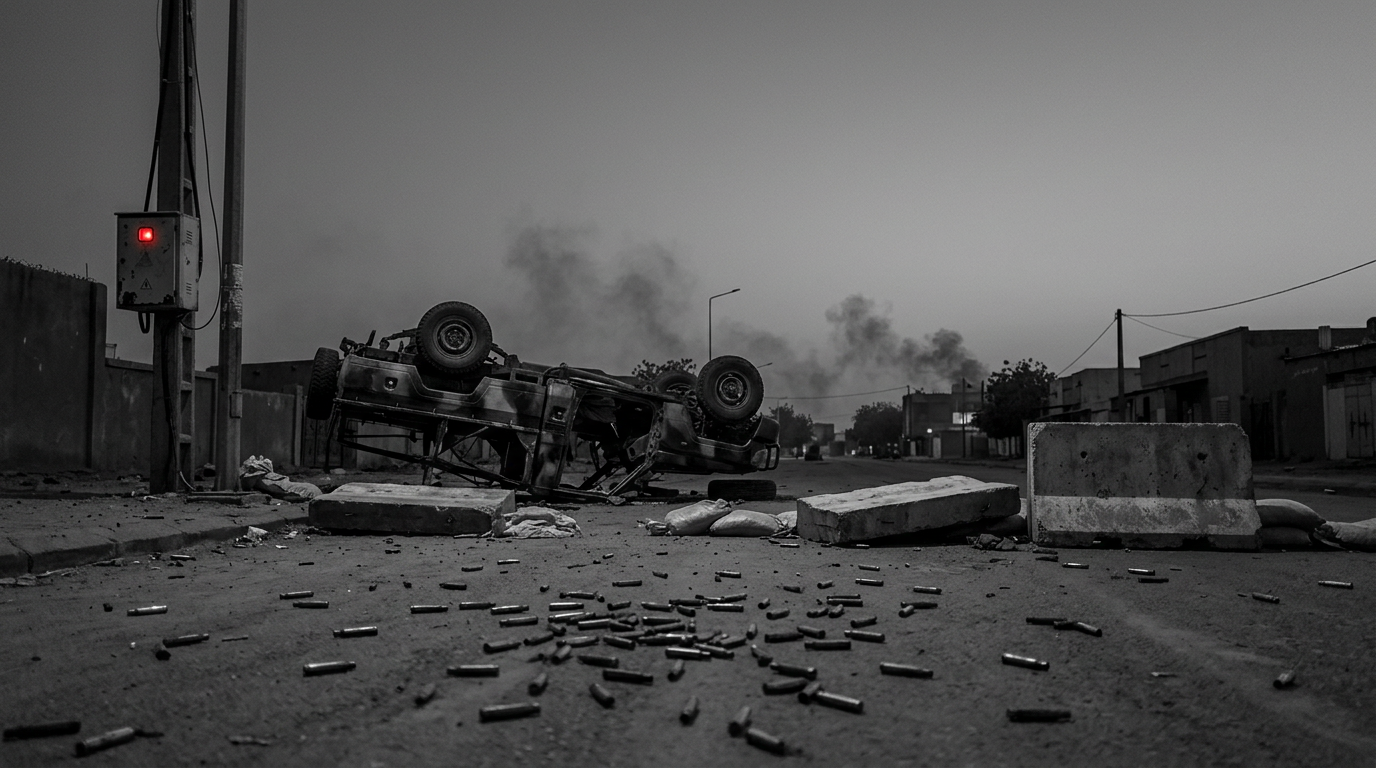
Nigerien military officials declared on August 30, 2026, that security forces have fully restored control over the capital city, Niamey, following an attempted mutiny. The uprising, reportedly initiated by disaffected soldiers, targeted key installations within the capital in the early hours of Saturday. This incident underscores ongoing internal stability challenges nearly three years after the current military leadership assumed power.
The insurrection commenced shortly after midnight, with renegade troops focusing their efforts on Base 101 at Diori Hamani International Airport, broadcaster, and the presidential palace. Reports indicated that the soldiers involved were primarily drawn from southwestern regions of the country, specifically Ouallam and Tera. These areas have experienced substantial military casualties in persistent confrontations with regional insurgent groups, a factor analysts believe contributes to internal military discontent.
Response and Stabilization Efforts
General Salifou Mody, the Defense Minister, confirmed that security forces successfully neutralized the uprising after several hours of intense combat operations. The swift response led to the containment and suppression of the mutiny, preventing a broader destabilization of the capital. This event highlights the precarious security situation within Niger, even as the ruling National Council for the Safeguard of the Homeland navigates complex geopolitical alliances.
Amidst the unrest, Russian Ambassador Viktor Voropaev stated that the Kremlin-backed Africa Corps had been requested to provide assistance in stabilizing Niamey. This request signals the deepening security partnership between Niger's military government and Russia, a shift that has seen the West African nation increasingly distance itself from traditional Western security partners. The pivot towards Russian support aligns with the broader strategy of the Alliance of Sahel States, which Niger is part of.
Persistent Security Threats
Despite these strategic realignments and the quelling of the latest mutiny, the Nigerien government continues to face formidable external and internal security challenges. The nation is contending with persistent threats from militant groups linked to al-Qaeda and the Islamic State in Iraq and Syria (ISIL). These ongoing conflicts, particularly in the regions where the mutineers originated, are seen by observers as a significant source of frustration among lower-ranking military personnel.
The recent mutiny, while contained, serves as a stark reminder of the underlying tensions and grievances within the armed forces. Such internal instability risks complicating the government's efforts to effectively counter the broader militant insurgency across the Sahel region. The long-term implications of these security dynamics on national stability and regional cooperation remain a critical area of concern for international observers.
Broader Context of Military Rule
The attempted coup comes almost three years after the current military government seized power, promising to address security woes and governance issues. However, the continuous struggle against militant groups and the internal dissent exemplified by this mutiny indicate that these challenges persist. The government's reliance on external partners like the Africa Corps also reflects the scale of the security landscape it faces, as well as its strategic choices in navigating international relations. The path forward for Niger will involve balancing internal military cohesion with effective counter-insurgency operations and geopolitical alliances.