NFL ends minority offensive assistant mandate, reframes program as best practice
The NFL ended its mandate for teams to hire minority offensive assistants, shifting from a funded requirement to a recommended best practice.
Mehmet Şahinoğlu ·
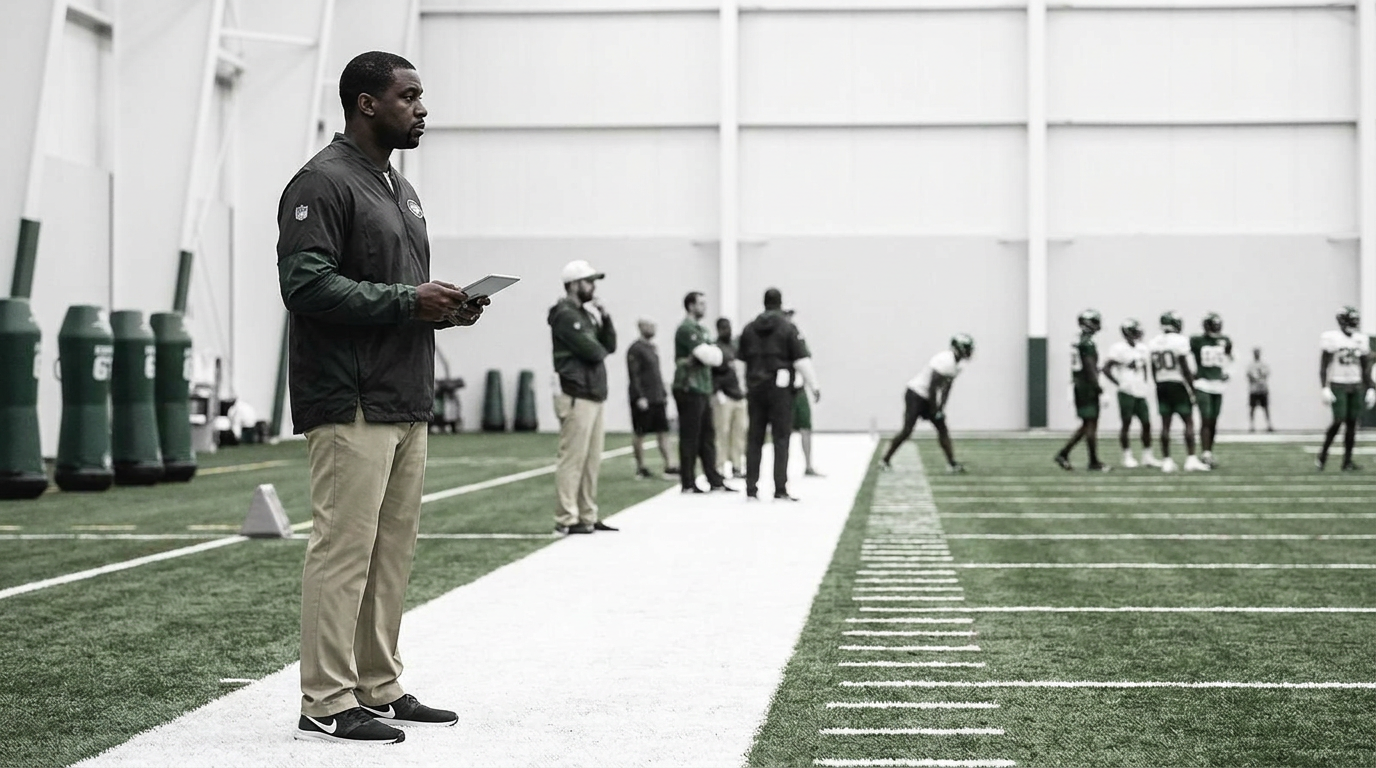
The National Football League ended its requirement that all 32 teams employ a minority offensive assistant ahead of the 2025 season, league officials said. The decision, taken this past winter, also ends the league’s partial reimbursement of salaries for coaches hired under the initiative. Officials framed the change as an evolution into a recommended best practice that clubs can choose to maintain and said it predates a recent subpoena from Florida Attorney General James Uthmeier.
Introduced in 2022 after former coach Brian Flores filed a lawsuit challenging league hiring practices, the mandate aimed to expand the pipeline of minority coaches in offensive roles that often lead to coordinator and head-coach opportunities. Under the resolution, each club hired a minority offensive assistant who would work closely with the head coach and offensive staff and contribute to game planning, with the NFL reimbursing clubs for half of those assistants’ salaries during the program’s initial period.
League officials said all 32 clubs complied, though the scope of responsibilities varied by team. Pittsburgh Steelers owner Art Rooney II, who chairs the NFL’s diversity committee, has described the outcomes as mixed, citing differing implementation across franchises. Some assistants worked in quarterback or game-planning rooms, while others were assigned broader duties across position groups. That variability complicated measurement of the policy’s effectiveness.
Jonathan Beane, the NFL’s senior vice president for league leadership and inclusion, said league funding was never intended to be permanent. He said the program continues without a mandate or reimbursements, with clubs encouraged to keep minority offensive assistant roles as part of their staffing strategies. In practice, teams can decide whether to retain or reconfigure these positions without league subsidy.
League reframes initiative, ends reimbursements
Mandate shifts to club-driven practice
Officials emphasized a shift from a centrally required and subsidized program to one integrated into club-level hiring. The change also removes the formal requirement that assistants have regular, direct contact with the head coach and offensive coordinator, though the league still urges meaningful involvement in offensive planning. Without reimbursement, clubs now bear the full cost of these roles.
The timing of the decision drew scrutiny after Uthmeier sought information about the NFL’s hiring rules and criticized diversity-related language on the league’s website. League officials said the mandate was already set to sunset before those inquiries. The broader Rooney Rule, which requires teams to interview diverse candidates for senior roles, remains separate from the offensive assistant initiative.
Origins in 2022 and early outcomes
Pipeline examples and uneven execution
The offensive assistant mandate was one pillar of a broader 2022 push to increase representation on the offensive side of the ball, long seen as a primary pathway to coordinator and head-coach positions. The structure emphasized day-to-day exposure to decision-makers and core offensive meetings, aiming to accelerate experience and networks for rising coaches.
League officials pointed to examples of coaches who entered through the program and later advanced. Kenneth “K.J.” Black launched his NFL career during the initiative and moved into a full-time offensive role soon after. Nate Scheelhaase later rose to an offensive coordinator position and interviewed for head-coaching jobs, developments the league cites as evidence of pipeline impact even as reimbursements end.
Officials also acknowledged uneven execution across teams. Some clubs embedded the assistant in the quarterback room, while others assigned a wider range of responsibilities. That variability informed the decision to replace central mandates with club-driven best practices that the league says it will continue to recommend.
Looking ahead to the 2025 season, teams must decide whether to sustain, expand, or reshape minority offensive assistant roles without league funding. The NFL is expected to keep monitoring staff demographics and hiring trends, with any future adjustments to diversity initiatives likely evaluated against how clubs implement these roles on their own.