NFL Owners Join Referee Contract Talks
NFL owners join referee contract talks this week as the league and NFLRA seek a new agreement after negotiations broke down two weeks ago.
Mehmet Şahinoğlu ·
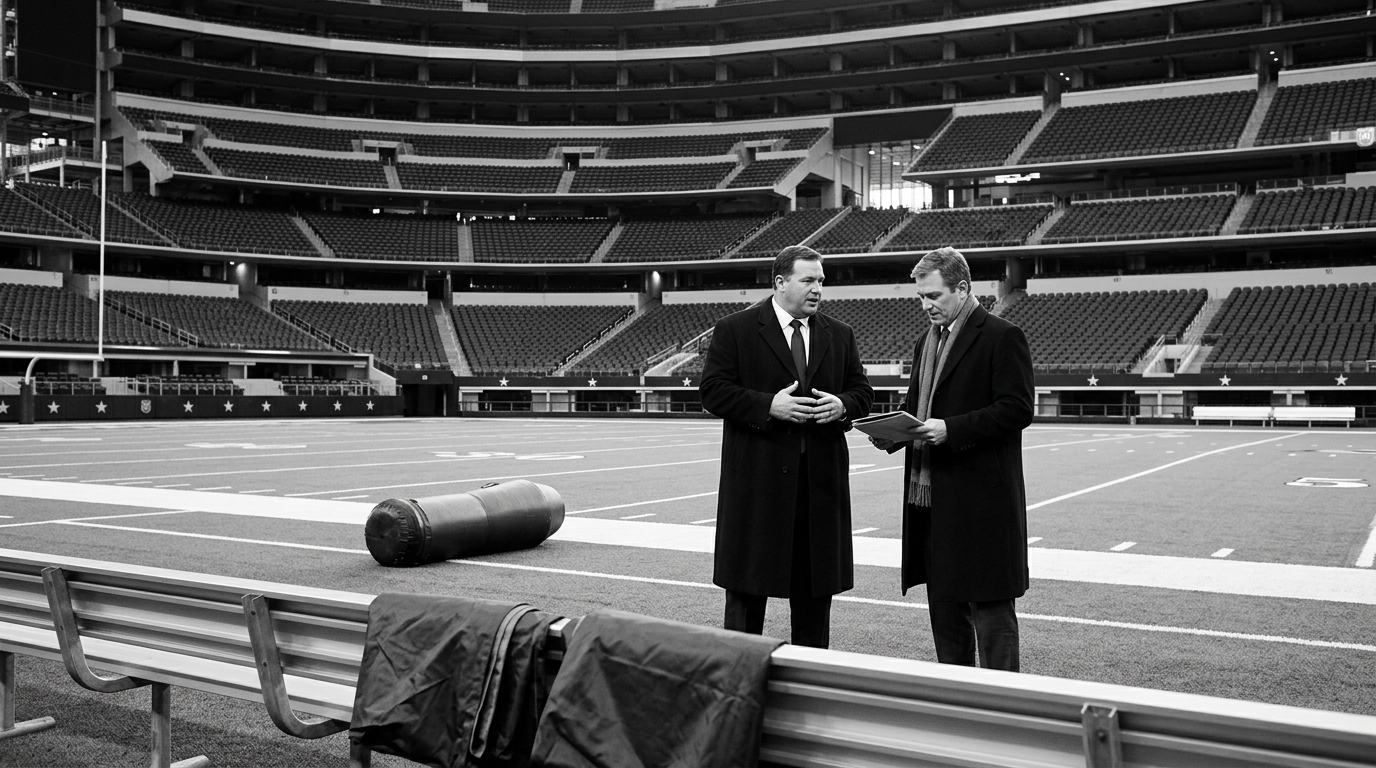
The National Football League (NFL) will bring team owners into negotiations with the NFL Referees Association (NFLRA) this week as the sides try to complete a new collective bargaining agreement for game officials. The move comes after the most recent round of discussions ended without a deal.
According to the NFLRA, talks broke down two weeks ago because the league’s negotiating group did not have enough authority to make final, binding decisions at the table. The prior session ended without an agreement, and the NFLRA said the league’s representatives were not able to commit the NFL to terms that would resolve outstanding issues.
In response, the NFL’s delegation is set to include several owners who sit on key league committees. The owners involved serve on the Management Council Executive Committee and the Competition Committee, according to the information provided. Their presence is intended to strengthen the league’s negotiating posture by ensuring that decision-makers with the ability to approve terms are directly involved in the discussions.
The league’s decision to add owners is framed as a direct answer to the NFLRA’s earlier concern about whether the NFL’s negotiating team could finalize an agreement. By expanding the delegation to include owners with committee roles, the NFL is seeking to remove a central obstacle cited by the officials’ union and to create conditions for progress toward a new contract.
These renewed talks are aimed at overcoming the impasse that emerged after the earlier breakdown. The immediate objective, as described, is to reach a new collective bargaining agreement covering the league’s officials, with the expectation that the enhanced representation will help move negotiations forward.
While the NFL and the NFLRA are returning to the table, the outcome of the discussions remains uncertain because the previous round ended without a resolution. What is clear from the NFLRA’s account is that authority and decision-making capacity were central points of contention, and the league’s updated approach is designed to address that specific issue.
Implications
Country Impact: In the United States, the NFL’s decision to include owners signals an effort to accelerate labor negotiations with officials by putting decision-makers directly at the table. The talks matter for league operations because the prior round ended without an agreement and raised questions about whether the league’s negotiators could finalize terms.
Industry Impact: For the sports industry, the development highlights how governance structures and committee leadership can shape collective bargaining dynamics. The inclusion of owners from the Management Council Executive Committee and the Competition Committee is positioned as a practical step to address the NFLRA’s stated concerns about negotiating authority.
Market Impact: From a market perspective, the focus is on operational continuity and the league’s ability to resolve labor matters efficiently after a recent impasse. The key uncertainty is whether the expanded delegation will be sufficient to produce a new collective bargaining agreement after the previous session ended without a deal.