Netanyahu rejects Trump’s 15-point Gaza framework
Netanyahu has rejected Trump’s 15-point Gaza peace framework, officials said, deepening differences over sequencing, withdrawal, and Hamas disarmament.
Atlas Newsdesk ·
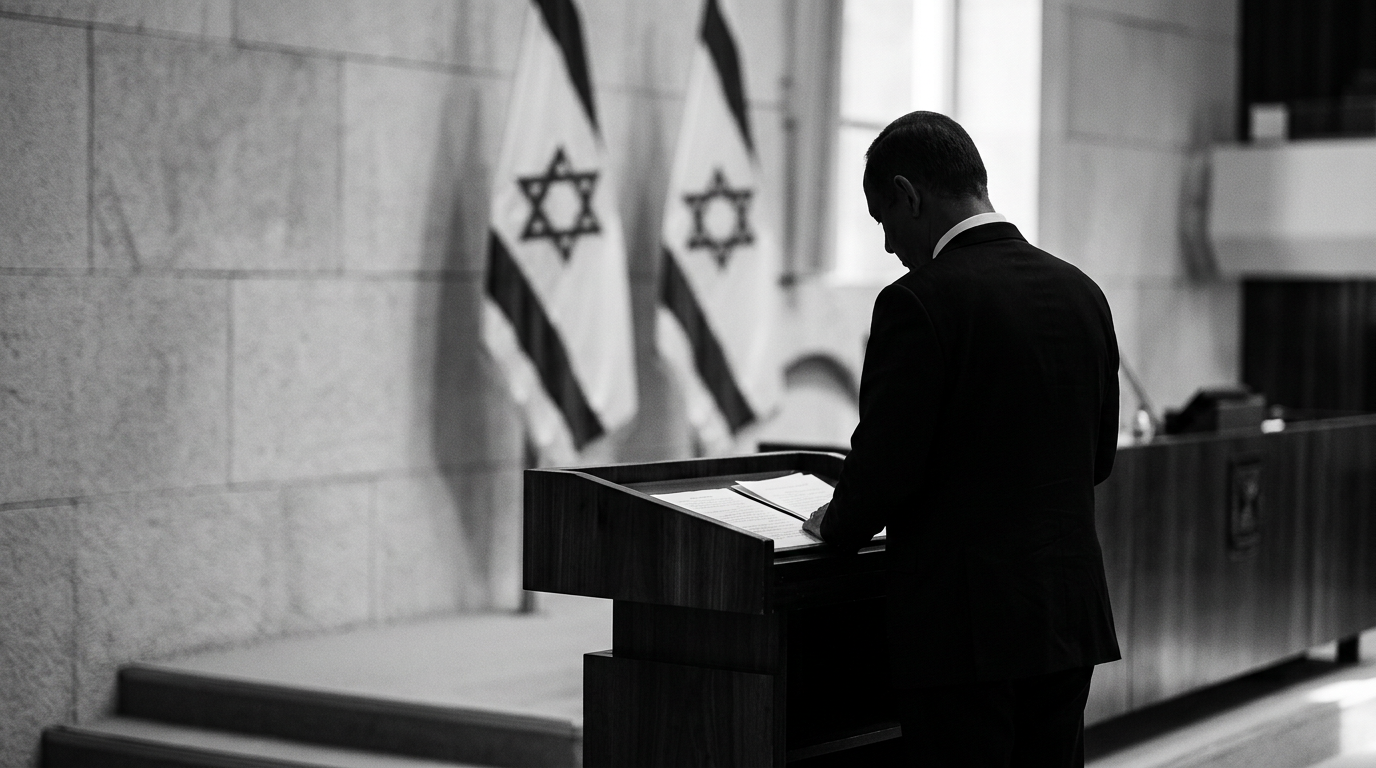
Israeli Prime Minister Benjamin Netanyahu has formally rejected a 15-point Gaza peace framework proposed by U.S. President Donald Trump, officials said, highlighting a growing divide over how the war could be brought to an end.
Officials described the U.S. proposal as a staged plan designed to move from immediate security steps toward de-escalation. Israeli officials, according to the source material, indicated they would block the approach before it could gain traction.
Netanyahu’s condition: no pullback without Hamas disarmament Israeli Prime Minister Benjamin The source material says Netanyahu’s position has not shifted: Israel will not withdraw from Gaza unless Hamas is fully disarmed. In this account, disarmament is not treated as one element to be negotiated during a wider transition. Instead, the Israeli government is described as placing disarmament as the required first gate before later phases can begin. The source material adds that, under such a structure, Israel would effectively control whether and when subsequent steps could proceed. That design would also place the timing of any phased drawdown under Israeli discretion, according to the source material. It notes that this could mean a pullback might be postponed without a fixed endpoint if Israeli authorities determine the disarmament requirement has not been met.
How the 15-point plan was meant to unfold
Officials said Trump’s proposal was presented as a Officials said Trump’s proposal was presented as a multi-part roadmap that combined security provisions, third-party involvement, and a step-by-step reduction of Israeli forces. The sequencing described in the source material begins with Hamas disarmament. From there, it moves into an international stabilization phase and then toward a gradual Israeli military pullback. The source material characterizes this as an attempt to establish an operational pathway from security measures to de-escalation. Netanyahu’s rejection, in the source material’s framing, reflects a different definition of what an acceptable end state would look like. The disagreement is not presented as a technical dispute over timing alone, but as a clash over prerequisites and control. Political constraints and limits on external leverage The source material also links the impasse to political pressures on both sides. It says the U.S. administration is seeking a diplomatic achievement that could be presented as evidence of American leverage.
At the same time, it says Netanyahu’s political survival is tied to avoiding arrangements that would transfer authority in Gaza to Palestinian or international bodies. Under that framing, the dispute extends into who would hold post-conflict governance and security decision-making power.
What remains unresolved after the rejection
Officials have not indicated, in the provided material, whether a revised proposal could narrow the gap between a phased transition design and Israel’s insistence that disarmament must come first. The immediate uncertainty is whether any alternative framework can advance after the proposed sequence was rejected outright by Israel’s leadership.