National Guard plans D.C. street force through Jan. 2029
The National Guard could remain in Washington through Jan. 20, 2029, under Pentagon estimates putting the D.C. mission near $1.4 billion.
Sophie McAlister ·
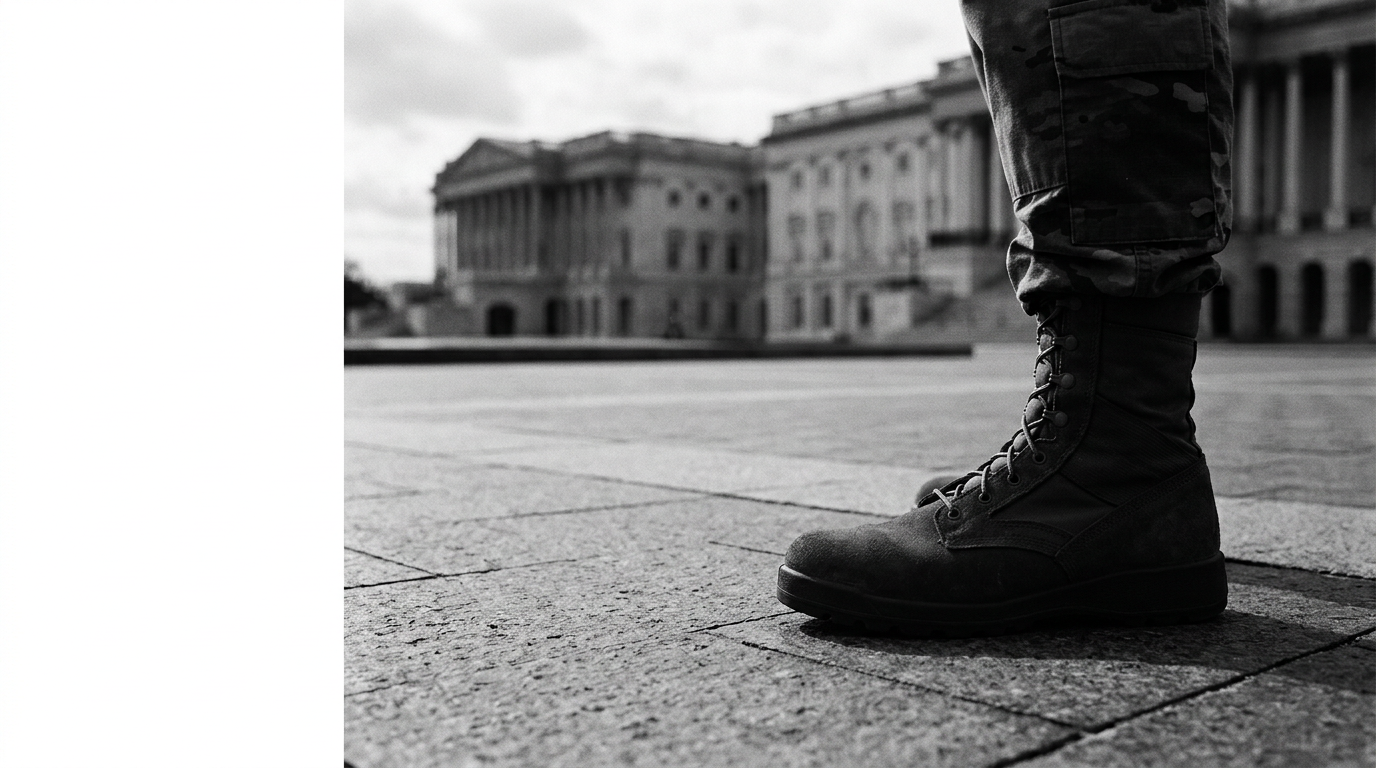
The National Guard could remain in Washington until Jan. 20, 2029, under Pentagon estimates that put the D.C. mission near $1.4 billion.
Budget documents described by Sen. Elizabeth Warren's office show the Pentagon seeking roughly $605 million for fiscal 2027 to cover pay, travel allowances and operations. The estimate then rises to $626 million for 2028, with another $198 million for the period ending Jan. 20, 2029.
The figures give Washington its clearest price tag yet for a military presence that has become routine around federal buildings, downtown corners and neighborhood corridors. They also sharpen a basic civic question for the District: whether public safety money should flow through a military deployment or through local policing and prevention programs.
A $605 million 2027 request
The troop count reached 4,622 as of Monday, according to the figures cited in the source material. Large groups came from Republican-led states, including 800 troops from Georgia and 492 from South Carolina.
The Pentagon estimates assume the force later falls to an average of about 2,500 after this summer's 250th anniversary events conclude. That drawdown matters because pay, travel, lodging and operating costs scale directly with the number of service members assigned to the city.
Dupont Circle rentals replace hotels
Housing has become one of the clearest cost pressures in the mission. Officials have moved some Guard members into short-term rentals in neighborhoods including Dupont Circle, saying those units cost about half as much as hotels.
Even with that shift, projected housing costs stand at about $4,055 a month for each troop. For a force measured in the thousands, lodging alone becomes a major recurring expense rather than a temporary administrative line.
Schwalb lawsuit challenges deployment
D.C. Attorney General Brian Schwalb has challenged the deployment in court, arguing that it risks normalizing the "use of military troops for domestic law enforcement." The lawsuit remains one of the main legal tests of how far the federal government can go in placing troops in the capital.
President Trump's officials have defended the Guard presence as a crime deterrent. Researchers at the Niskanen Center said in May that the deployment was not the reason violent crime declined over the prior year and argued that cheaper crime-fighting options exist, including investments in policing.
Brig. Gen. Leland Blanchard, who leads the D.C. National Guard, said Guard members have responded to about 800 medical emergencies. That figure points to a broader role on the street than visible patrols alone, even as critics question whether that role requires a military footprint.
If the force averages 2,500
If Congress funds the request and the force averages roughly 2,500, the D.C. National Guard would gain budget certainty for a multiyear domestic mission. The global macro mechanism would be budget allocation: federal dollars would stay attached to personnel, housing and operations in Washington rather than other defense or local public safety uses.
If lawmakers instead cut or delay the money, the Pentagon would face pressure to shrink the mission, move troops out of higher-cost housing or redefine duties. That path would push more responsibility back to local agencies and could reduce demand for short-term rentals serving the deployment.
If the courts restrict the mission, the effect would run beyond D.C. by setting limits on domestic troop use in public safety operations. The open questions are how Congress treats the 2027 request, whether the average force size actually falls after the anniversary events, and how Schwalb's lawsuit shapes federal authority in the capital.