NASA's Dale Reed Subscale Lab shifts aircraft R&D procurement toward modular digital twins
NASA's press release describes work at the Dale Reed Subscale Flight Research Laboratory using remotely piloted and autonomous subscale aircraft to mature…
Edward Mullen ·
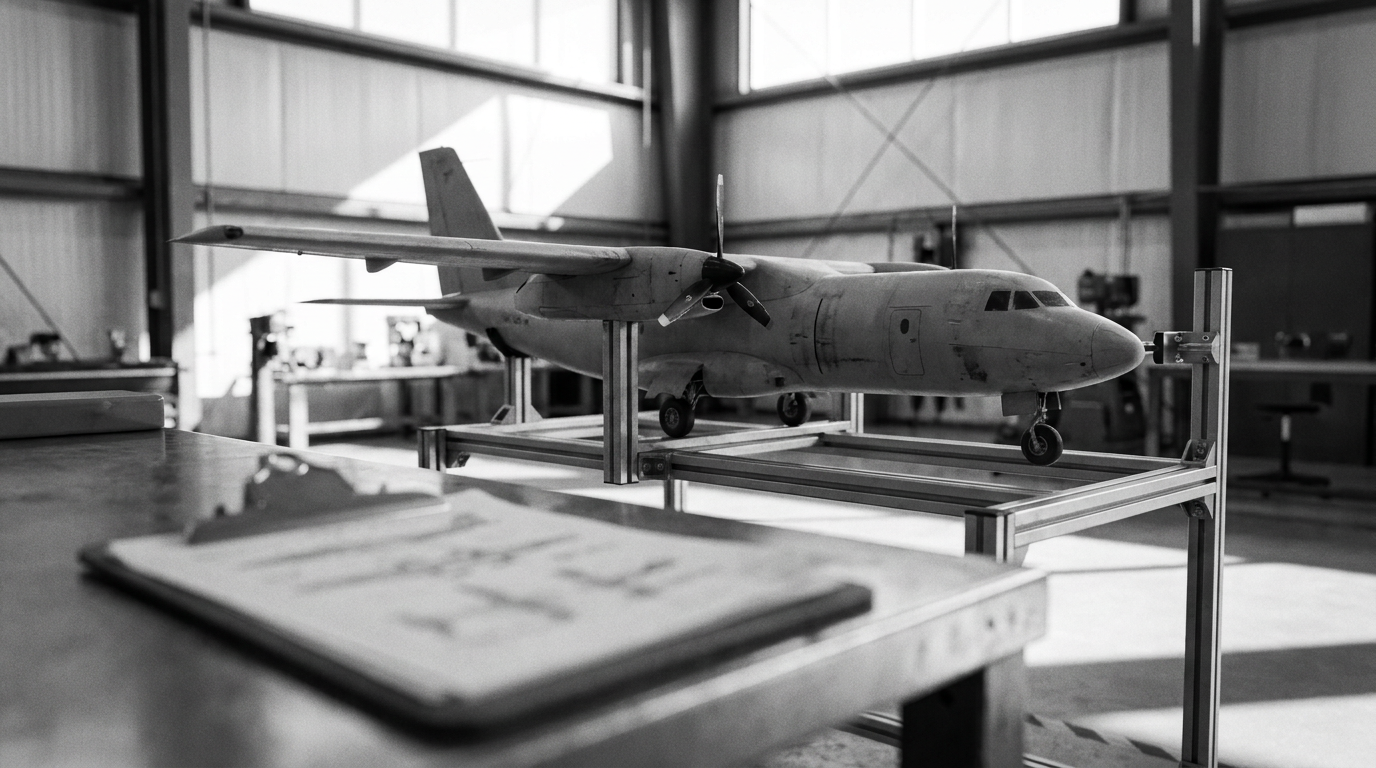
NASA published a news release describing activity at the Dale Reed Subscale Flight Research Laboratory in California that uses remotely piloted and autonomous subscale aircraft to "mature new" technologies and to reduce development risk. This is, so far, single-thread reporting — nasa.gov only, no independent confirmation. No one in the reported packet is on the record.
What NASA actually announced and where it lives in the process The release says the agency is "leveraging subscale aircraft testing to advance aerospace innovation and mitigate development risks," and locates the work at the Dale Reed Subscale Flight Research Laboratory, where remotely piloted and autonomous platforms are flown to exercise new components and concepts earlier than would be practical in full-scale programs. The write-up frames the activity as a way to mature technology readiness before committing to heavier, costlier physical prototypes.
This is a program description from an agency communications post, not an independent evaluation.
What subscale flights validate — and what they do not Subscale aircraft let teams prove aerodynamic concepts, control laws, sensor integration, and endurance envelopes in a fraction of the time and mass of a full-scale demonstrator. That lowers the barrier to multiple design iterations and decouples early risk discovery from large procurement commitments.
But the source does not claim subscale flights substitute for certification-focused full-scale testing: issues tied to structural loads, complex system-of-systems interactions, and certain manufacturing-process risks still require hardware representative of production units. The release omits a granular accounting of which certification risks remain unaddressed by subscale work.
Why procurement and org charts are the locus of change not just engineering choices Shifting more validation to subscale and digital-twin loops changes who signs the purchase order. Instead of a single large full-scale prototype line item handled by procurement for airframe manufacturing, program managers can split spend into modular contracts: simulation and digital-twin software, small-batch subscale airframes, sensor suites for bench and flight, and autonomy-integration services.
That produces a different vendor mix and creates a procurement workflow that favors shorter, repeatable buys over a single large bespoke build — in other words, an org-chart consequence where systems integration and model-validation teams gain earlier procurement authority and larger influence over program milestones. The NASA post itself presents the subscale facility as operational capacity that enables this mix, but it stops short of mapping contract types or estimated budget reallocation.
The skeptical read: safety, certification, and the limits of modular validation The obvious counter is that regulators and legacy primes will insist on representative full-scale hardware for any safety-critical demonstration tied to certification. Subscale testing can show that a concept is promising; it cannot replicate production manufacturing defects, fatigue over service life, or regulatory paperwork.
The source does not confront these limits, and a reasonable critic would argue the communications framing overstates the degree to which subscale work reduces the need for subsequent full-scale investment. That objection is material: if certification retains its current requirements, procurement will only be modularized in the very earliest phases, not across the entire development lifecycle.
What this changes for manufacturers and suppliers in the coming months For prime contractors, avionics vendors, and specialized fabricators, the near-term change is practical: expect more RFPs for short-run subscale assemblies, digital-twin integrations, and autonomy stacks rather than single long-lead full-scale prototype orders. That shifts negotiating leverage toward suppliers who can deliver iterative hardware-software bundles and toward system integrators who bridge simulation and flight test.
The NASA release signals capacity and intent but omits cost comparisons and explicit procurement guidance, leaving programs and their contracting officers to define how much spending will migrate.
Observable signals that would prove this read wrong or right Watch for three concrete indicators in the coming months: whether NASA and other program offices publish procurement solicitations that favor subscale or digital-twin line items over full-scale prototype buys; whether prime contractors publicly redefine milestone gate criteria to accept subscale-validation artifacts as sufficient for early funding tranches; and whether agency communications expand from descriptive lab activity to formal procurement policy changes that reclassify what constitutes a "prototype" for budgeting. If those signals do not appear and instead large bespoke prototype buys persist, the procurement shift is likely only rhetorical; if they do, contracting officers and supplier strategies will need to adapt.
The NASA news release is a clear statement of capability and intent from a high-profile federal lab; it is, however, a communications piece rather than a procurement directive or peer-reviewed study. Its practical impact will be decided in contracting offices and prime-program milestones, and the release leaves the most consequential questions — explicit cost trade-offs and the categories of residual technical risk — unanswered.