Mexico gas imports still supply 75% as demand climbs
Mexico gas imports still cover 75% of 9 bcfd demand as a $42 billion power plan adds 32 GW, including 10 GW of gas-fired capacity.
Atlas Newsdesk ·
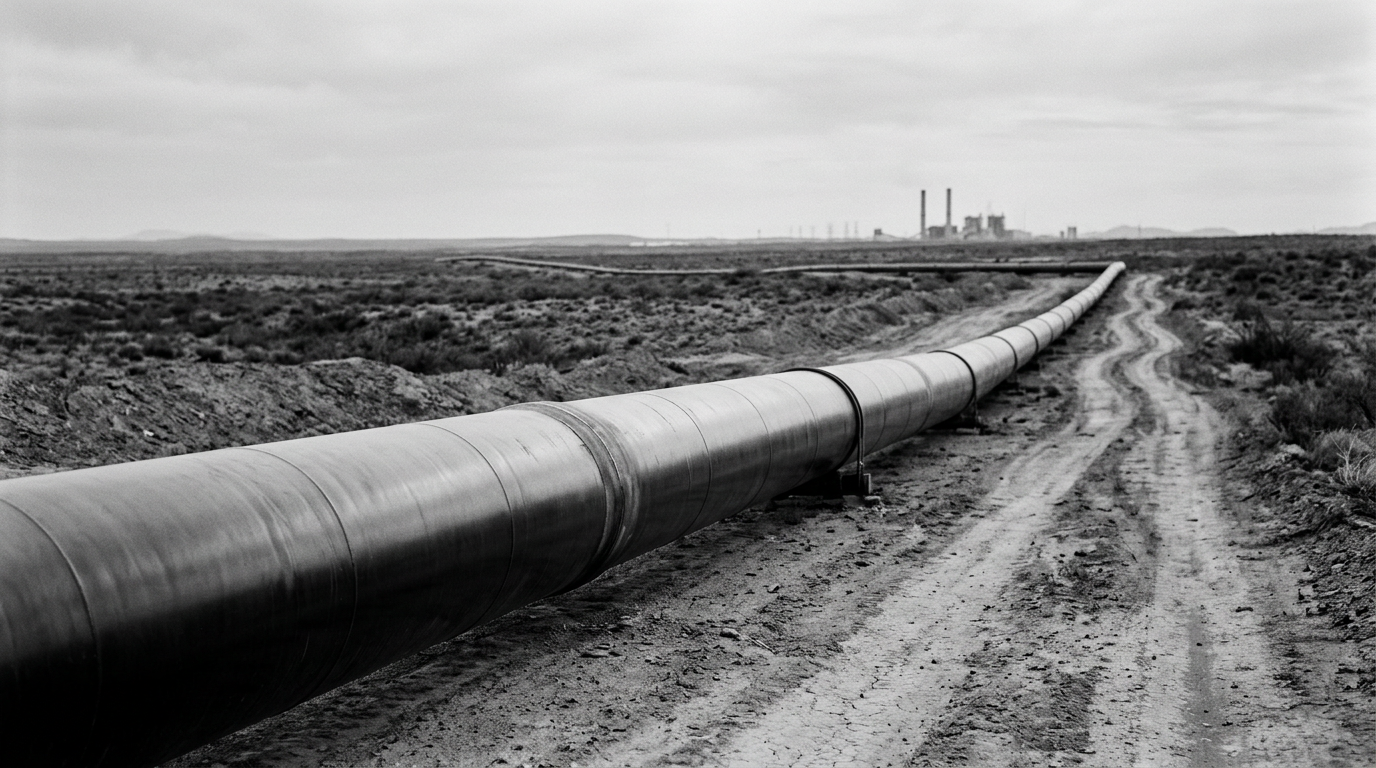
Mexico is still meeting most of its natural gas needs with supply from the United States, even as electricity demand and power-sector expansion plans point to higher overall fuel use. Officials and company targets outlined in current planning documents have not yet shifted the country away from this reliance.
U.S. deliveries currently cover 75% of Mexico’s gas demand, which is cited at 9 billion cubic feet per day (bcfd). That level of dependence leaves Mexico exposed if cross-border pipeline flows tighten at the same time power needs increase, according to the figures and risks described in official plans.
Power buildout leans on gas and renewables
The government has committed $42 billion to expand national power capacity by 32 GW. Within that program, 10 GW is planned for new gas-fired power plants, while the rest of the capacity is slated to come from renewable energy sources.
Officials describe the approach as a balance between dispatchable generation and new supply that does not add to fuel requirements. Even so, the size of current gas imports means the gas portion of the expansion remains closely tied to U.S. pipeline supply under the demand levels cited in planning.
Pemex output target would not eliminate imports
State-owned Pemex has set a to lift domestic gas production to 4 bcfd by 2030. Based on the demand level referenced in official planning, that target would still leave Mexico short of self-sufficiency and unable to fully remove its import requirement.
United States
The gap matters because the planned addition of gas-fired capacity is designed to support system reliability. As a result, the pace and scale of domestic supply growth are directly relevant to how much the power system continues to rely on cross-border gas flows.
Fracking restrictions narrow unconventional options
Mexico’s ability to expand unconventional gas supply is constrained by a federal ban on hydraulic fracturing in the southern Tampico-Misantla basin. Officials cite population density, opposition from indigenous communities, and the protection of freshwater aquifers as key concerns behind the restriction.
Under current policy, unconventional development is limited to northern basins where saltwater aquifers are present. Even in those areas, activity would be conditional on the introduction of independent environmental and seismic monitoring systems, which officials say would be required before development could proceed under the stated framework.
Security, costs, and regulation add uncertainty Officials also point to operational hurdles in northern basins, including risks linked to organized crime. Other cited challenges include potential regulatory friction with opposition-led state governments and the high capital expenditure needed for wastewater treatment and reinjection.
These execution issues intersect with Pemex’s financial position, which is described as constrained by a significant debt load. Officials also note a geological and strategic constraint: keeping Tampico-Misantla off limits reduces Mexico’s options for developing domestic shale oil reserves.
Taken together, the planning figures and policy limits leave uncertainty over how quickly domestic supply can rise to match the scale of power additions, while the country’s current import share keeps U.S. pipeline flows central to Mexico’s gas balance.