Meta AI spending drains cash flow despite record revenue
Meta AI spending faces sharper scrutiny after record revenue came with weaker cash flow, lower profit and guidance that failed to reassure investors.
Amira Hassan ·
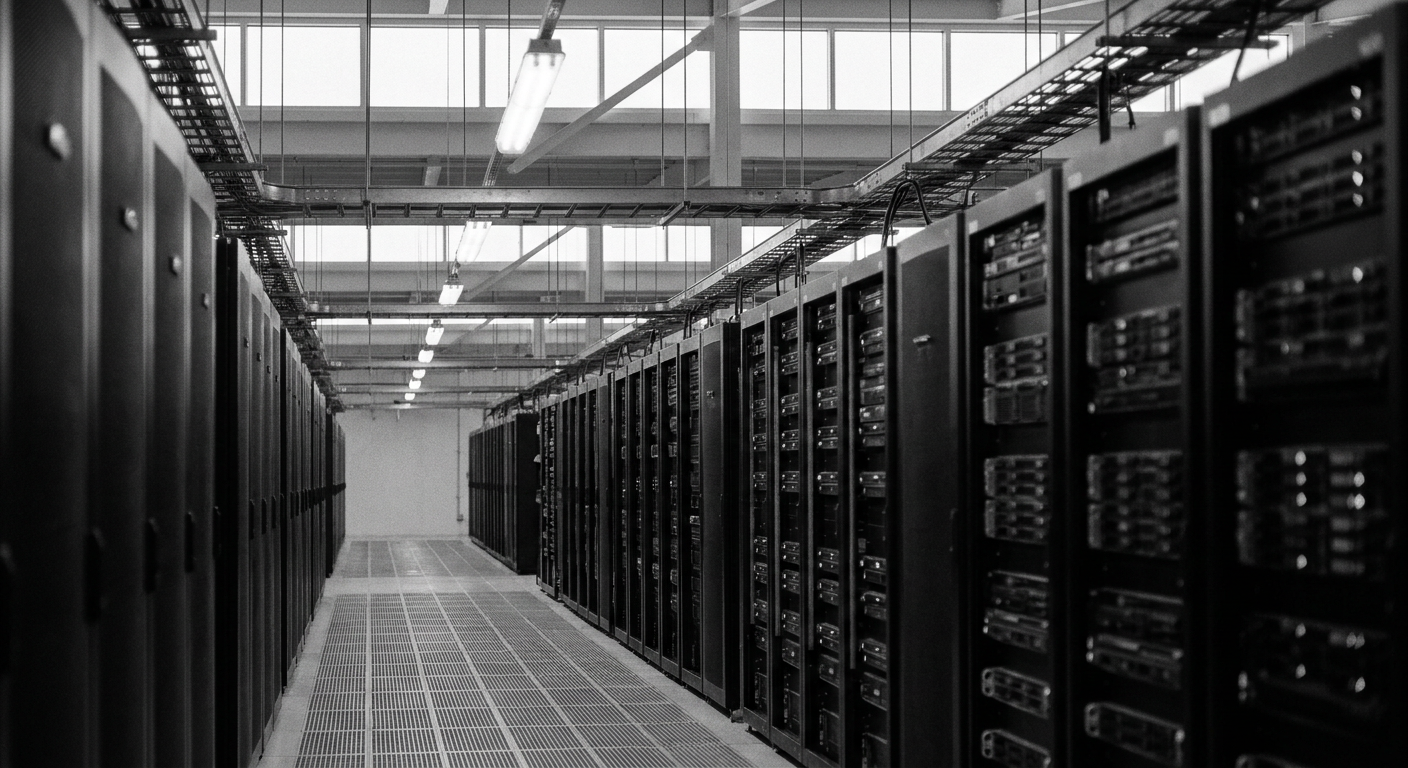
Meta AI spending rattled investors after record second-quarter revenue failed to offset worries over cash flow, guidance and data-center costs.
Meta Platforms shares fell around 10% in after-hours trading after the company’s earnings call left investors without the detailed spending and monetization answers they wanted. The reaction showed that sales growth alone is no longer enough to settle concerns over the scale of Meta’s artificial intelligence build-out.
Record sales meet cash pressure
The company said second-quarter revenue reached $60.8 billion, up 28% from a year earlier. Net income was $15.8 billion, but the figure was below analyst expectations and down 14% from the prior-year period.
The sharper signal came from free cash flow. Meta generated more than $12 billion in free cash flow in the first quarter, but that measure fell to less than $784 million in the second quarter, remaining positive even though analysts had expected it to turn negative.
That compression put a brighter spotlight on the cost of servers, data centers and other infrastructure tied to artificial intelligence. Investors are weighing whether Meta’s core advertising business can keep funding the build-out without putting more pressure on earnings quality.
Capex floor rises to $130 billion
Meta also lifted the lower end of its annual capital spending outlook. The company now expects at least $130 billion in capital expenditures this year, up from an earlier minimum of $125 billion, while the upper end stayed at $145 billion.
The change was modest in percentage terms but important for investor psychology. It confirmed that Meta is still leaning into infrastructure investment at a time when shareholders are asking when those assets will produce measurable returns.
Chief Executive Mark Zuckerberg told investors the company has received “quite a number of offers” from outside companies seeking to buy unused computing capacity at a premium. He said Meta’s priority is to keep that capacity for internal projects rather than sell it for near-term profit.
Zuckerberg framed the decision as a trade-off between proving demand for compute and protecting Meta’s long-term AI ambitions. “It’s not like you don’t want to only do long-term things and not kind of prove the markets out that exist in the near term,” he said. “But I also think it would be foolish to basically just sell all the compute and take a short-term profit.”
Guidance leaves investors unconvinced
The company’s current-quarter revenue outlook added to the pressure. Meta said sales for the three months ending in September are likely to land between $61 billion and $64 billion, compared with analyst expectations of roughly $63 billion.
The midpoint of that range sits below the forecast investors had been using as a benchmark. For a company spending at such scale, even a slightly softer guide can raise doubts about whether growth is accelerating fast enough to absorb higher infrastructure costs.
The direct effect is clearest for Meta itself: management must show that artificial intelligence can improve advertising performance, engagement or new product revenue before spending begins to look open-ended. For the broader technology sector, the results reinforce a tougher market test for AI investment, where capital plans are judged against cash generation rather than ambition alone.
If Meta converts its computing capacity into stronger ad targeting, higher user engagement or paid AI services, the company could defend its spending and support broader demand for chips, cloud infrastructure and data-center power. If costs keep rising faster than monetization, Meta may face pressure to slow capital spending, sell more excess compute or accept lower free cash flow, which would weigh on AI suppliers and add caution to global technology investment.