
Meloni distances from Trump after Iran war fallout
Meloni distances from Trump after the Iran war, as Italy blocks bomber refueling and faces energy shocks, weaker growth and political backlash.
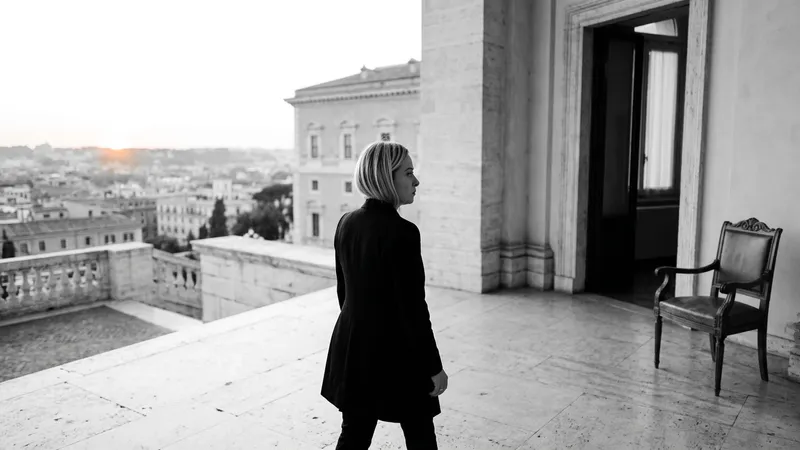
S. -Israeli war in Iran, marking a visible shift in how Rome is positioning itself internationally. The change was underscored on April 5, 2026, during Meloni’s trip to the Gulf region, when she said Italy needed to speak up when it disagreed and added, “When we don't agree, we must say it. And this time, we do not agree,” referring to the conflict.
The split followed a decision taken a week earlier, when Italy refused to allow U.S. bombers to refuel at a military base in southern Italy. Together, the public statement and the operational restriction signaled a more cautious approach toward cooperation linked to the Iran war, even as Italy remains a key U.S. ally in Europe.
Before the conflict, Meloni had sought to cast herself as a central European channel to Trump. That approach was reinforced by her being the only European leader invited to Trump’s January 2025 inauguration, and by her subsequent April 2025 visit to the White House. The Iran war, however, has put that strategy under strain and has made the political costs of close alignment more visible at home.
Italian public opinion has shifted sharply. Positive views of Trump fell from 35 percent to 19 percent, a decline attributed largely to the war’s economic effects, including surging energy prices. Domestic politics also reflected the pressure: a recent referendum on judicial reform, widely read as a proxy vote on Meloni’s pro-Trump posture, saw 61 percent of voters aged 18–34 reject her proposals.
The economic backdrop is particularly sensitive for Italy because of energy exposure. Italy is Europe’s second-largest natural gas consumer and depends on the fuel for about 40 percent of its energy needs. The conflict has disrupted global energy flows, with roughly one-fifth of the world’s energy exports reported stalled in the Strait of Hormuz, amplifying price pressures that feed into household costs and industrial inputs.
Institutions have begun to reflect the deterioration in their projections. The Bank of Italy revised down its economic growth forecast to 0.5 percent for both 2026 and 2027. Separately, Italy’s national statistics institute reported that the country’s deficit has moved above the European Union’s 3 percent limit, a development that can constrain fiscal room ahead of upcoming elections.
How long the political and economic effects persist remains uncertain, including the duration of the energy disruption and the extent of any further policy divergence between Rome and Washington. For now, Meloni’s comments and Italy’s operational decision on refueling have become the clearest markers of a recalibration driven by the Iran war’s domestic and market consequences.
Implications
Country Impact: Italy’s stance signals a more cautious alignment with Washington as the Iran war’s economic effects hit households and industry. With the deficit above the EU’s 3% limit and growth forecasts cut to 0.5% for 2026 and 2027, fiscal flexibility is tighter ahead of upcoming elections.
Industry Impact: Energy-intensive sectors face heightened exposure as global supplies are disrupted and prices rise. Italy’s dependence on natural gas for about 40% of its energy needs makes domestic costs and competitiveness more sensitive to external shocks.
Market Impact: The reported stalling of about one-fifth of the world’s energy exports in the Strait of Hormuz underscores a key global chokepoint risk for energy markets. Italy’s downgraded growth outlook and deficit position add to investor focus on European fiscal constraints and energy-driven inflation pressures.
More stories
- Burnham says Brexit vote faced Russian meddling in 2016
- Russian strikes hit Ukraine plants after Trump ceasefire statement
- Saudi flights divert after Dammam airport targeted
- US said to threaten Ukraine weapons, intelligence aid
- Riyadh airport hit again as Trump weighs US role
- Houthis hit Riyadh airport after 12 killed
- Assam BJP courts Indigenous Muslim voters ahead of vote
- Trump says China helped drive Iran ceasefire talks
- Gulf Industry Under Fire Amid Escalating Conflict
- Pakistan Urges US-Iran Dialogue Amid Gulf Crisis