FIFA orders World Cup venues to cover commercial stadium names
FIFA has mandated the obscuration of commercial stadium names and branding at World Cup host venues to prioritize official tournament sponsors.
Mehmet Şahinoğlu ·
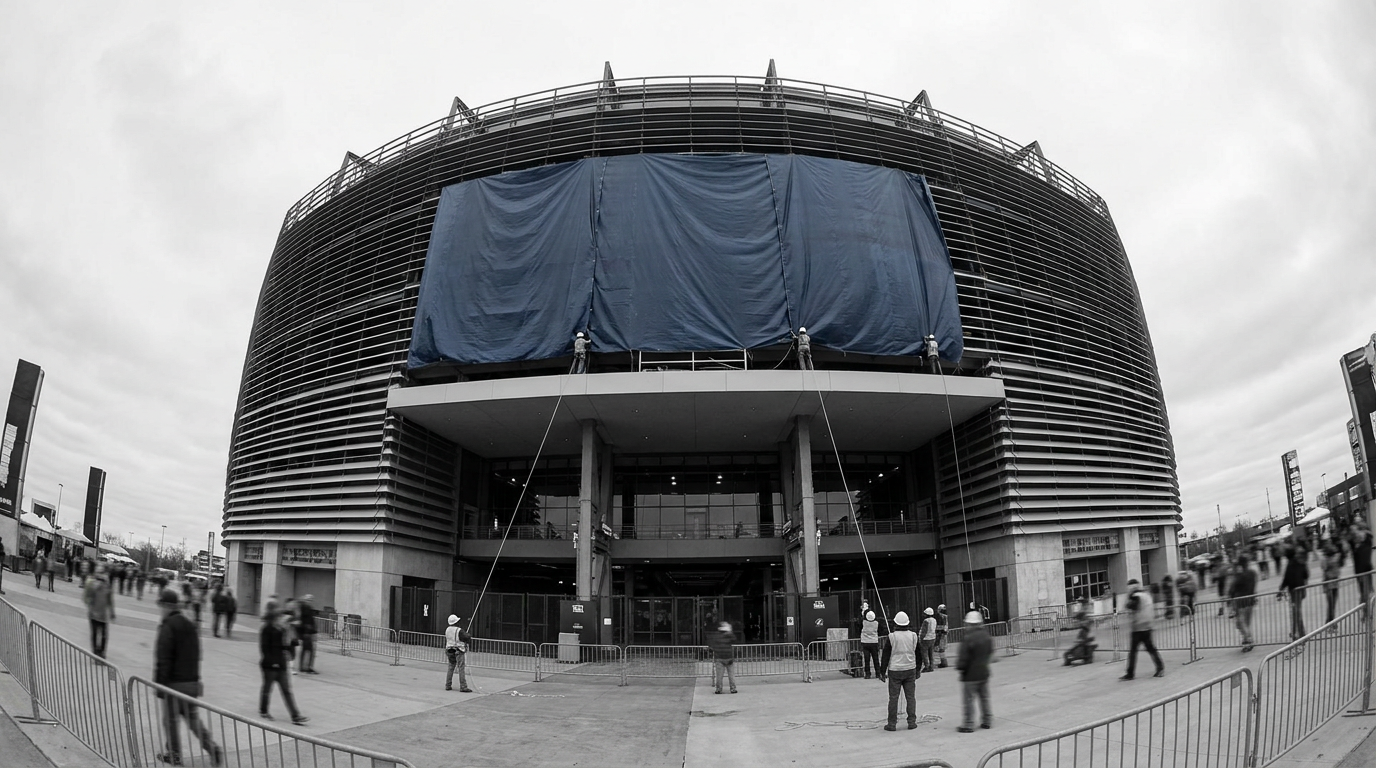
FIFA has instructed World Cup host venues to obscure commercial stadium names and any non-tournament sponsor branding during matches, a policy that was visible at Levi’s Stadium in Santa Clara, California, when it staged its first World Cup match on Sunday. The directive reflects FIFA’s long-standing commercial model, which limits in-stadium exposure to the tournament’s official partners.
Venue operators are required to remove or cover signage that could be interpreted as advertising for companies outside FIFA’s sponsor roster. In official match presentation, venues are typically referred to by their host city rather than by commercial stadium names.
In Santa Clara, the stadium’s naming-rights partner acknowledged the change publicly on social media. The company posted an image showing the logo above the scoreboard covered and joked about welcoming visitors to a “beautiful [redacted] stadium,” highlighting how unfamiliar the rule can appear to local fans accustomed to branded venue identities.
The same restrictions apply across the 11 NFL stadiums scheduled to stage World Cup matches. As the tournament proceeds, host operators are expected to apply the same standards consistently, both in-stadium and in broadcast-facing areas that might otherwise display non-partner branding.
FIFA branding standards protect sponsor exclusivity
FIFA’s stadium-branding rules are designed to prevent non-partner companies from receiving high-value visibility during the competition. The requirement can extend beyond a stadium’s exterior name to include covering or removing interior signage and other branded elements that would normally be prominent on game days.
For host venues, the result can look unusual, particularly in markets where stadium naming rights are a central part of the local sports economy. FIFA’s approach is consistent with the tournament’s broader commercial presentation, which prioritizes official partners for in-venue branding exposure.
Hosting obligations include surface and scheduling demands
The conditions for hosting also extend into venue operations. Stadium owners must comply with FIFA requirements such as installing a FIFA-quality natural grass playing surface for the tournament window. Venues are also expected to pause other events for a period of weeks so the stadium can be dedicated to World Cup operations.
Those operational demands can affect scheduling at multi-use NFL facilities that regularly host concerts and other large events. Attention will turn to how other host venues manage the same branding changes and operational constraints as more World Cup matches are staged in U.S. NFL stadiums.