Kuwait Petroleum Corp. HQ Hit by Drone Strike, Fire Erupts
Kuwait Petroleum HQ was hit by an unmanned drone, sparking a fire and full evacuation; key details on damage and casualties remain unclear.
Atlas Newsdesk ·
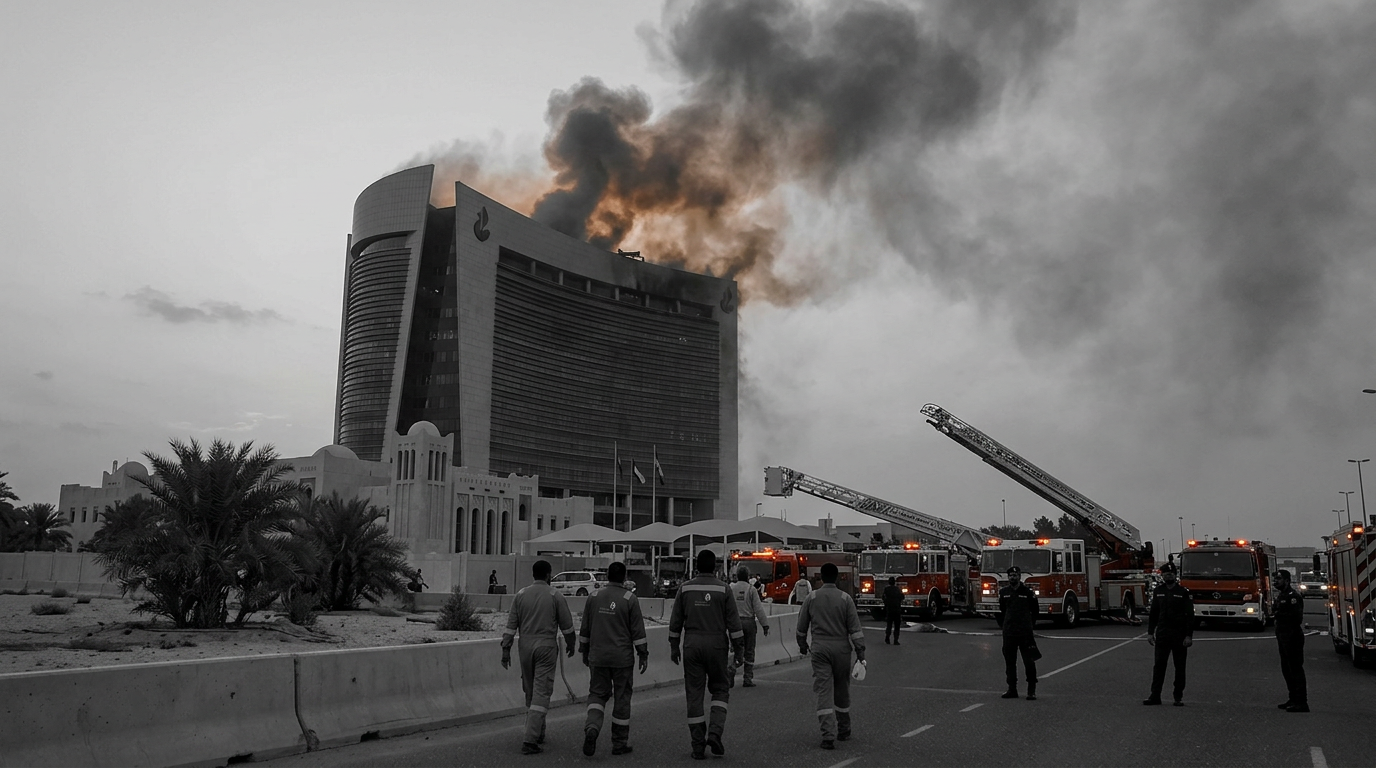
A fire broke out at the headquarters of Kuwait Petroleum Corp. after the site was struck by an unmanned drone, the company said. Kuwait Petroleum Corp. reported that all personnel inside the building were fully evacuated. Firefighting teams were sent to the location to contain the incident.
The headquarters is a key administrative center for Kuwait’s energy sector because it also houses the emirate’s oil ministry. That dual role makes the site both an operational coordination point and a politically sensitive location. The company’s statement confirmed the evacuation and the dispatch of emergency responders, but it did not provide further operational detail.
Several critical facts were not included in the available information. There were no specifics on whether anyone was injured or killed, how extensive the damage may be, or how the drone reached the building. The material also did not state the exact time the strike occurred, how large the fire was, whether any systems were impaired, or whether the incident caused any wider interruption to energy-sector operations.
The same account described the strike as part of what it called an “Iranian-led” campaign aimed at vital infrastructure in Persian Gulf states. However, the provided material also noted that independent confirmation of that attribution was not available within the current facts. As presented, responsibility remains unclear based on the information supplied.
According to the same account, the incident follows earlier aerial attacks on Kuwait’s Mina Al-Ahmadi and Mina Abdullah refineries. It also said Kuwait’s international airport has been repeatedly attacked, portraying a broader pattern of pressure on economic and transportation assets. The current incident was framed as an attack on Kuwait’s energy administrative core, even though it was not described as a direct strike on production facilities.
For global markets and policymakers, the event highlights the importance of continuity planning and security for energy-related sites, including administrative hubs that support decision-making and emergency coordination. The presence of both Kuwait Petroleum Corp. and the oil ministry in the same building underscores how an incident at a single location could complicate coordination during a response.
At the same time, the lack of detail on casualties, damage, and operational impacts leaves uncertainty about the immediate consequences for Kuwait’s energy administration and any knock-on effects.