Klebsiella preprint claims OMVs carry NDM-7, exposing a surveillance gap for labs
A bioRxiv preprint reports that Klebsiella pneumoniae exports functional NDM-7 via outer membrane vesicles, degrading imipenem and cefiderocol outside the…
Edward Mullen ·
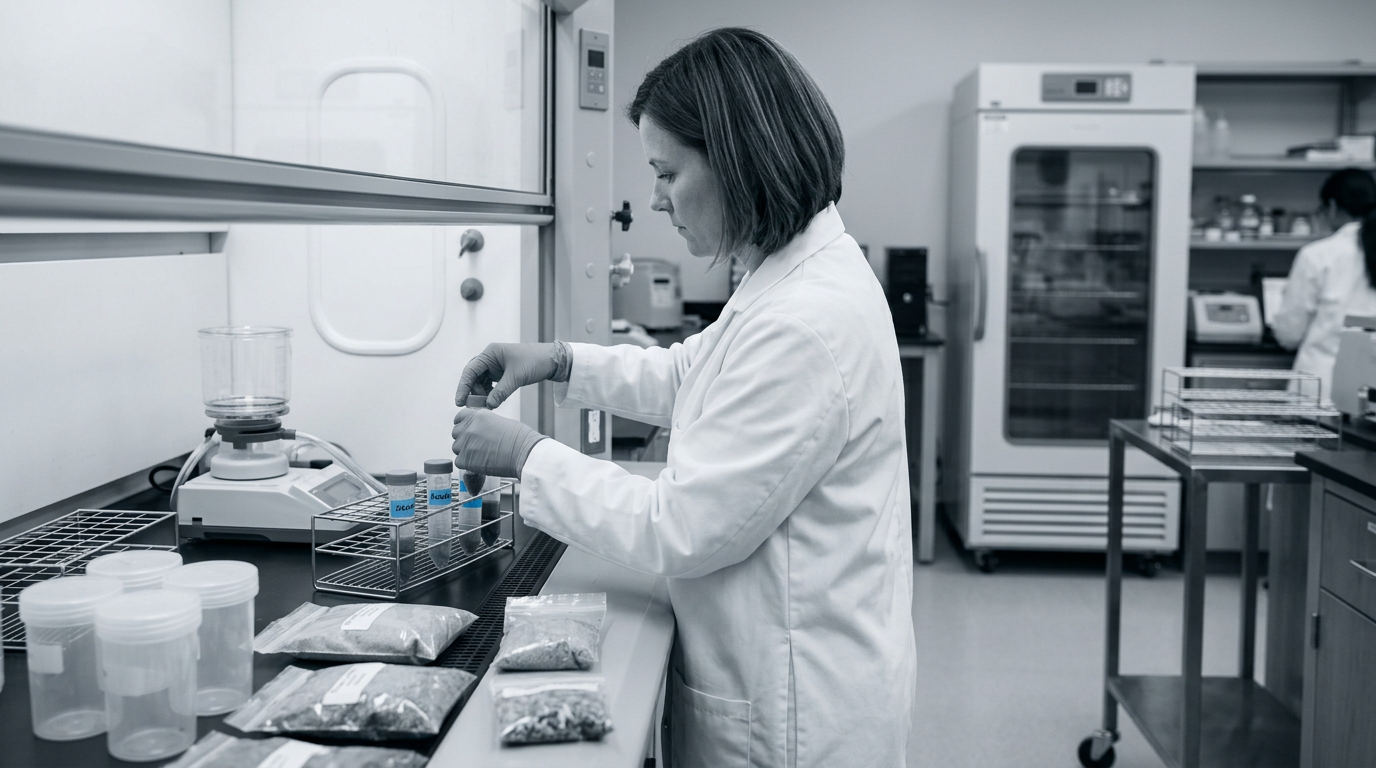
A clinician grappling with a resistant Klebsiella pneumoniae infection currently assumes the battle occurs within the patient, confined to cultured bacteria. However, new research suggests a formidable adversary may already be circulating in the hospital environment, independent of live cells. This shift from organism-centric detection to widespread, real-time environmental screening of antibiotic resistance genes heralds a new era for biosecurity.
OMVs move resistance outside the cell, beyond current assays The headline result rests on controlled lab assays — not field data Because the study is a preprint, its claims should be treated as preliminary. The summary indicates activity against imipenem and cefiderocol, but not how that activity scales across concentrations, matrices, or time outside controlled conditions.
Without peer-reviewed baselines that compare OMV-mediated degradation to cell-associated enzyme under clinical workflows, and without field measurements in wastewater or built environments, the external validity remains unproven. The result’s importance is plausible and serious — and exactly why replication, quantitation, and stress-testing across conditions matter before policy moves.
Why clinic-only surveillance misses a growing reservoir
A fair objection: will this matter outside the dish Skeptics will argue that OMV-borne enzymes could dilute rapidly, bind to substrates, or lose activity in complex fluids, rendering real-world impact marginal. They’ll note that, absent quantitative kinetics across realistic concentrations and temperatures, the policy argument for redirecting surveillance budgets is premature.
Those are appropriate demands of a preprint; the point stands that the paper nominates an out-of-band resistance pathway that existing clinic-first systems are poorly equipped to detect if it does matter.
Follow the data to the environment: what changes for labs Procurement and the future of work in infection control What this preprint is not saying — and why it still matters The study surfaces a mechanism, not a program. It does not outline how to validate OMV-mediated resistance in real-world plumbing, how to set public health thresholds for action, or how to regulate building-level AMR monitoring and remediation.
Those omissions are normal for a first report. They are also the reason the most actionable response now is data infrastructure: pilots that sequence environmental samples where carbapenems and cefiderocol are heavily used, and pipelines that can attribute trends to plausible sources without overfitting to noise.
The six-month watch list that decides 2026 budgets The paper reports functional export of NDM-7 to OMVs, which then degrade carbapenem and siderophore antibiotics extracellularly. Clinical diagnostics — from culture-based minimum inhibitory concentration tests to targeted nucleic-acid assays — assume the relevant resistance determinant is inside a pathogen they can grow or genotype.
If OMVs carry active enzyme into the environment, resistance pressure can be applied without a live, culturable bacterium at the point of failure, a mode current lab workflows are not designed to measure.
If resistance enzymes like NDM-7 ride OMVs into sinks, drains, or surfaces, the relevant data are no longer confined to patient isolates. Traditional surveillance that samples infections at the bedside and reports antibiograms risks undercounting a diffuse reservoir of enzymatic activity circulating through hospital effluent and community wastewater.
The preprint’s mechanism — functional degradation of imipenem and cefiderocol outside the cell — is precisely the kind of signal that does not show up when the unit of measure is “organisms we cultured,” rather than “resistance genes and proteins present in the environment.”
Assuming validation, the data that matter shift from “what is inside this isolate?” to “what resistance determinants are present in this building, ward, or municipal catchment, right now?” That tilts biosecurity toward continuous metagenomic and targeted AMR gene sequencing in environmental samples — wastewater lines from ICUs, point-of-care drains, and air or surface capture media — with reporting pipelines designed to flag enzyme families like NDM-7 regardless of carrier. For hospital infection-prevention teams, that means reallocating some microbiology bench time and budget to environmental sampling kits, on-site or near-site sequencing, and bioinformatics that trend AMR genes at the facility level, not just susceptibility in patient charts.
If the surveillance unit becomes a building or sewer line, the purchasing unit does too. Clinical labs accustomed to ordering test panels will be asked to co-buy environmental sequencing services with facilities and public works, and to staff against continuous data streams rather than discrete test orders.
New roles emerge: environmental sampling coordinators embedded with infection control; analysts fluent in AMR gene calling and trend detection; and vendor management functions bridging clinical compliance and municipal infrastructure. Meanwhile, traditional diagnostic vendors risk ceding influence to environmental genomics providers if they do not add AMR gene panels that explicitly track vesicle-borne enzymes alongside organism-based results.
Expect the debate to move quickly if replication studies quantify OMV enzyme loads in hospital effluent and connect them to shifts in drug performance. Watch for major public health agencies to announce environmental AMR gene-sequencing pilots, and for wastewater and building-monitoring vendors to add resistance-gene detection as a first-class service.
If, by Q4 2025, those signals are absent — no agency pilots, no commercial traction, no uptick in academic methods — the case for a procurement pivot weakens. If they appear, the case strengthens, and the locus of AMR surveillance work will move from benches to pipes.