Johnson & Johnson holds Apollo talks on $20 billion unit
Johnson & Johnson is in talks to sell its orthopedics unit to Apollo for about $20 billion as it separates a slower-growing device business.
Jurgen Goldmeier ·
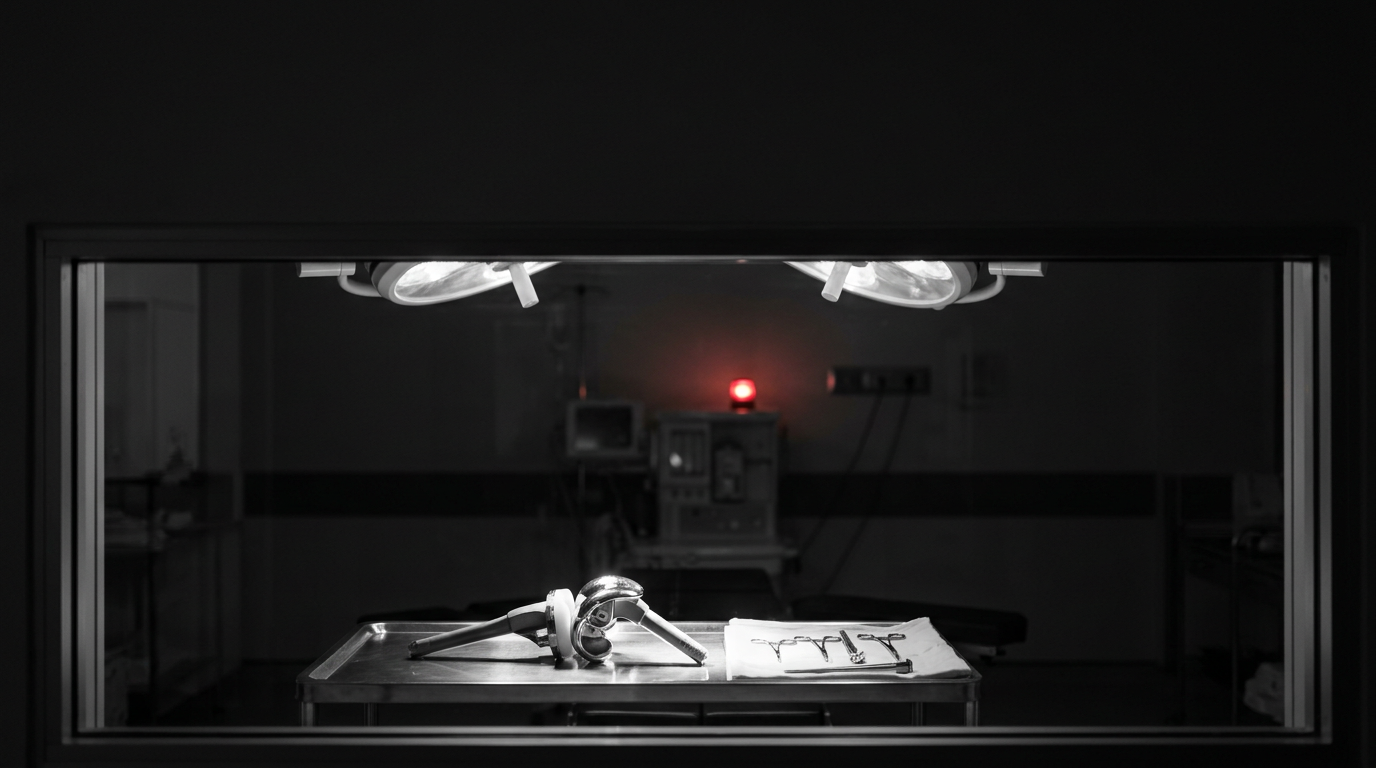
Johnson & Johnson is in talks to sell its orthopedics unit to Apollo Global Management for about $20 billion, people familiar said.
Apollo talks center on $20 billion
Apollo’s discussions with J&J focus on DePuy Synthes, the hips-and-knees business that also sells tools used in bone and joint repair. The people cautioned that the talks may end without a sale, and that a rival bidder may appear before any agreement is reached.
The structure and financing of any transaction were not disclosed in the source material. A deal near $20 billion would rank close to the $21 billion J&J paid in 2012 to buy Synthes before combining it with DePuy.
DePuy Synthes loses priority
The potential disposal marks a reversal for a unit that once sat near the center of J&J’s medical-device strategy. The company bought Synthes to broaden its bone-repair portfolio and folded it into DePuy to build a wider orthopedics platform.
Management has already signaled that DePuy Synthes no longer fits cleanly with the growth profile it wants for the broader company. In the fall, J&J said it planned to separate the business and was reviewing routes to complete that process within 18 to 24 months.
J&J Chief Financial Officer Joseph Wolk described the unit’s position in restrained terms at the time. “It’s a steady grower, but not outperforming,” Wolk said.
Sales base sets the scale
For J&J, the sale talks put a price around a business that generated $9.3 billion of sales last year, according to the source material. That revenue represented under 10% of the company’s total sales, an anchor that explains why a large divestiture could still leave J&J’s broader portfolio intact.
For Apollo, the attraction would be different: a mature medical-device platform with established hospital and surgeon relationships rather than an early-stage growth asset. If completed, the transaction would give the private-equity firm exposure to elective and trauma-related procedures while leaving it to manage slower unit growth.
Debt markets frame the choice
The global macro channel would run through credit markets rather than consumer demand. A transaction of this size would require debt and equity financing, so borrowing costs and lender appetite would shape how aggressively Apollo could price the asset.
If lenders support the transaction on terms Apollo can accept, J&J could accelerate its separation timetable and redeploy capital toward faster-growing health-care segments. The medical-device sector would then have a new privately owned orthopedics competitor with pressure to improve margins and sharpen product focus.
Three paths now matter: an Apollo deal, a competing bid, or no sale. Each carries a different mechanism for J&J, the industry and the broader financing market.
If Apollo reaches an agreement, the macro effect would be a test of large-deal financing capacity, while J&J would simplify its device portfolio. If another suitor enters, the sector could see a higher valuation benchmark for orthopedics assets, though J&J would face a longer process.
If talks fail, J&J would remain on its 18-to-24-month separation track and Apollo would avoid a large capital commitment. The open question is whether the unit’s steady sales base is enough to offset its slower growth for buyers funding a transaction near $20 billion.