Japan keeps yen line as Fed lifts dollar pressure again
Japan said it will coordinate with the US to keep yen trading orderly after a Fed-driven dollar rise pushed the currency near 155.50.
Atlas Newsdesk ·
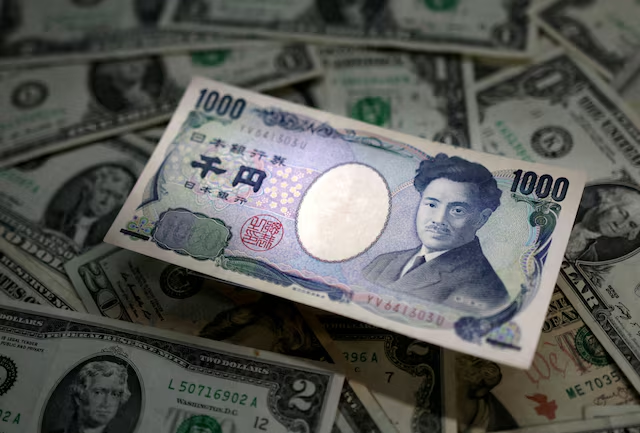
Japan pledged to keep yen trading orderly after the currency slid to about 155.50 per dollar, renewing pressure on policymakers.
The statement came on Thursday after the US Federal Reserve raised interest rates on Wednesday and the dollar gained across major currencies. The yen had touched a seven-month high of 152.89 earlier this month, before retreating as traders reassessed the pace of Bank of Japan tightening.
Chief Cabinet Secretary Minoru Kihara said Tokyo would stay in close contact with the US Treasury Department over currency conditions. Asked about the Fed decision, Kihara said Japan would keep working toward “maintaining an orderly currency market.”
Tokyo repeats July stance
Kihara said Japan’s position had “absolutely not changed” since a joint yen-buying operation with the United States at the end of July. That intervention on July 31 was rare and followed the yen’s drop to near 164 per dollar earlier that month, a level described as a 40-year low.
The July action pushed the currency away from that low and came with a warning that officials could respond again if disorderly trading returned. Tokyo’s latest comments stopped short of announcing new action, but they kept intervention risk visible as the yen moved back toward weaker levels.
Finance Minister Satsuki Katayama said separately that Japan had made clear its willingness to respond to excessive currency volatility when the July operation was launched. Kihara and Katayama were both reappointed in a cabinet reshuffle announced later on Thursday, keeping the government’s main currency-policy voices in place.
BOJ decision narrows the window
The pressure now shifts to the Bank of Japan, which is expected to raise interest rates to 1.25% on Friday. That would put the policy rate at its highest level in 31 years, according to the source figures, but analysts said the move alone may not strengthen the yen.
The reason is the gap between Japanese and US rates, which remains central to currency trading. If the Fed keeps US yields high while the BOJ signals only gradual increases, investors can still earn more from dollar assets than from yen assets.
Katayama said she expected the BOJ to coordinate closely with the government while conducting monetary policy aimed at achieving its 2% inflation target. That statement matters because Japan’s currency policy is handled by the finance ministry, while interest-rate decisions belong to the central bank.
Yen paths after Friday
If Governor Kazuo Ueda pairs a move to 1.25% with guidance pointing to further increases, the yen could draw support through narrower expected rate gaps. For Japan, that would reduce import-price pressure; for exporters, it could trim the currency boost that weaker yen levels provide to overseas earnings.
If the BOJ raises rates but signals patience, the market focus may return quickly to the dollar. In that scenario, the global macro effect would be a continuation of higher US-rate support for the dollar, while Japanese authorities would face renewed pressure to define when volatility becomes excessive.
If the yen again approaches levels seen before the July intervention, the finance ministry’s tolerance band becomes the central uncertainty. A second operation would affect the currency market first, but it would also send a signal to global investors that Tokyo is prepared to spend political and financial capital to slow one-way yen moves.