Israel’s data-center freeze sharpens Washington’s AI grid-security debate
Israel’s 140-day pause on new server-farm approvals turns AI energy demand into a concrete national-security warning for Washington.
Lauren Collins ·
# Israel’s data-center freeze sharpens Washington’s AI grid-security debate
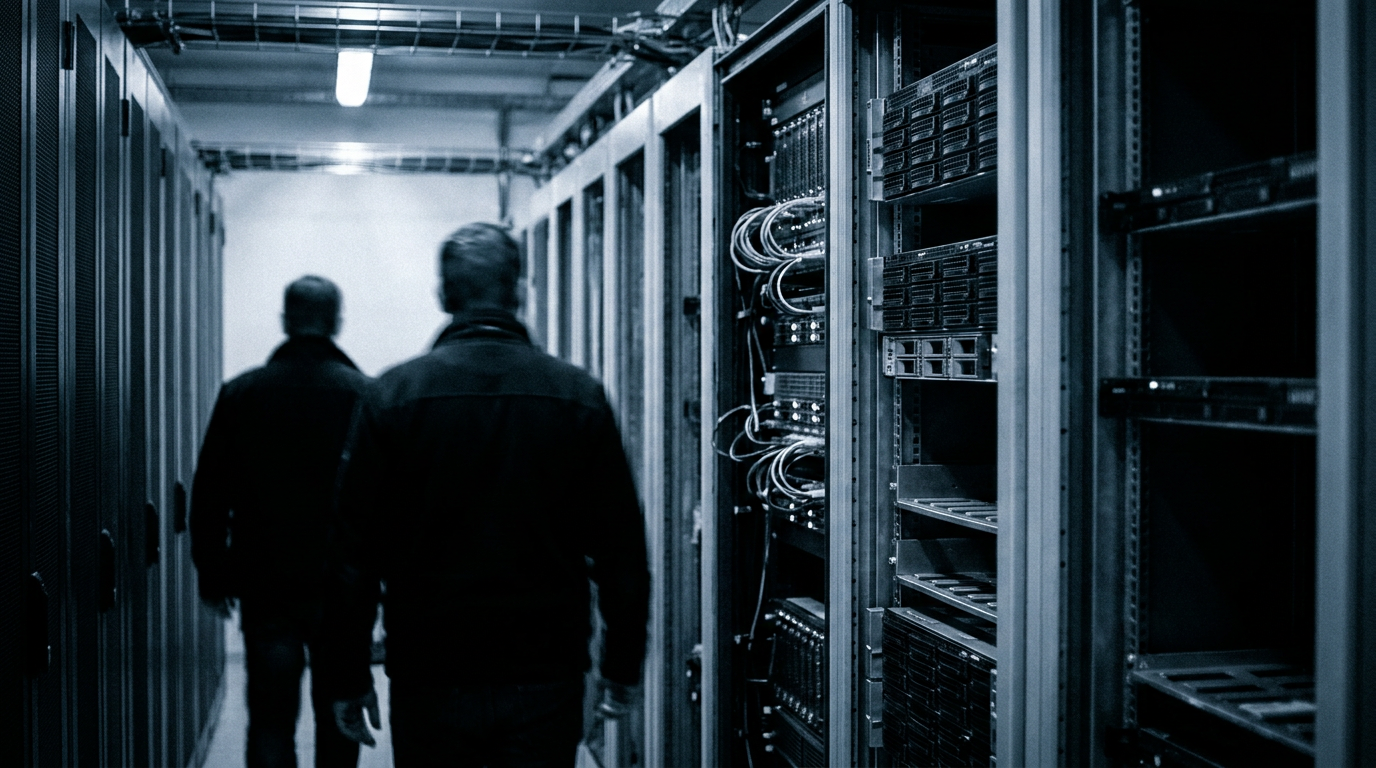
Washington received a practical warning from Israel this week: AI infrastructure can stress a power grid before policymakers finish writing rules for it. Israel’s Electricity Authority has frozen approvals for new server farms for 140 days after a surge in connection requests raised concerns about grid stability, according to the signal provided.
For the White House
For the White House, Pentagon and Department of Energy, the Israeli move puts a hard edge on a debate that has often sounded abstract in Washington. Data centers are no longer only commercial real estate for cloud companies. They are energy-intensive nodes for AI, intelligence processing, military logistics, cyber defense and private-sector services that governments increasingly treat as strategic infrastructure.
The Israeli decision matters in Washington because it joins two policy tracks that usually move through different agencies. The White House has led the public AI-safety agenda, focusing on model behavior, security testing, privacy and misuse. The Department of Energy and federal grid officials focus on electric reliability, while the Department of Homeland Security and intelligence agencies track cyber threats to critical infrastructure.
AI data centers sit at the intersection of those lanes. Large computing campuses require high-capacity grid connections, steady electricity and backup systems that can ride through outages. When connection requests arrive faster than planners expected, grid operators face a sequencing problem: serve new digital demand quickly, protect reliability for households and industry, and avoid creating concentrated targets for adversaries.
Electricity Authority
The Pentagon has a separate reason to care. Modern defense planning depends
on secure cloud computing, AI-assisted analysis, resilient communications and fast data processing.
If the facilities supporting those functions compete for power with civilian
users, or if they cluster in ways that strain local grids, the issue becomes more than a utility-planning dispute. It becomes a question of operational resilience.
Israel’s case carries extra weight because Washington and Jerusalem have deep cooperation on cyber defense and technology security. Israel faces persistent cyber pressure and physical-security risks around critical infrastructure. A regulator’s decision to pause server-farm approvals therefore reads in Washington as more than a local capacity measure. It shows how AI demand can collide with wartime resilience, energy planning and national security at the same time.
The U.S. debate has been building in pieces. AI companies and cloud providers have pushed for more computing capacity. Utilities have warned that demand growth can require new transmission, generation and interconnection planning. Security officials have warned for years that power systems are attractive targets for nation-state hackers because outages ripple across finance, health care, communications and emergency services.
What Israel adds is a governance question: who gets to say no, or at least not yet, when digital infrastructure expands faster than the grid can absorb? In the United States, that answer is fragmented across state utility commissions, regional grid operators, federal regulators, the Energy Department, national-security agencies and Congress. No single Washington office controls the full chain from AI-model demand to electric substations.
That fragmentation creates a policy gap. The White House can set AI priorities, but it does not approve most power connections. The Pentagon can identify mission risks, but it does not run civilian grid planning. Congress can fund resilience and demand oversight, but legislation usually trails the technology cycle. Israel’s 140-day freeze shows what a more centralized emergency brake can look like when a regulator concludes that connection demand threatens reliability.
The commercial stakes are also direct. For data-center operators, a freeze changes project timelines, financing assumptions and customer commitments. For utilities, it creates breathing room to assess load forecasts and network capacity. For AI developers, it is a reminder that access to chips is only one bottleneck. Electricity, siting, cooling and transmission can slow deployment just as decisively.
Washington’s challenge is to avoid treating that bottleneck as only an economic constraint. If AI infrastructure becomes critical to defense, intelligence, emergency response and financial markets, the grid connections behind it become part of the security perimeter. That means policymakers may need to consider not just how much electricity data centers use, but where they are located, how they are protected, and whether they can operate through cyberattacks or physical disruptions.
There is also a geopolitical layer. Countries that can provide reliable, secure and affordable power for AI computing may gain an advantage in advanced research, military applications and industrial productivity. Countries that cannot may face slower deployment or greater reliance on foreign cloud capacity. For Washington, that turns energy policy into part of the wider competition over AI leadership.
The falsifiable test is whether the White House or Department of Energy responds by Aug. 31, 2024, with guidance, an executive order, or a formal interagency process that treats AI’s energy footprint as a national-security issue rather than a routine utility matter. If Washington launches a coordinated strategy, the mechanism would be clear: federal agencies would begin linking AI infrastructure approvals, grid-resilience standards and security planning, which could raise compliance costs for data-center operators but reduce systemic risk for the wider technology and energy sectors. If U.S. officials instead frame Israel’s freeze as specific to Israel’s grid and security environment, companies will likely keep negotiating project-by-project with utilities and state regulators, leaving the national-security implications to be handled through existing critical-infrastructure programs rather than a dedicated AI-energy framework.