India–UAE trade corridors give operators a BRICS test bed, report says
India and the UAE are modeling BRICS collaboration with $101bn in trade. Discover how new corridors and initiatives are reshaping logistics for exporters.
Hannah Vogel ·
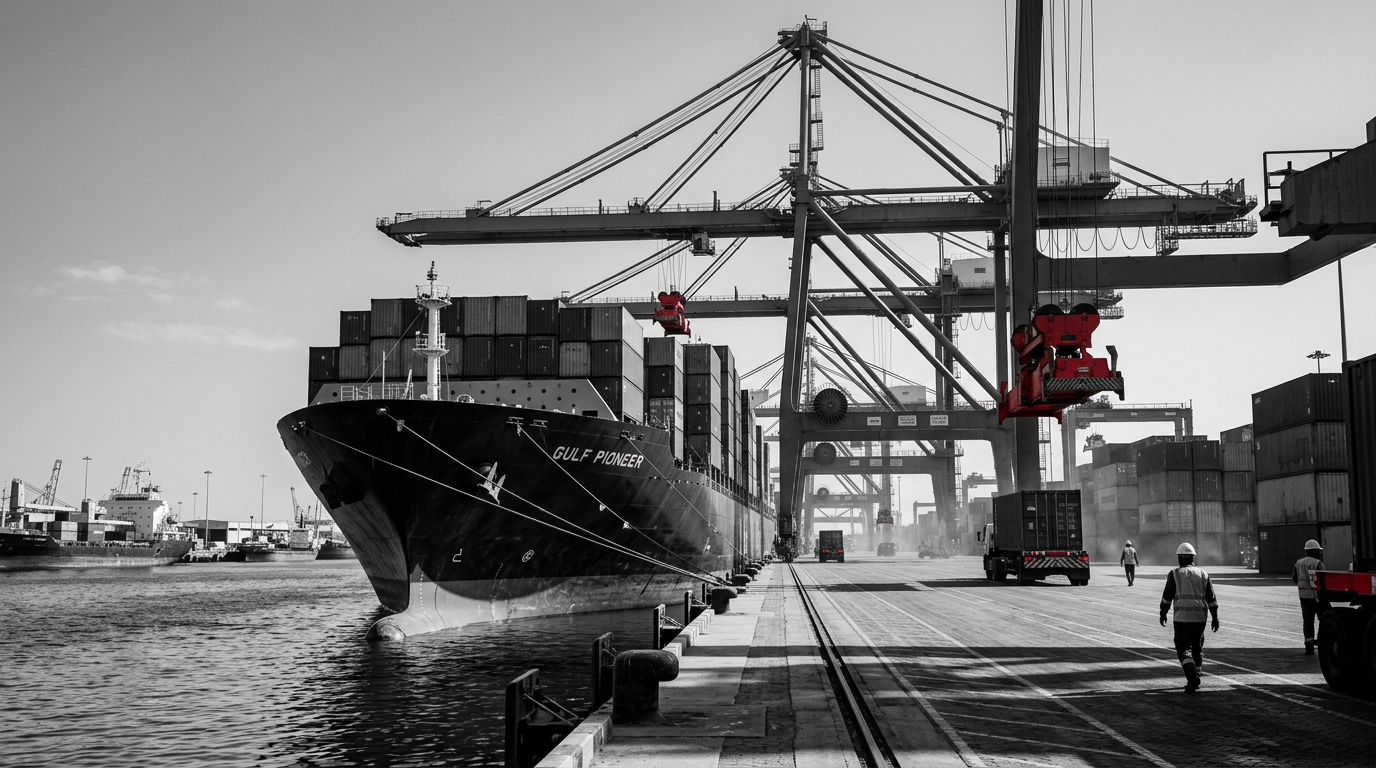
In a report published by Prokerala and citing Gulf Today, India and the United Arab Emirates are presented as turning a long‑standing bilateral relationship into “an effective model of cooperation within BRICS,” underpinned by $101.25bn in bilateral trade in FY26 and a stated goal of $200bn by 2032. The report highlights named projects — Bharat Mart, a Virtual Trade Corridor and cooperation under the India–Middle East–Europe Economic Corridor (IMEC) — and notes that the UAE–India Comprehensive Economic Partnership Agreement (CEPA), operational since 2022, has “bolstered the flow of goods, services and investment.” This is, so far, single‑source and unaudited: a media report summarising another outlet’s assessment, not an official statistical release or a bilateral joint statement.
The report’s claim is directional; the operational denominator is still missing
The Prokerala article, crediting Gulf Today, puts forward several measurable anchors — $101.25bn in FY26 bilateral trade, a $200bn target by 2032, and the UAE and China together accounting for 88.50% of India’s electronics exports to BRICS — and flags institutional signals such as CEPA’s entry into force in 2022 and growing Indian company membership in the Dubai Chamber (85,841 by end‑June 2026). What it does not provide are the operating metrics that matter to private buyers and sellers: comparative baselines for clearance times, the share of trade moving through the named corridors, or any published reduction in friction for documentation, payments or compliance. Without those denominators, the “model for BRICS” claim remains a positioning line rather than a verified change in the cost or speed of doing cross‑border business.
What changes for exporters and procurement if the corridors deliver
If the initiatives listed — Bharat Mart, the Virtual Trade Corridor and IMEC cooperation — do what the report argues they are intended to do, the first‑order change is channel, not branding. Exporters can treat the UAE as a consolidated distribution and financing node for reaching BRICS demand, and procurement teams can qualify UAE‑based partners as lower‑risk intermediaries relative to longer, multi‑jurisdiction routings. In practical terms, that would mean sales teams pricing on firmer delivery windows into Gulf and onward markets; logistics managers booking capacity via UAE hubs; and treasury adjusting settlement and hedging workflows to reflect more flows clearing through UAE financial rails. The report’s emphasis on “integrated logistics corridors” suggests paperwork and coordination move from bilateral, ad‑hoc arrangements to more predictable lane‑based operations; but the extent of the shift is not quantified here.
CEPA and a virtual corridor are policy scaffolding; operators need evidence of throughput
The report frames CEPA as the first agreement of its kind concluded by the UAE and credits it with bolstering flows of goods, services and investment. That is a policy foundation that can enable commercial changes: tariff schedules, services commitments and dispute‑resolution mechanisms reduce uncertainty and can shorten procurement cycles. Likewise, a “Virtual Trade Corridor” is described as helping strengthen supply‑chain integration and create “new routes for trade and investment flows.” For sales leaders and heads of procurement, the relevant questions are narrow: have supplier onboarding times fallen because documentation is standardised under CEPA? Are shipments cleared faster when booked through the virtual corridor compared with traditional processes? Absent those comparative figures in the report, it is fair to treat the policy and platform language as scaffolding whose commercial value will be established only when ministries or chambers publish throughput and performance statistics.
Electronics exports already point to a BRICS concentration: UAE and China dominate demand
One concrete datapoint in the report is compositional rather than directional: within BRICS, the United Arab Emirates and China are said to be the largest destinations for India’s electronics exports, together accounting for 88.50%. For Indian electronics manufacturers and component traders, this concentration has obvious implications for route planning, channel partnerships and after‑sales service. If the UAE share of that 88.50% is material, channel investments in Dubai — warehousing, authorised distributors, repair centres — are likely to carry a higher return than trying to seed multiple smaller BRICS markets directly. Conversely, procurement teams sourcing electronics from India into other BRICS markets may find that UAE‑based consolidators can offer better availability and lead times simply because the physical stock already flows there in scale. The report does not break out the UAE versus China split within that figure, nor does it disclose whether the share is rising or stable, which limits what can be inferred about trend velocity.
Dubai Chamber membership growth signals entrepreneur intent, not yet realised trade
According to the report, the number of Indian companies registered as active members of the Dubai Chamber reached 85,841 by end‑June 2026. That is a directional signal: company registrations often precede material shipments as founders test a market, secure bank accounts and sign with logistics providers. For software, fintech and trade‑services vendors, that installed base is a market of potential customers with India‑UAE cross‑border workflows to digitise — invoicing, know‑your‑customer checks, customs documentation. But registrations are not the same as revenue or export volumes. Without a companion disclosure showing how many of those firms transact monthly or the median invoice value, commercial planning should treat the chamber count as pipeline, not as realised demand.
The dominant narrative glosses over execution risk and politics in the corridor buildout
The optimistic read is straightforward: historic ties, a functioning CEPA since 2022, and high‑profile corridor initiatives will naturally compound into faster, larger trade flows and a replicable BRICS playbook. What is missing in this single‑source report is independent confirmation of the operational state of the named projects, the allocation of capacity within IMEC to India–UAE traffic, and any disclosure on the governance of the “Virtual Trade Corridor.” Operators have learned to discount corridors until their service‑level agreements, liability regimes and booking rules are published. The political risk is non‑trivial: IMEC is a multi‑jurisdiction undertaking; timing and prioritisation can be affected by events exogenous to India–UAE bilateral goodwill. Until a ministry, port operator or chamber publishes hard measures — average clearance time, on‑time performance, booked capacity — the narrative remains ahead of verifiable execution.
How companies should adjust go‑to‑market and procurement over the next 12 months
Even with the caveats, there is enough here for cautious action. Indian exporters with BRICS ambitions can prioritise UAE‑anchored channels for pilots, where CEPA’s rules and the chamber’s infrastructure may simplify initial entry relative to other BRICS markets. Procurement teams in the Gulf and beyond can add UAE‑based consolidators to tender lists for India‑origin goods and services, testing whether the corridor claim translates into actual lead‑time or cost advantages. Service providers — logistics platforms, trade finance, cross‑border payments, compliance SaaS — can build product configurations and pricing specifically for India–UAE flows, marketing explicitly to the 85,841 Indian firms on the Dubai Chamber rolls as a distinct segment. Each of these steps can be justified on a test‑and‑learn basis; none requires buying the thesis wholesale.
What would turn the “model for BRICS” line into a measured operating reality
To move from rhetoric to operating fact, three disclosures would matter. First, an official India–UAE bilateral update showing FY27 trade growth above the FY26 baseline of $101.25bn, with a breakdown of the share moving through corridor‑designated routes. Second, a ministry, port authority or chamber publishing performance metrics for the Virtual Trade Corridor — average clearance time versus legacy processing, number of consignments processed, and error or dispute rates. Third, a public milestone on Bharat Mart or IMEC cooperation naming participating tenants or lanes and their committed capacity. Those are observable, falsifiable signals. Until at least one of them lands, operators should treat the “BRICS model” framing as a hypothesis to be tested with tightly scoped commercial experiments rather than as a guaranteed arbitrage.
A necessary skeptic: targets do not ship products, and multi‑year goals mask reallocation
The $200bn by 2032 target is long‑dated; it can be met by price inflation, energy price cycles or one‑off capital goods deliveries absent any structural improvement at the corridor level. Likewise, company registration counts can rise for reasons orthogonal to trade flows — tax planning, residency rules, or portfolio diversification. The Prokerala report’s reliance on Gulf Today, without a companion statistical annex, means operators should look for corroborating releases from India’s Ministry of Commerce, the UAE Ministry of Economy, port operators or the Dubai Chamber before committing to capacity or pricing predicated on structural friction reduction. The directional momentum may be real; the commercial risk lies in over‑indexing to it before the measured frictions move.