Lawmakers Press ICE, FAA on 'Ghost Flights' and Missing Aviation Data
A 32-member group of lawmakers has asked federal agencies for clarity after immigration enforcement flights appeared masked in public tracking data, raising…
Sophie McAlister ·
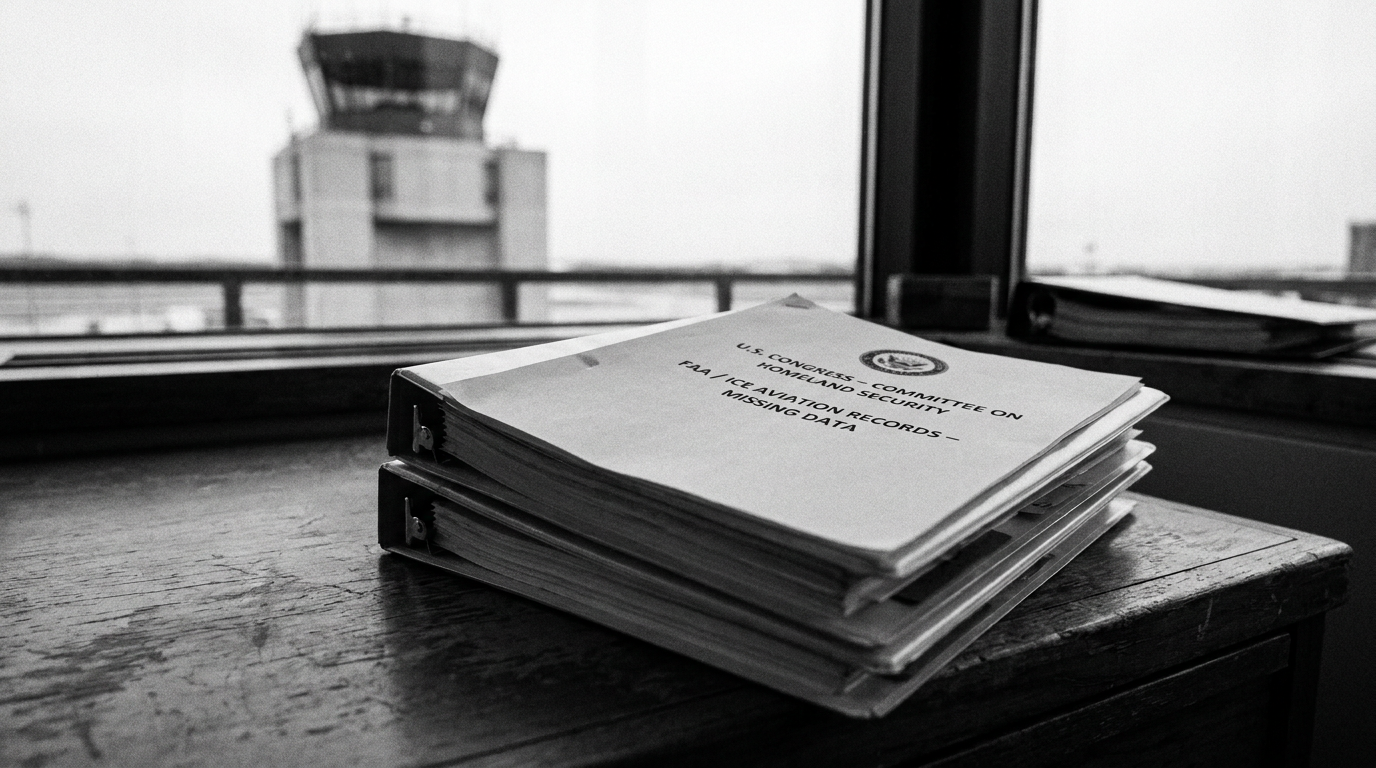
A 32-member group of lawmakers on Capitol Hill has urged federal agencies to explain gaps in public aviation tracking after Immigration and Customs Enforcement flights appeared to be masked or absent from public data feeds. The lawmakers asked for clarity on the unit’s use of the Federal Aviation Administration’s Limiting Aircraft Data Displayed program and other data-suppression methods, citing concerns about “ghost flights” and missing flight information.
The letter requests that the Department of Homeland Security and ICE detail how frequently they request flight redactions and under what authorities those actions occur. Lawmakers said they want to understand whether the agency’s practices are consistent with FAA rules and whether safeguards exist to prevent misuse of data suppression that could hinder oversight or public accountability.
Federal aviation tracking tools rely on data the FAA makes available to public and commercial services; the Limiting Aircraft Data Displayed (LADD) program is a mechanism that can restrict certain aircraft information from being displayed broadly. The lawmakers’ inquiry suggests some ICE flights may have been made less visible through that program or other measures, leaving gaps in publicly accessible tracking records.
Oversight questions and agency responsibilities
The inquiry frames the issue as an oversight concern: lawmakers want to know which offices within DHS and ICE authorize data-suppression requests, what legal or security justifications are used, and whether the FAA is being notified and documenting such actions. The effect, lawmakers argue, is that flights tied to immigration enforcement can become difficult to trace in public databases, complicating congressional and public scrutiny.
ICE and DHS maintain roles in transporting detainees and conducting immigration operations, and lawmakers say transparency around those movements matters for both policy oversight and civil liberties monitoring. The FAA, which administers the LADD program, is a central actor because it controls which aircraft data streams are publicly released and which are limited for safety or security reasons.
The matter plays out in Washington institutions: the oversight comes from Capitol Hill, the agencies involved are both headquartered in the region, and the FAA’s national presence connects federal aviation policy and transparency to local accountability. Legislators in the District are positioning themselves to press for documents and explanations that could influence how DHS and related agencies handle sensitive transport operations going forward.
Public tracking of aircraft has grown into a routine tool for journalists, researchers and advocacy groups. When flight records appear incomplete or selectively obscured, it raises broader questions about when government exceptions to transparency are invoked and how they are recorded.
Lawmakers asked for details about the scope of data suppression, examples of redacted flights, and the legal bases cited for those actions. They also sought information on internal DHS guidance and whether independent audits have examined the practice.
In the coming weeks, Capitol Hill staff will review agency responses and may press for follow-up briefings or document productions if the answers leave gaps. That review process could prompt further inquiries or legislative attention to the use of aviation data suppression in law enforcement operations.