Hungary acts to protect Paks as Danube hits record lows
Hungary began emergency Danube works near Paks after record-low water levels, aiming to protect turbine operations and power supply, officials said.
Atlas Newsdesk ·
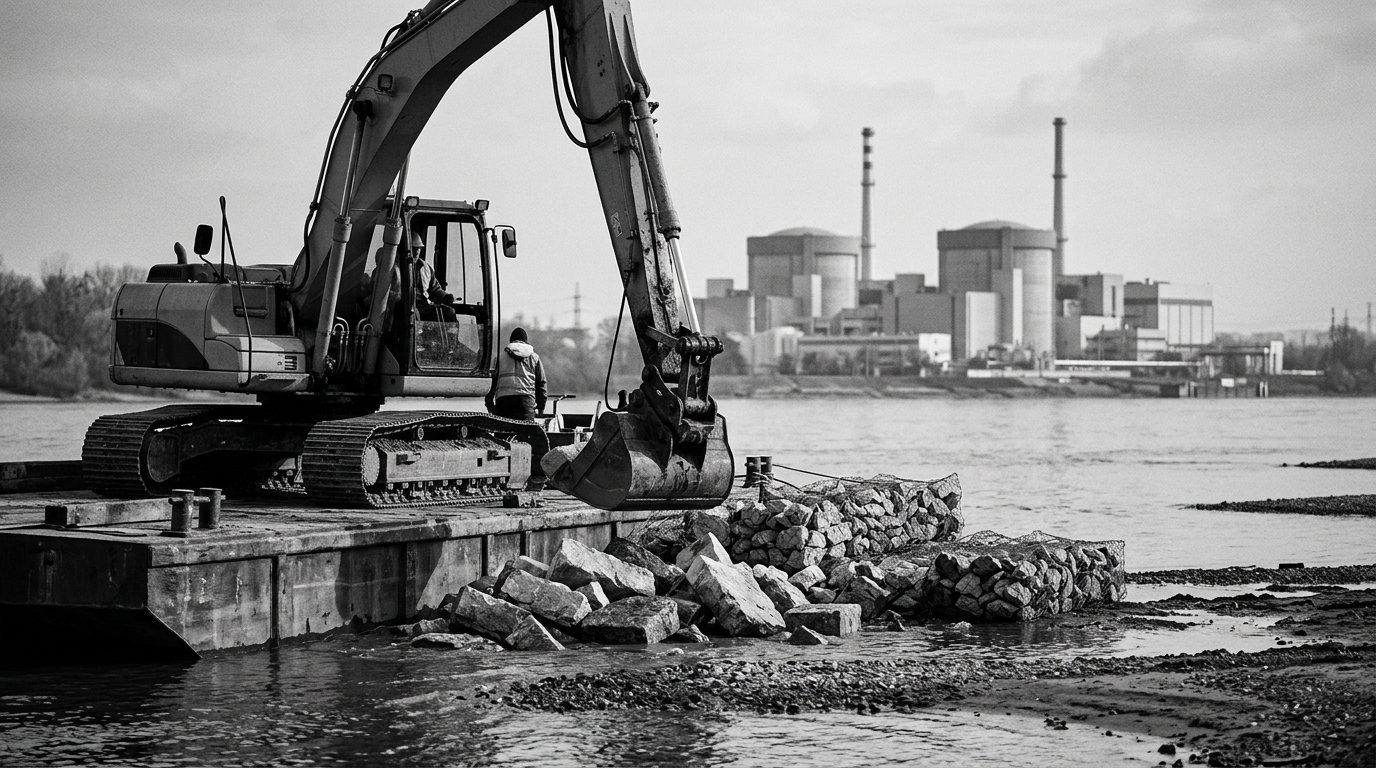
Hungary has launched emergency river engineering on the Danube beside the Paks nuclear power plant after water levels near the site fell to record lows during a spell of extreme heat, officials said. The government said the immediate is to keep Paks operating by stabilising water conditions at the plant’s intake point and lowering the risk of disruption to turbine operations.
Officials described the work as urgent because Paks generates more than one-third of Hungary’s electricity. They warned that if the Danube drops too far, turbines would need to be taken offline, which would directly affect the country’s power supply.
River works designed to hold water near the
River works designed to hold water near the intake Officials said the measures include sinking two barges Officials said the measures include sinking two barges and building a riverbed sill close to Paks to hold back water locally. The intention is to raise, or at least maintain, the effective river level in the specific stretch that matters most for the plant’s intake and related equipment. According to officials, defence personnel have been mobilised to carry out the intervention. They presented the use of defence resources as an indication of how critical the government considers uninterrupted operation at Paks during the current heat-driven low-water episode. The engineering response is aimed at countering a projected 132 cm drop in water levels along the affected part of the Danube. Officials said the reshaping and reinforcement of riverbed conditions is meant to reduce near-term operational risk created by exceptionally low water.
Heat-linked river lows revive focus on operational limits
Officials linked the rapid fall in Danube levels Officials linked the rapid fall in Danube levels to extreme heat and said the measures are an emergency response to an immediate constraint on operations, not a permanent redesign of the river system. They said the priority is to keep the local river level stable enough to avoid a forced pause in turbine operations. The episode has also highlighted a broader vulnerability for nuclear power plants that depend on river conditions, officials said, particularly when hydrological conditions change quickly. They pointed to similar issues elsewhere in Europe, referring to reports of shutdowns in Romania and France after low-water conditions contributed to operational interruptions, while providing no additional details on those cases. Resilience review extends beyond the immediate works Beyond the river engineering now under way, officials said the situation has fed into a wider review of how resilient existing and planned nuclear assets are under longer-term environmental projections. They described the current low-water period as part of an assessment of whether earlier infrastructure assumptions remain valid if river levels become more volatile. Officials added that this review is being weighed Officials added that this review is being weighed alongside existing international supply agreements, without specifying what changes might follow. In the near term, authorities said they will continue monitoring whether further declines in water levels outpace the effect of the emergency structures.
How long the Danube remains unusually low, and whether the measures can keep up if water levels continue to fall, remain key unknowns, officials said.