US Considers Strategic Oil Release Amid Price Surge
The U.S. is considering a strategic oil release as part of an IEA plan to release 400 million barrels globally, aiming to stabilize oil prices.
Lauren Collins ·
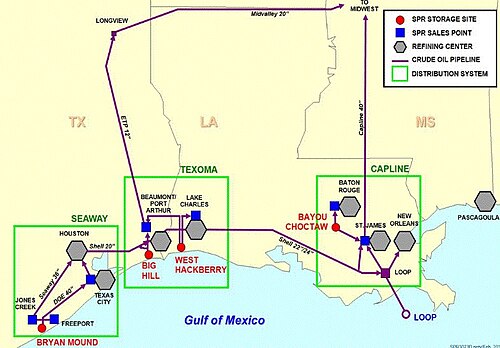
The United States is evaluating a contribution to a global strategic oil release, as announced by President Donald Trump on Wednesday, March 11. This initiative, coordinated with the International Energy Agency (IEA), seeks to mitigate rising oil prices. The IEA's broader plan involves releasing a substantial 400 million barrels from strategic reserves worldwide.
President Trump indicated the U.S. contribution would be a modest amount, aimed at reducing current market prices. Specific details regarding the volume of the U.S. release were not provided at the time of the announcement. This consideration comes amidst heightened geopolitical tensions, particularly the ongoing U.S.-Israeli conflict with Iran, which has contributed to market volatility and upward pressure on crude oil benchmarks.
Strategic Petroleum Reserve Overview
Historical Precedent for SPR Use
Prior to that, in June 2011, former President Barack Obama ordered a 30-million-barrel release in response to the Libyan civil war. This action was part of a coordinated effort with other IEA member nations, which collectively released an additional 30 million barrels. During the Gulf War (Operation Desert Storm) in 1990-1991, former President George H.W. Bush authorized the sale of approximately 21 million barrels from the reserve in two distinct phases.
Recent Considerations and Market Dynamics
Global oil markets remain sensitive to geopolitical developments, particularly in the Middle East. Any coordinated release from strategic reserves by major consuming nations can temporarily increase supply, potentially easing price pressures. However, the long-term impact depends on the duration and scale of the release, as well as the underlying geopolitical and economic factors influencing demand and supply.
Economic and Political Implications
Implications
Country Impact: A U.S. strategic oil release could temporarily lower domestic fuel prices, potentially easing inflationary pressures and consumer costs. However, it would also reduce the nation's emergency energy buffer, a critical component of national security.
Industry Impact: The energy sector, particularly oil and gas producers, might see a short-term dip in crude prices, affecting revenue streams. Industries reliant on oil, such as transportation and manufacturing, could benefit from reduced input costs, potentially improving profit margins.
Market Impact: Global oil markets are likely to react to the increased supply with a downward adjustment in crude futures prices. This could have ripple effects on energy-related equities and potentially strengthen the U.S. dollar against currencies of oil-exporting nations, depending on the scale of the release.