Honda Targets F1 Parity by 2027-2028 Rules
Honda says it aims for Formula 1 performance parity by 2027 or 2028, aligning development with major technical regulation changes expected in 2027.
Mehmet Şahinoğlu ·
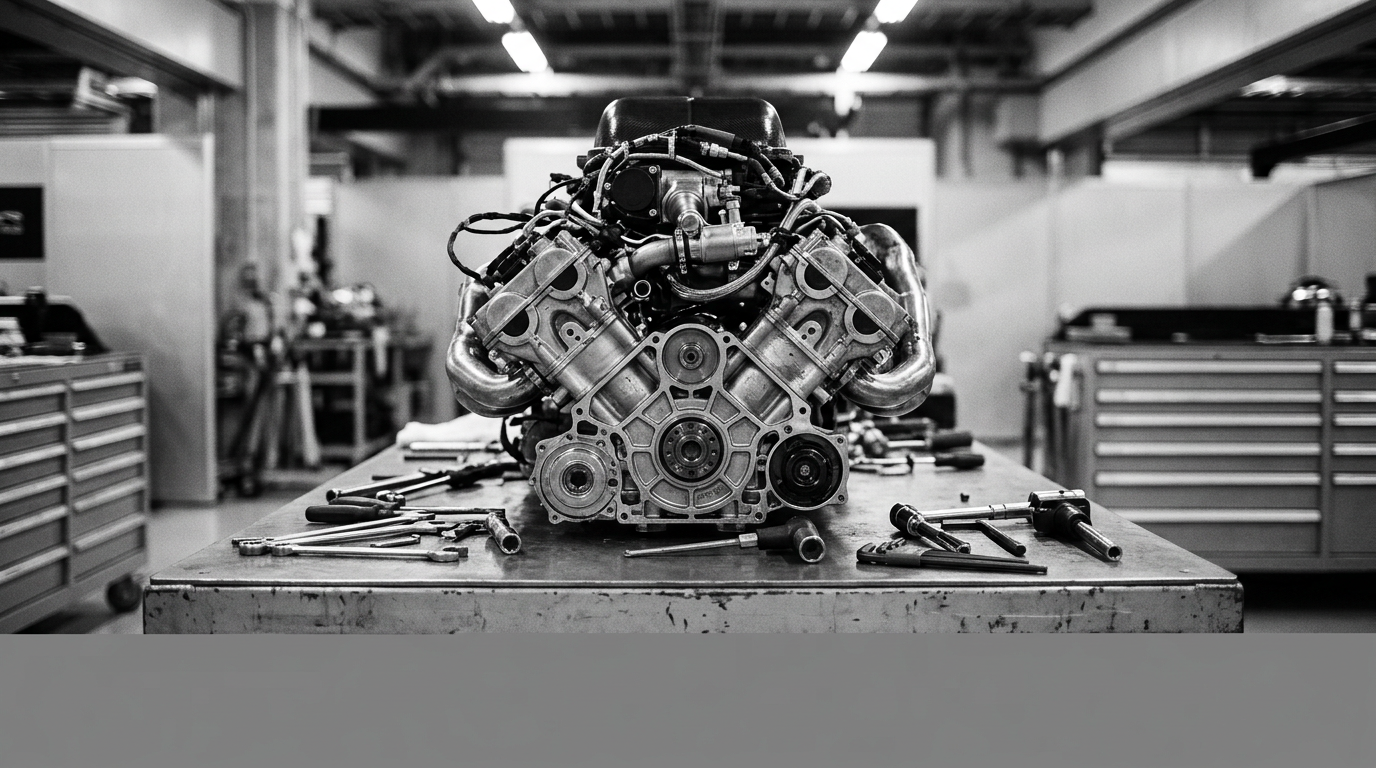
Honda says it is working toward full performance parity in Formula 1 by 2027 or 2028, aligning its plan with major technical regulation changes expected in 2027. The Japanese manufacturer is framing the next few seasons as a development cycle designed to close early gaps that have emerged in its partnership with Aston Martin.
Chief Engineer Shintaro Orihara said the programme is currently focused on step-by-step gains, with priorities including improvements to the internal combustion engine and better integration between the power unit and the chassis. Officials involved in the effort have described the opening phase of the Aston Martin collaboration as exposing sizable performance shortfalls, and Honda acknowledged in January that the start of this new era has been difficult.
Honda links its roadmap to the 2027 technical Honda links its roadmap to the 2027 technical shift Orihara said development work is heavily concentrated on Orihara said development work is heavily concentrated on preparing for the regulatory change anticipated in 2027. According to him, the planned rule-related adjustments include changes to fuel flow rates and a revised balance between internal combustion power and electrical output. He said combustion performance remains a central target in the current phase, while larger development steps are planned to arrive in 2027 as the rule framework evolves. Officials have presented the 2027 rule set as the anchor point for the wider plan, with parity targeted by 2027 or 2028 depending on progress. Honda has also cast the programme as a major engineering and investment challenge. Orihara said the company must protect reliability even as technical demands increase, describing the task as more complicated when power gains are pursued at the same time as operating requirements tighten.
Incremental upgrades and tighter Aston Martin integration As
Incremental upgrades and tighter Aston Martin integration
As part of its in-season work As part of its in-season work, Honda introduced its first ADUO upgrade of the year at Zandvoort. The update was aimed specifically at the internal combustion engine, consistent with the company’s emphasis on iterative advances rather than sweeping changes outside the main regulatory reset. Orihara said performance depends on more than engine output alone. He pointed to the installation of the power unit within the chassis as a key priority for the upcoming season, calling for tighter coordination as the programme matures. He described the pairing of a new engine and a new chassis as an opportunity to improve overall integration of the Honda power unit. Honda has presented this as a way to address issues encountered in the first year of the Aston Martin collaboration, where hardware choices and packaging decisions can affect reliability as well as outright pace. Gap-closing takes precedence over immediate wins Honda has indicated that near-term race victories are not the primary objective. Instead, officials have said the focus is on reducing the competitive deficit over a longer development arc, with the 2027 regulation package serving as a turning point for the project.
Orihara said the programme’s outcome will depend on balancing aggressive power-output gains with reliability requirements created by new technical mandates. For now, Honda’s stated approach is to keep delivering incremental upgrades while building toward the larger 2027 shift, with parity aimed for 2027 or 2028.