Holiday gridlock: AAA July 4 travel forecast for DMV
AAA July 4 travel forecast data points to peak congestion between D.C. and Annapolis at 12:45 p.m. Friday, July 3, with driving dominating trips.
Sophie McAlister ·
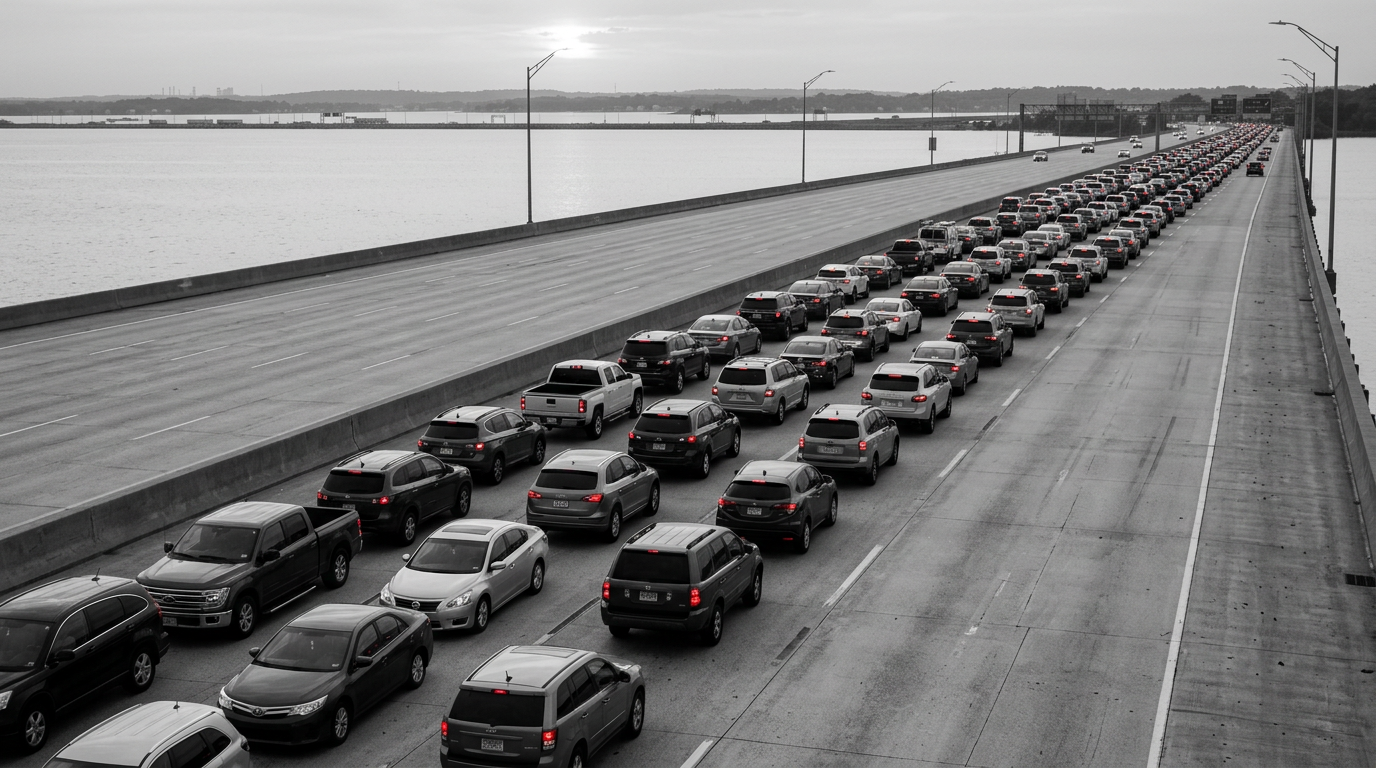
AAA July 4 travel forecast modeling points to the region’s toughest bottleneck on Friday, July 3 at 12:45 p.m., when traffic is expected to spike between Washington and Annapolis.
The warning comes as AAA projects heavy nationwide movement for Independence Day week, with drivers expected to make up the vast majority of trips. In the Washington area, that typically translates into pressure on key corridors linking the District to Maryland beach and bay routes.
DC-to-Annapolis corridor expected to see the sharpest pinch
AAA’s prediction singles out the D.C.-to-Annapolis drive as the region’s most challenging stretch at a specific moment: Friday, July 3 at 12:45 p.m. For many local households, that window aligns with midday departures out of downtown offices and neighborhoods across Northwest and Capitol Hill.
To reduce delays, AAA advises motorists to begin travel earlier in the day during the midweek ramp-up. The group recommends leaving before noon on both Wednesday and Thursday.
For Friday, AAA pushes the departure target even earlier: before 11 a.m. The guidance reflects how quickly midday volumes can stack up once holiday schedules overlap with routine daytime travel.
Timing guidance for July 4 weekend travel
AAA also identified the most difficult period to be on the road on July 4 itself. The organization expects the heaviest congestion between 10 a.m. and 2 p.m.
For residents planning day trips or post-parade drives, that four-hour band is the one AAA effectively recommends avoiding. Leaving early or waiting until after the peak period may help drivers sidestep the worst backups.
On Sunday—the day after July 4—AAA again points to late-morning departures as the safer bet. It recommends traveling before 11 a.m., warning that traffic will build and remain elevated from noon through 6 p.m.
The return rush is a familiar pattern for the region, as visitors filter back toward D.C. from Maryland’s waterways and weekend destinations. Even short trips can run long when many travelers choose the same return window.
National travel volume remains high as driving dominates
AAA projects about 77.2 million Americans will travel for July 4 this year. The organization estimates that roughly 85% of travelers will drive, even as it notes that trips are occurring amid high gas prices.
In year-over-year terms, AAA expects both car and air travel to be approximately flat compared with last year. That suggests the mix of how people are traveling is largely holding steady, even as the overall holiday travel machine continues running at a high level.
AAA attributes the slight overall bump in total travel to one category: cruising. Cruise vacations continue to gain popularity, pushing travel totals upward even as other modes remain relatively steady.
Stacey Barber of AAA Travel framed the outlook as a high-volume holiday despite signs of leveling. “While the overall number of Independence Day travelers appears to be plateauing, we’re still expecting record volumes this year,” Barber said.
For the D.C. region, the implication is straightforward: road pressure will be driven less by a surge in air traffic and more by packed highways, especially around midday departures. AAA’s timing guidance—before noon midweek, before 11 a.m. Friday, avoiding 10 a.m. to 2 p.m. on July 4, and leaving early Sunday—offers the clearest path to a smoother trip.
What comes next for local drivers is a familiar choice as the holiday approaches: shift departure times earlier, or plan for longer travel times when the forecasted peaks arrive. AAA’s corridor-specific callout between D.C. and Annapolis signals where delays may be most concentrated as the weekend gets underway.