Gold reserves growth signals long-term metal price recovery.
A historic 45% of central banks plan to expand their gold reserves this year despite recent price pullbacks, according to a World Gold Council survey.
Omar Farouk ·
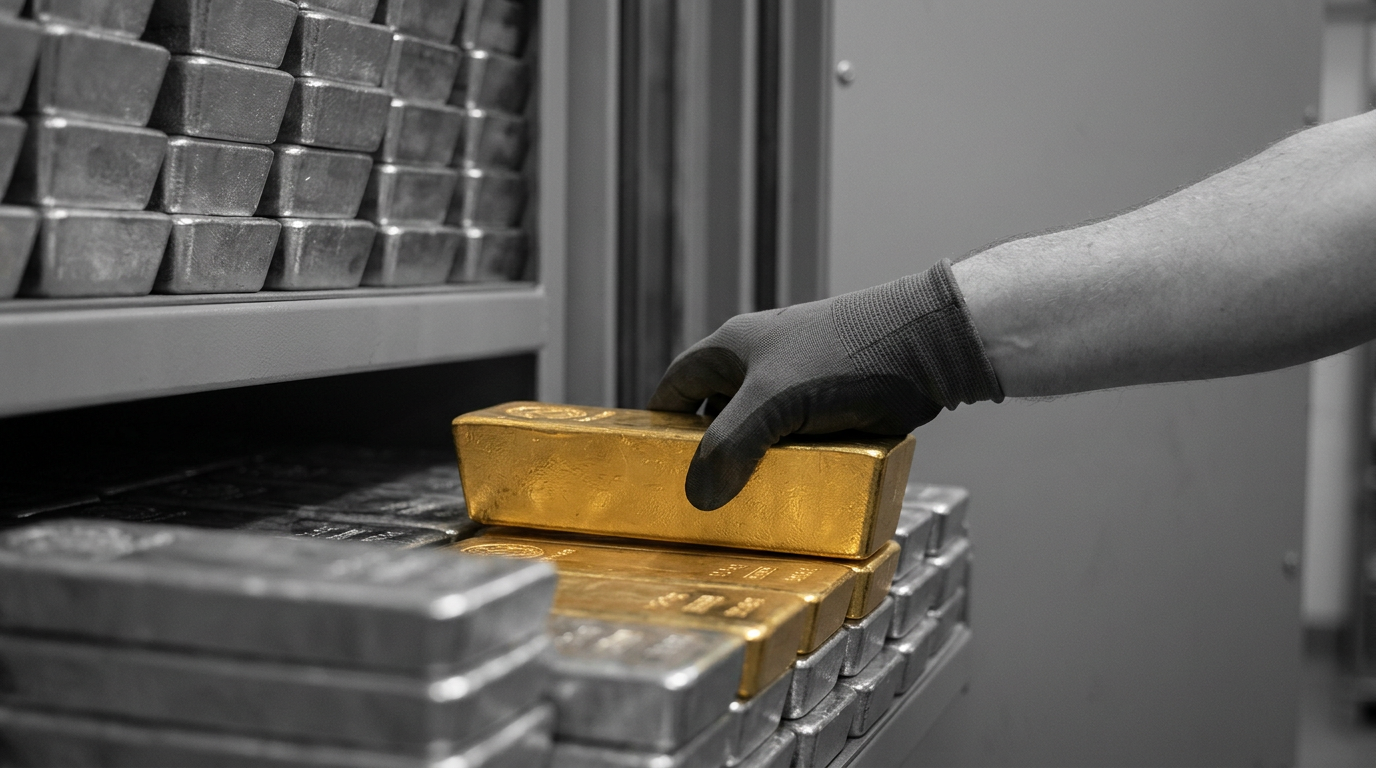
Global gold reserves are set to expand as a record number of central banks plan to increase their holdings over the next year, stabilizing the market.
According to a joint survey conducted by the World Gold Council and YouGov Plc, 45 percent of the 74 central banks polled intend to boost their gold allocations. This represents the absolute highest positive response rate since the annual survey began tracking this data in 2018.
Conversely, only one participating institution indicated an intention to decrease its physical gold positions. This overwhelming consensus suggests that institutional demand will continue to support the metal's valuation despite recent market turbulence.
Over the past three years, robust buying from monetary authorities helped double gold prices, fueling an unprecedented rally across global markets. However, market dynamics shifted recently as geopolitical conflicts in the Middle East pressured energy markets and pushed interest rate expectations higher.
Consequently, these macroeconomic pressures forced speculative investors to exit their positions and liquidate paper gold futures. This sell-off dragged bullion prices down to their lowest levels since late last year, breaking the asset's sustained upward momentum.
Decline Viewed as Buying Opportunity
Industry experts view the recent price correction as a strategic entry window rather than a structural decline. Many reserve managers had previously paused their purchasing programs due to prohibitive, record-high valuations earlier in the year.
Shaokai Fan, the global head of central banks at the World Gold Council, noted that several institutions have been waiting for a market correction. The current price dip provides these conservative sovereign buyers with the ideal opportunity to execute their accumulation strategies.
By positioning themselves during this downward swing, central banks can effectively average down their acquisition costs. This massive institutional backing acts as a powerful price floor, preventing deeper downward spirals across the gold market.
Shifting Reserve Management Strategies
The ongoing appetite for precious metals reflects broader, structural shifts in global reserve management. Many emerging market central banks are actively seeking to diversify away from traditional reserve currencies like the US dollar.
Escalating geopolitical tensions and inflation concerns have further validated the role of gold as a premier safe-haven asset. Unlike fiat currencies, physical bullion carries no counterparty risk and cannot be inflated by arbitrary monetary printing.
As central banks execute these long-term diversification strategies, the physical gold market is expected to remain highly tight. Speculative volatility may temporarily depress paper prices, but physical accumulation remains exceptionally robust.
Future Outlook and Market Implications
Looking ahead into 2025, the structural demand from sovereign buyers is poised to reshape capital flows within global financial markets. Analysts anticipate that central bank activity will increasingly decouple gold from traditional interest rate correlations.
Market participants should closely monitor official transaction reports to gauge the speed of this institutional buying. If macroeconomic uncertainty persists, more nations may accelerate their purchases to protect national balance sheets.
Ultimately, the strategic shift toward hard assets highlights a fundamental trust deficit in the global financial architecture. The permanent reallocation of state-level capital into gold suggests that the metal's secular bull market remains fundamentally intact.