Glasgow Central Station Closed After Building Fire
Glasgow Central Station closed indefinitely after a major fire and building collapse on Union Street, disrupting rail services across Scotland.
Ayla Demirhan ·
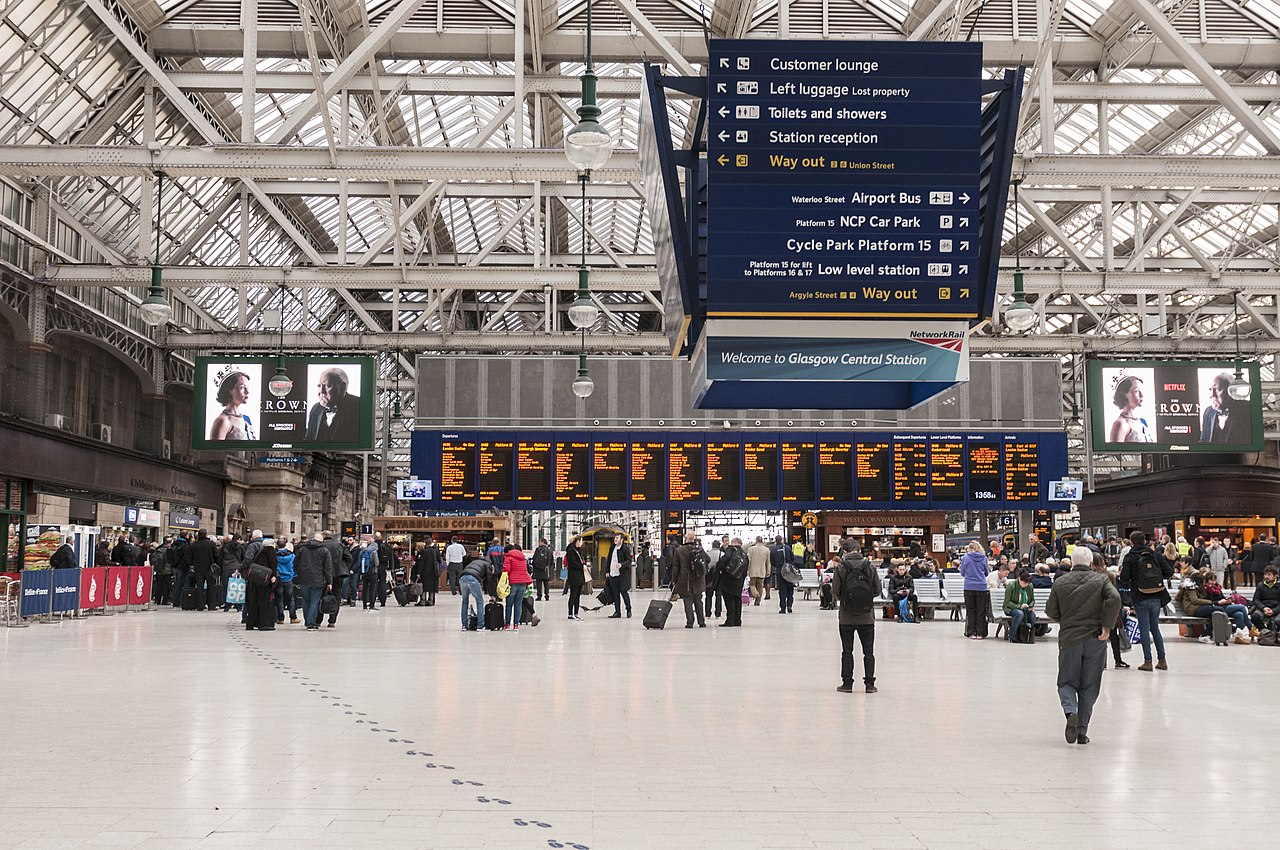
Glasgow Central Station, a primary rail hub in Scotland, ceased operations indefinitely on Sunday following a significant fire that caused the collapse of an adjacent commercial building on Union Street. The incident has led to widespread disruption across intercity and local rail services, with some routes being diverted and others suspended.
The fire, which reportedly began in a vape shop, severely damaged the mid-Victorian Forsyth building. This structure housed several businesses, including retail outlets, a salon, and a cafe. Emergency services confirmed no casualties resulted from the blaze or the subsequent structural failure.
Emergency Response and Building Collapse
Witnesses described hearing explosions, which are speculated to have originated from lithium batteries within vape products. These explosions preceded the collapse of the building's dome. The Scottish Fire and Rescue Service deployed nine fire appliances and three high-reach vehicles, with personnel remaining on site through Monday morning to manage the aftermath.
Rail Service Disruptions
Network Rail confirmed the station's closure, impacting thousands of daily commuters and travelers. ScotRail services operating on high-level platforms were entirely suspended. Trains typically using low-level platforms were instructed to bypass Glasgow Central, further complicating travel plans.
Intercity routes faced significant alterations, with some services rerouted to alternative stations such as Preston, Carlisle, or Motherwell. This extensive disruption underscores the station's critical role in Scotland's transportation network.
Broader Impact on City Events
Beyond transportation, the incident also affected local cultural events. The closing night of the Glasgow Film Festival, a prominent annual event, had to be relocated due to the proximity of the fire and the ongoing emergency response. This highlights the broader societal ripple effects of such urban incidents.
Historical Context of Glasgow Central
Glasgow Central Station, opened in 1879, is one of the busiest railway terminals in the United Kingdom outside of London. Its closure represents a rare and significant event, given its historical importance and daily operational volume. The station serves as a gateway for routes connecting Glasgow with major cities across Scotland and England, making its indefinite closure a logistical challenge for Network Rail and train operators.
Authorities are currently assessing the structural integrity of the affected area and the timeline for reopening the station. The focus remains on ensuring public safety and restoring normal services as quickly as possible, though a definitive timeframe has not yet been provided.
Implications
Country Impact: The indefinite closure of Glasgow Central Station significantly impacts Scotland's national rail network, disrupting travel for thousands and rerouting essential intercity connections. This could strain alternative transport infrastructure and local economies reliant on rail access.
Industry Impact: The rail industry faces substantial operational challenges, including rerouting logistics, passenger management, and potential revenue losses for operators like ScotRail and Network Rail. Businesses located within the affected building have suffered complete destruction, leading to economic losses and job displacement.
Market Impact: While direct market impact is localized, prolonged disruption to a major transport hub could indirectly affect regional economic activity and business confidence in Glasgow. The incident may also prompt reviews of fire safety regulations for commercial buildings, particularly those housing businesses with potentially hazardous materials like lithium batteries.