Germany economy gains as Bundesbank lifts GDP outlook again
Germany economy likely grew slightly in the second quarter, beating the Bundesbank's prior stagnation call as exports and public spending helped.
Claire Dubois ·
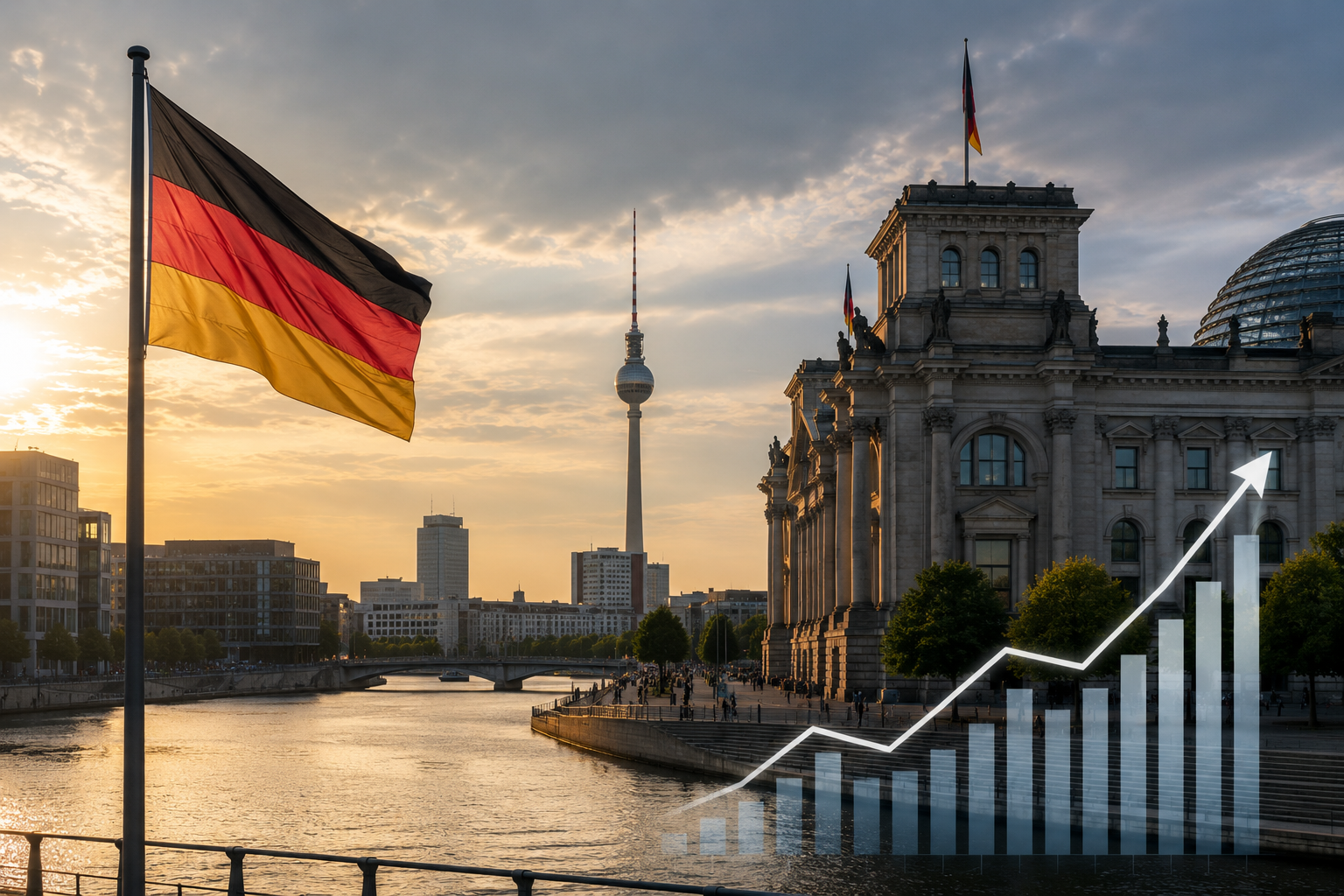
Germany economy likely expanded slightly in the second quarter, the Bundesbank said, signaling firmer momentum than it expected in June.
The central bank said Tuesday that output probably rose between April and June, revising away from its earlier view that activity would stall. It also warned that growth in the July to September period is likely to be softer.
Bundesbank raises second-quarter view
The first official estimate for second-quarter gross domestic product is due Thursday from Destatis. An analyst poll ahead of the release pointed to growth of 0.1%, down from 0.3% in the previous quarter.
In its monthly report, the Bundesbank said the latest data suggested a better near-term path than its June projections assumed. “Overall, the current set of indicators points to a slightly higher underlying economic-growth rate than anticipated,” the central bank said.
The upgrade matters because Germany has struggled to break out of a long weak patch marked by soft industrial output, high energy costs and pressure on export-heavy manufacturers. Even a small expansion would show that Europe's largest economy has absorbed recent shocks better than the Bundesbank previously expected.
Exports and consumers hold up
The central bank pointed to stronger foreign demand and rising exports as supports for manufacturers. It also said consumers appeared “relatively unfazed” by elevated energy costs, an important signal for domestic demand.
Government spending is another support. Major outlays on infrastructure and defense are helping offset weaker private-sector momentum, according to the Bundesbank's assessment.
Recent survey data also turned more constructive. A closely watched index of business expectations improved more than anticipated in July, while separate private-sector surveys suggested activity had returned to growth.
The better quarter does not erase Germany's larger growth problem. The Bundesbank and the government both expect the economy to expand by only 0.5% over the full year, a modest figure for a country trying to restore industrial competitiveness and lift investment.
Merz reform agenda faces test
Chancellor Friedrich Merz has framed 2026 as a “year of growth” after a prolonged malaise. His coalition has announced changes covering pensions, income tax and bureaucracy, aiming to reduce costs and improve the investment climate.
A separate Bundesbank study published Tuesday showed why administrative reform has become a central economic issue. The central bank said red tape costs German companies about 7% of annual revenue, up from 5% between 2022 and 2024.
The study also found that the administrative burden has weakened productivity growth by roughly half a percentage point. For manufacturers already facing energy, labor and export pressures, those costs can reduce funds available for equipment, digital upgrades and hiring.
Three paths for the recovery
If foreign demand continues to support exports, Germany could keep posting modest gains despite weak domestic momentum. That would help the euro-area macro picture by limiting recession risk, while manufacturers would get order-book relief and the wider industrial sector could stabilize without a sharp inventory correction.
If energy costs rise again because of the Middle East conflict or other supply shocks, the improvement could fade. Higher input bills would squeeze companies, restrain household spending and weigh on European growth through weaker German imports from trading partners.
If public infrastructure and defense spending accelerates while bureaucracy reforms reduce compliance costs, Germany could see a more durable lift. The mechanism would be higher demand from government projects, lower administrative drag for firms and stronger productivity, though the timing depends on execution rather than announcements.
The open questions are narrow but important: whether Thursday's GDP estimate confirms the Bundesbank's reading, whether the third quarter slowdown is shallow, and whether Merz's reforms reach companies quickly enough to change investment plans. For now, the German economy looks less weak than feared, but not yet strong enough to end the debate over its growth model.