Gas prices hit $4 as Iran war squeezes Hormuz oil flows
Gas prices reached $4 a gallon as Iran war disruptions through the Strait of Hormuz added pressure on US drivers.
Atlas Newsdesk ·
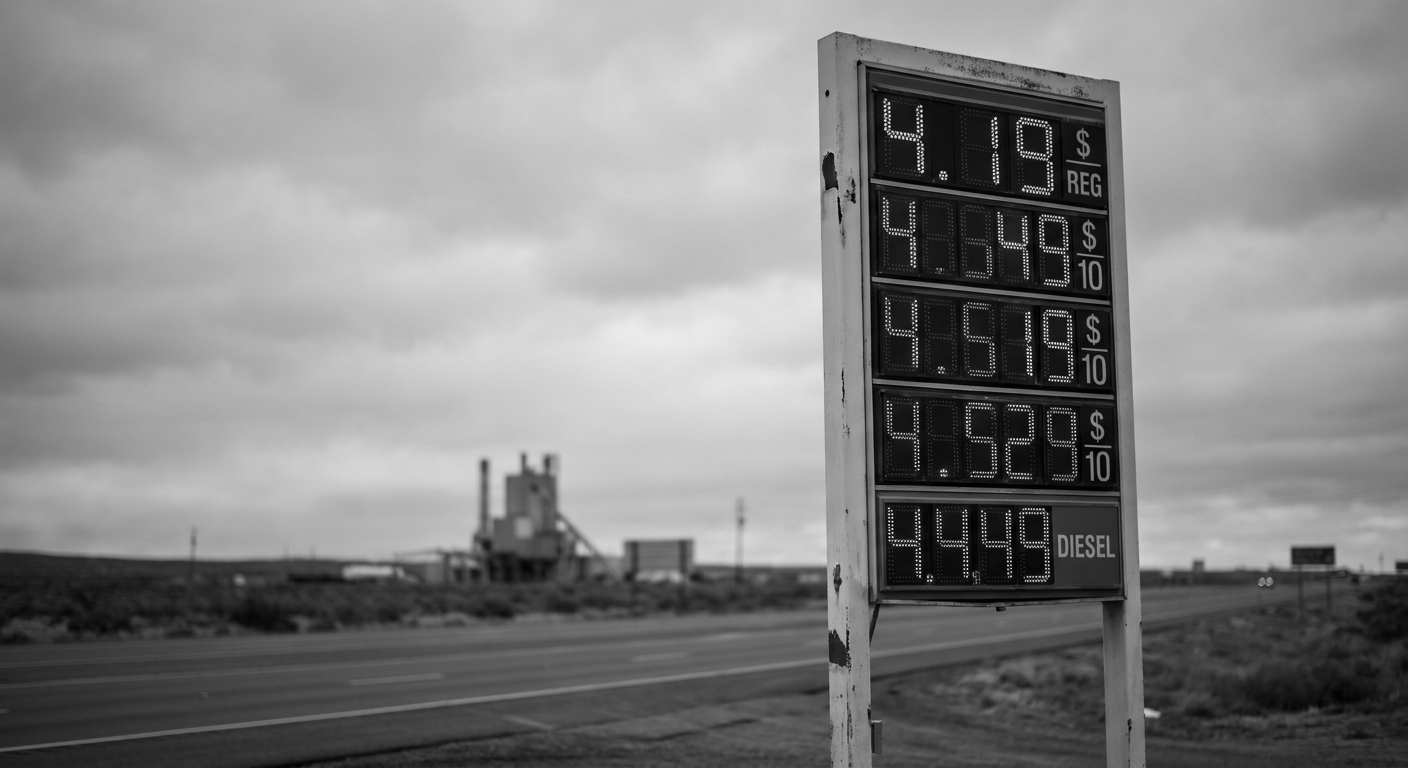
US gas prices climbed to $4 a gallon Monday, AAA said, deepening the pump shock tied to Iran-war disruptions near Hormuz.
The national average has now touched that level twice since fighting in Iran disrupted global oil supplies, according to the provided account. Before the conflict affected shipments through the Strait of Hormuz, the average stood at $2.98 a gallon.
That leaves drivers facing a $1.02 increase from the pre-disruption level, a rise of about 34% based on the figures provided. For households, the change is visible immediately because gasoline is bought frequently and priced in large public displays.
Hormuz disruption resets pump math
The Strait of Hormuz is the route named in the account as the pressure point behind the latest price move. The report said fighting cut off most oil that had been moving through the waterway, tightening global supply and feeding into retail fuel costs.
Gasoline prices do not move only on crude supply, but crude is a central input in the chain from production to refining to service stations. When available barrels become harder to secure, the cost pressure can travel through wholesale markets and eventually reach drivers at the pump.
The $4 level is also psychologically important for consumers, even if the exact burden depends on driving habits and vehicle efficiency. It signals that the disruption has moved from an energy-market story into a household-budget issue.
AAA gauge frames the shock
AAA was the source cited for Monday’s national average, giving the story a single clear benchmark rather than scattered local prices. National averages can hide large regional differences, but they provide a useful snapshot of direction for consumers and policymakers.
The change from $2.98 to $4 matters because it represents more than a routine daily swing. A driver buying 15 gallons would pay $60 at Monday’s average, compared with $44.70 at the earlier level, a difference of $15.30 for that fill-up.
The direct hit lands first on motorists, delivery operators and businesses whose costs are sensitive to fuel. The wider sector effect is felt across refiners, distributors and retailers, which must manage higher input prices, uncertain supply conditions and customer resistance to more expensive fuel.
Three paths for fuel costs
If the Hormuz disruption persists, the mechanism is straightforward: constrained supply keeps pressure on crude-linked costs, and gasoline can remain elevated. In that scenario, the global macro effect would be tighter energy conditions, the driver effect would be higher recurring transport costs, and the industry effect would be more volatile pricing across the fuel chain.
If shipments through the route normalize, the pressure could ease through the same channel that lifted prices. More available oil would reduce the scarcity premium, giving gasoline suppliers room to lower prices and allowing drivers to recover some of the lost purchasing power.
If interruptions intensify or return after a brief improvement, the risk is another round of price instability rather than a clean adjustment. That would make budgeting harder for households, complicate inventory and pricing decisions for fuel businesses, and keep energy costs prominent in the broader economic discussion.
The open questions are narrow but important: how long the disruption lasts, how much oil can move through alternative routes, and how quickly wholesale changes pass through to retail stations. Until those answers are clearer, Monday’s $4 average is best read as a marker of strain, not a settled endpoint.