AI Expansion Hits Critical Wall as Chip-Making Equipment Shortage Deepens
Global AI expansion is critically dependent on Dutch-made ASML EUV machines. Potential EU export controls could reshape the semiconductor supply chain and AI…
Atlas Newsdesk ·
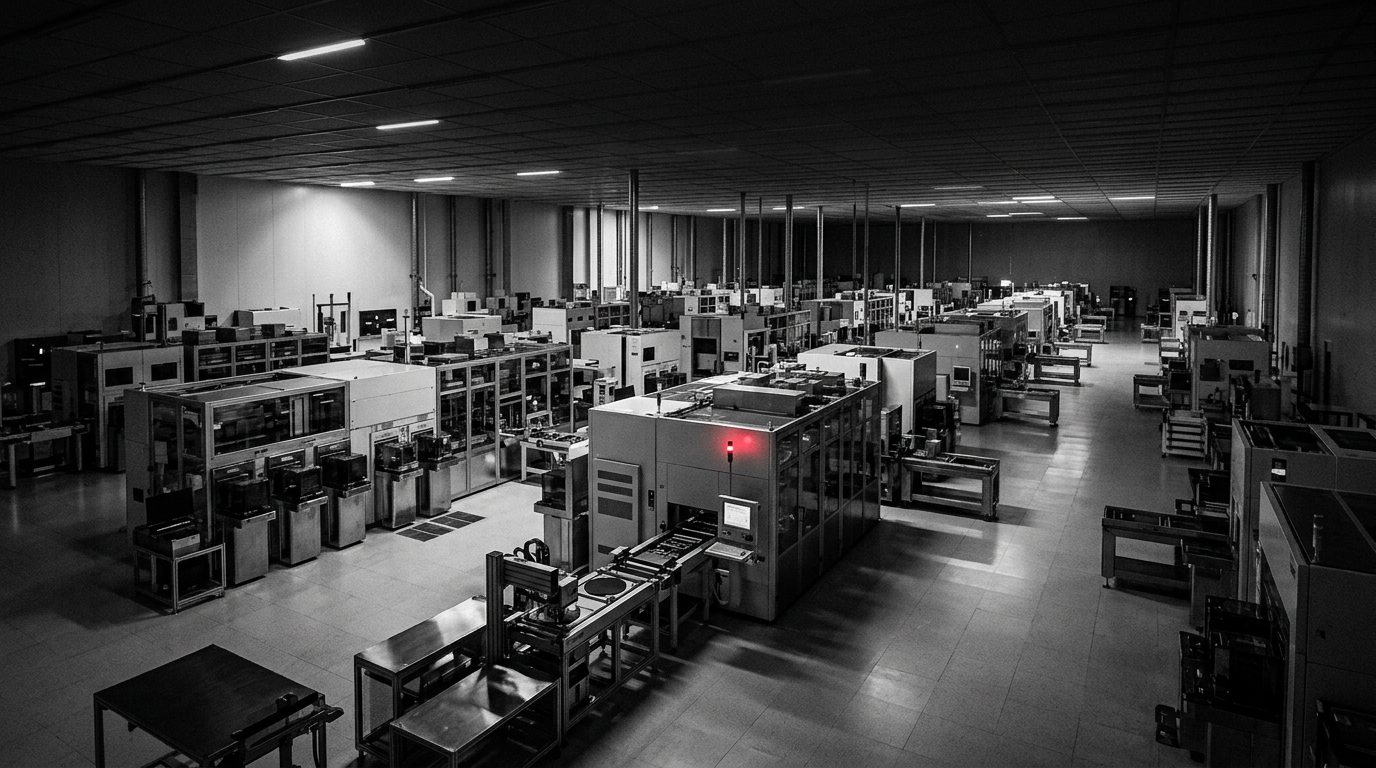
The worldwide expansion of artificial intelligence applications is encountering significant challenges stemming from a crucial reliance on specialized manufacturing equipment. Specifically, the development of advanced semiconductors, vital for constructing large-scale data centers and training sophisticated AI models, hinges on the availability of extreme ultraviolet (EUV) lithography machines.
These highly complex tools are exclusively manufactured by the Dutch company ASML, creating a single point of dependency within the global technology supply chain.
Forecasts indicate a substantial increase in global data center investments, potentially reaching $7 trillion by 2030. Achieving this growth trajectory, however, is directly contingent on a consistent and unrestricted supply of these high-end fabrication instruments. This dependence highlights a strategic vulnerability in the rapidly accelerating AI sector, tying its future progress to a limited number of suppliers and a specific technological bottleneck.
Potential for European Regulatory Influence
Policy analysts suggest that the European Union possesses a unique geopolitical leverage point due to ASML's domicile in the Netherlands. Implementing potential restrictions on the export of these critical machines could provide the EU with a powerful tool to influence the pace and direction of global AI development. Such an action, in the form of an export moratorium, would effectively decelerate the worldwide AI development cycle.
This slowdown could create a strategic window for regulators to address pressing systemic risks associated with unbridled AI growth. These risks include growing concerns over cybersecurity vulnerabilities, potential disruptions to labor markets due to automation, and the proliferation of autonomous weapon systems.
A deliberate intervention would compel a fundamental re-evaluation and restructuring of the global semiconductor supply chain, which is currently optimized for efficiency rather than resilience or regulatory control.
Trade Implications and Shifting Control
While an intervention of this magnitude from the European Union would likely provoke retaliatory trade measures, particularly from economic powers like the United States, it would simultaneously shift the epicenter of regulatory authority. The locus of control over critical technology and its strategic implications would move towards the European Union, granting it significant influence over the future landscape of artificial intelligence.
This emerging strategy reflects a broader international consensus that current industry self-regulation is insufficient to mitigate the profound macroeconomic and security risks posed by the rapid and largely unchecked scaling of AI technologies. Stakeholders increasingly believe that proactive governmental oversight is necessary to ensure responsible development and deployment of AI, rather than relying solely on market forces to address complex ethical and societal challenges.
Global Semiconductor Supply Chain Reassessment
The potential for EU export controls underscores a broader need to reassess the global semiconductor supply chain. Diversification of manufacturing capabilities and geographical distribution of critical technology production could become paramount. The current concentration of advanced chip-making tools presents a single point of failure that could have cascading effects across numerous industries dependent on high-performance computing.
The strategic importance of EUV lithography machines extends beyond mere economic considerations, touching upon national security, technological sovereignty, and global power dynamics. As AI becomes increasingly integrated into critical infrastructure and defense systems, control over its foundational technologies gains immense geopolitical weight. The decisions made regarding these machines could profoundly shape the technological balance of power for decades to come.