Federal Reserve chair avoids rate clues as prices still bite
Federal Reserve Chair Kevin Warsh resisted offering rate-path clues, saying inflation remains too high as trade and geopolitical shocks cloud forecasts.
Atlas Newsdesk ·
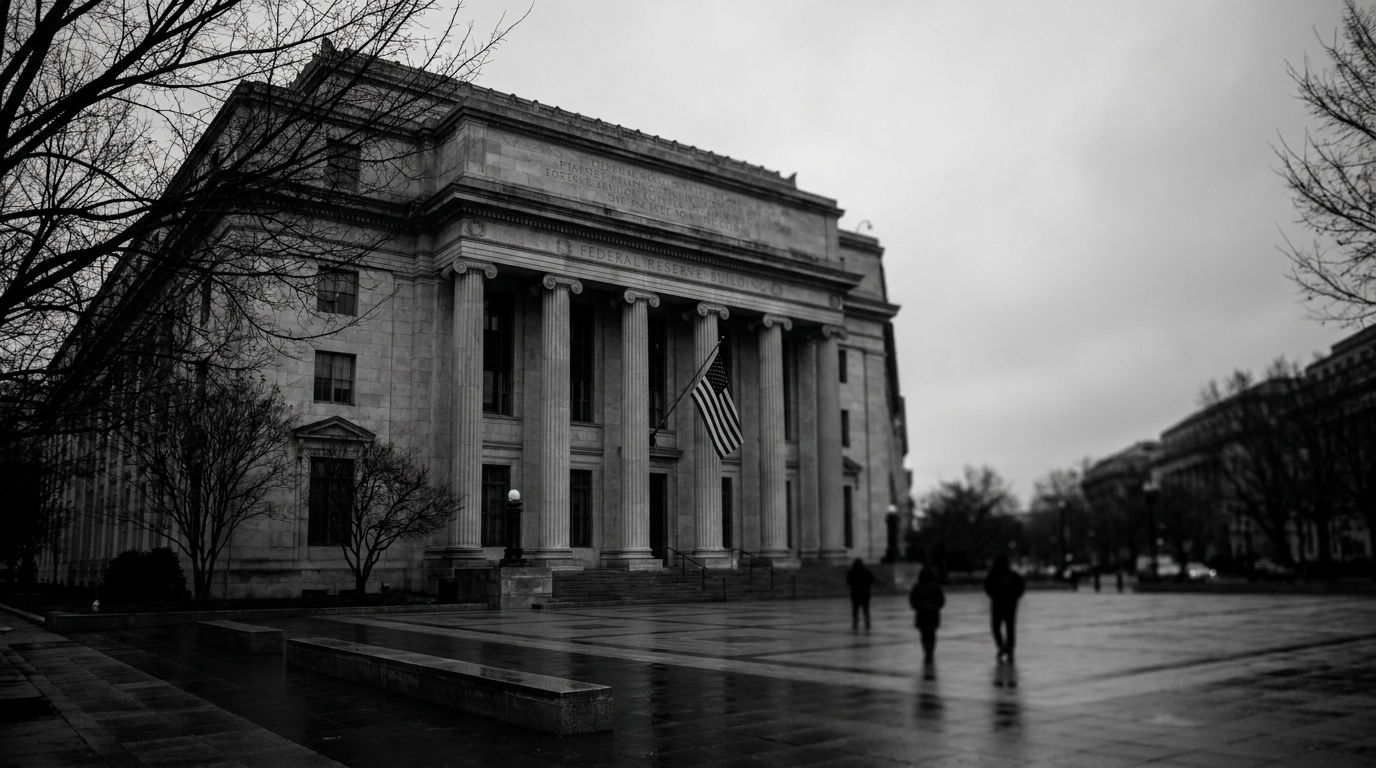
Federal Reserve Chair Kevin Warsh kept markets without rate guidance Wednesday, saying inflation is still too high while uncertainty clouds forecasts.
The remarks came in Warsh’s first international appearance as chair and gave investors little help in reading the central bank’s next move later this month. He signaled discomfort with inflation but avoided saying whether that concern would translate into a specific policy action.
Warsh rejects rate-path hints
Warsh said he found “common cause” with central bank leaders in Europe, Britain and Canada in resisting “forward guidance.” The term refers to the practice of telling households, companies and investors where borrowing costs may be headed before a formal decision is made.
His message marks a communication style built around flexibility rather than pre-commitment. Warsh has argued that when uncertainty is high, strong signals about future rates can trap policymakers if the economy changes before they act.
That approach matters because central bank language can move financial conditions even before interest rates change. A clear hint about lower rates can ease borrowing costs, while a warning about tighter policy can push lenders and investors to reprice risk.
Tariffs and war cloud forecasts
The policy backdrop has become harder to read because inflation risks are coming from several directions at once. The source article cited Washington’s tariffs and the Iran war as shocks that have made price forecasting more difficult for central bankers.
Tariffs can raise import costs, depending on how companies absorb or pass on the added expense. War can disrupt energy, shipping and insurance markets, which can then feed into prices paid by consumers and businesses.
Those forces complicate the usual policy playbook. If inflation is driven by weak demand, central banks can respond one way; if it is driven by supply shocks, a rate move may slow activity without quickly fixing the source of price pressure.
Warsh’s refusal to preview the next decision therefore leaves the Federal Reserve with room to adjust as data arrives. It also leaves markets to infer policy direction from inflation readings, labor signals and the central bank’s formal statement later this month.
Markets lose a familiar signal
The immediate effect is clearest for investors and lenders that depend on central bank messaging to price credit. Without guidance, bond traders, banks and mortgage lenders may place more weight on incoming data and less on speeches.
For the Federal Reserve, the benefit is optionality. The cost is that silence can create wider disagreement about what the central bank intends to do, especially when inflation remains above the comfort level described by its chair.
The wider central banking community is facing a similar communication test. Warsh said his view aligned with European, British and Canadian counterparts, suggesting a broader pullback from advance signaling at a time when shocks are harder to model.
If inflation pressures persist, the global macro effect would likely be tighter financial caution as investors assume central banks cannot declare victory on prices. For the Federal Reserve, that would reinforce the case for keeping options open; for banks and rate-sensitive industries, it would preserve uncertainty around funding costs.
If the shocks fade instead, the absence of guidance could let the Federal Reserve shift tone without reversing an earlier promise. The macro effect would come through calmer inflation expectations; the industry effect would be a cleaner repricing of credit, housing and corporate borrowing channels.
A third path is messier: inflation cools in some categories while tariffs or war-related costs lift others. In that case, the Federal Reserve may face a communication problem as much as a policy problem, because markets will demand clarity just as Warsh’s framework argues against giving it too soon.
The key open question is whether investors will treat less guidance as prudent caution or as a sign that policymakers have limited visibility. The answer will shape how much central bank speeches still matter before the next formal decision.