Eventbrite Lists D.C. Flea Market Events in One Hub
Eventbrite has launched a Washington, D.C. page aggregating flea market listings, linking users to event pages for dates, locations, and RSVP or tickets.
Sophie McAlister ·
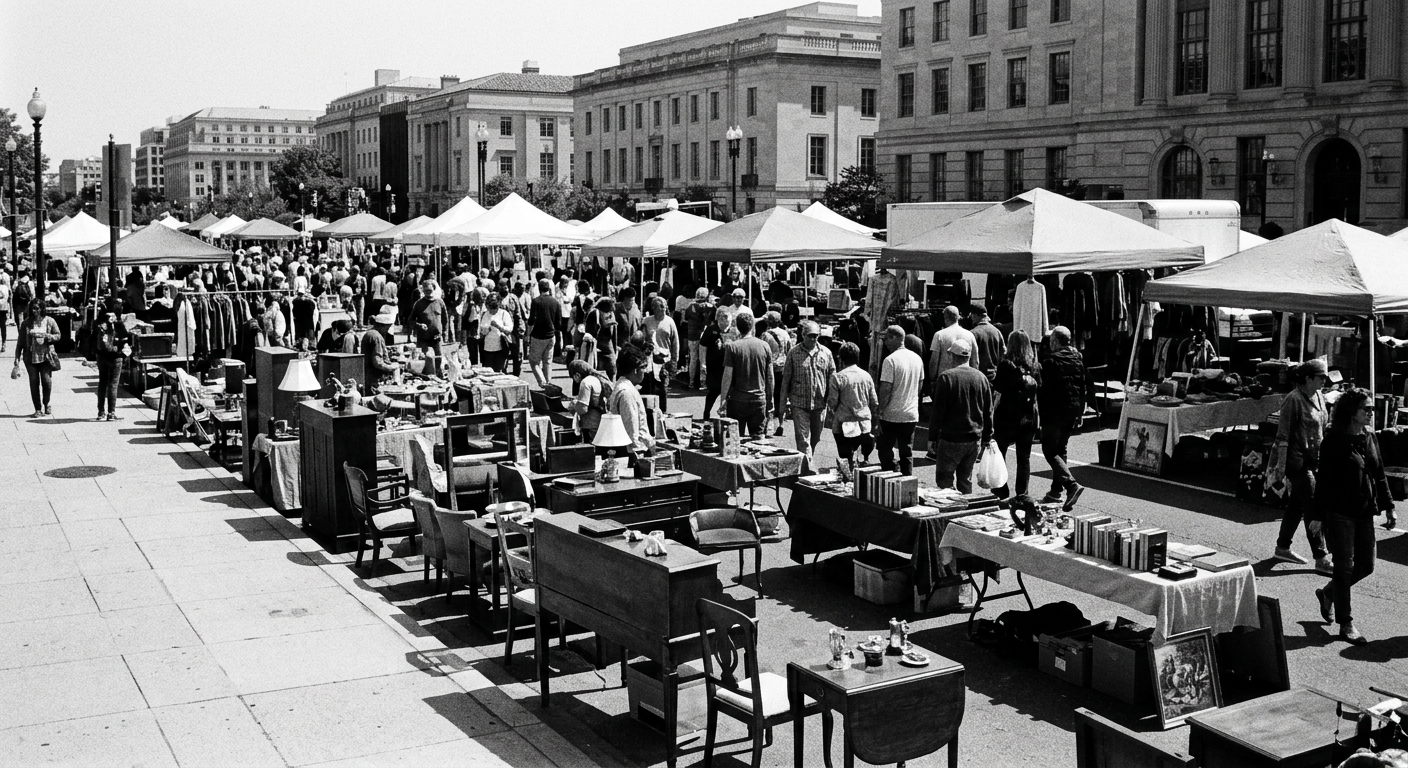
Eventbrite has published a Washington, D.C.-focused hub titled “Discover Flea Market Events & Activities in Washington, DC,” bringing multiple upcoming flea market listings into a single browsing page. The curated page is designed for both residents and visitors who want to find local markets, pop-up sales, and community vendor events without searching across many separate organizer sites.
The hub compiles entries that typically connect out to individual event pages, where users can see the event’s date and location and complete ticketing or RSVP steps. The page is available on Eventbrite’s website and is also surfaced through a feed, allowing users to scan what is coming up and then register through each dedicated listing.
How the Eventbrite hub works for shoppers and visitors Rather than replacing event-level details Rather than replacing event-level details, the D.C. flea market hub serves as a portal that points to organizer-managed pages. Those individual event pages generally carry practical information such as start and end times, maps and directions, and organizer contact details. Where pricing applies, event pages typically include ticket information, and where admission is free, pages often provide RSVP options. For people planning a weekend activity or neighborhood outing, the aggregated view can reduce the need to cross-check multiple calendars and social posts before choosing a market to attend. Why organizers and vendors use the platform Eventbrite is commonly used by local promoters and small vendors as a front door for managing attendance. The platform can be used to handle signups, sell tickets, and communicate updates to attendees, which can be especially relevant for markets operating with limited space.
Discover Flea Market Events
The source material notes that many market pages include capacity limits, early-bird ticket options, or free RSVP choices. That structure can help organizers estimate turnout for events held in settings like civic plazas, community centers, or private lots, where logistics and crowd planning depend on expected attendance.
What attendees should double-check before going
While the centralized listing can make discovery easier, final specifics still live on the event pages managed by organizers. Attendees are advised to review each event listing for confirmed venue details, including exact addresses, parking information, and any age rules or item restrictions.
Updates made by neighborhood groups or market organizers to their individual event pages are expected to appear at the event-level pages linked from the hub. The source material also notes that spring and summer calendars often grow, meaning new listings and schedule changes may be added over time.
Overall, the D.C. flea market page functions as a centralized directory that helps users compare dates, read descriptions, and complete registrations within one interface, while keeping authoritative logistical details at the individual event level.
Implications
Country Impact: For Washington, D.C. residents and visitors, the listing provides a single place to discover flea markets and pop-up vendor events and then follow through on RSVP or ticket steps. It may also make it easier to compare options across neighborhoods based on dates and venue locations shown on event pages.
Industry Impact: For organizers and small vendors, visibility through a centralized Eventbrite hub can broaden reach beyond a single neighborhood community calendar. The use of RSVPs, ticketing, and capacity settings can also support planning for markets held in spaces where turnout needs to be estimated in advance.
Market Impact: For Eventbrite’s marketplace model, curated local hubs can concentrate demand by reducing search friction and routing users directly to registrations on event pages. Because the hub is a directory rather than a replacement for organizer pages, the practical impact depends on how often event listings are created and updated by local organizers.