EU tariffs threat rises after Google's $1 billion fine case
Trump said the U.S. would open a Section 301 inquiry after the EU’s Google fine, raising the risk of new EU tariffs.
Atlas Newsdesk ·
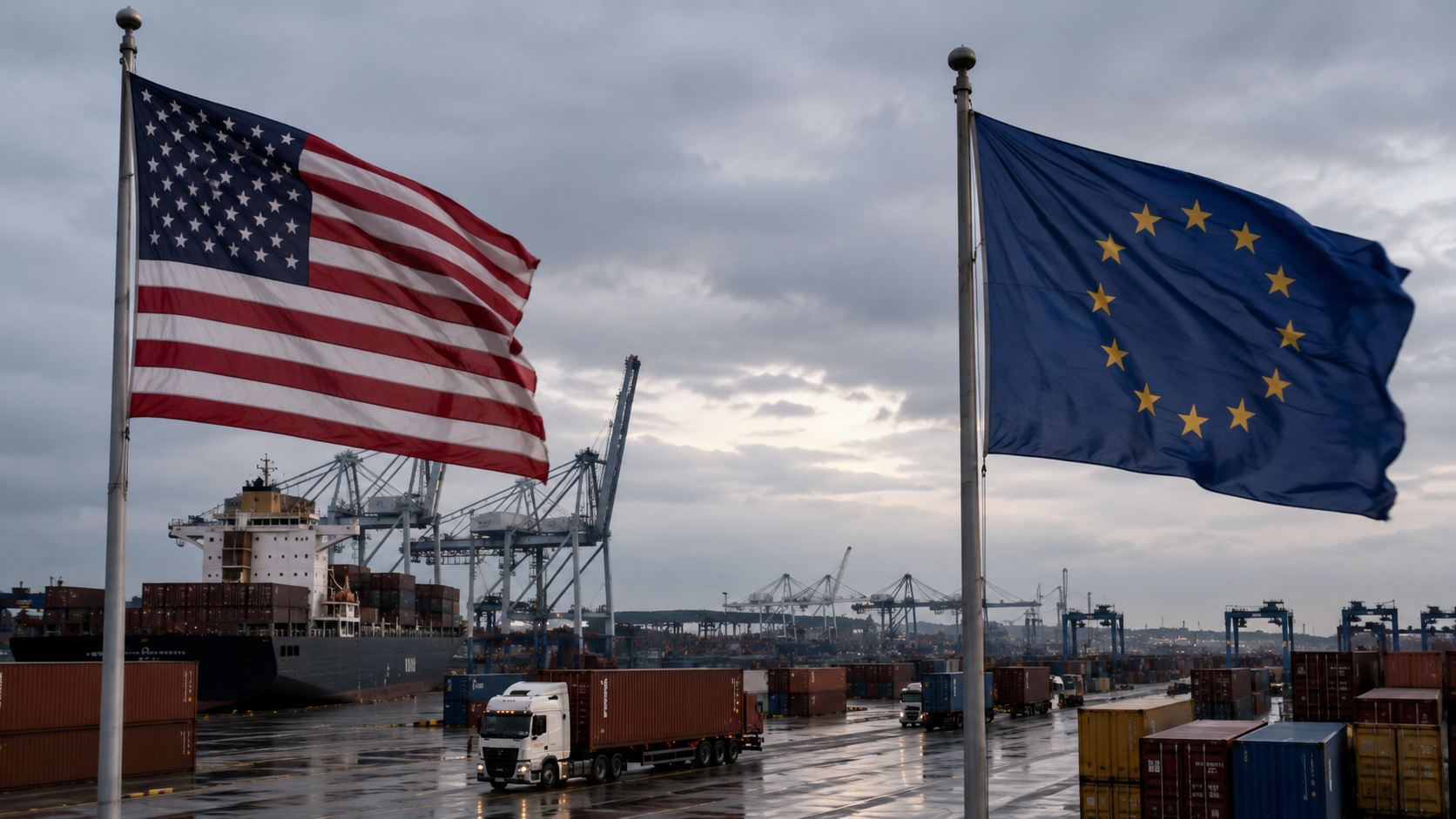
EU tariffs are back in focus after President Trump said he would launch a Section 301 inquiry tied to the bloc’s $1 billion Google fine.
The dispute links two policy fronts that have repeatedly collided: Europe’s regulation of large digital platforms and Washington’s use of trade law to defend U.S. companies. The immediate trigger was the European Union’s latest penalty against Alphabet’s Google, which the bloc said breached digital competition rules.
Trump responded Friday on Truth Social by saying his administration would start a probe under Section 301 of the Trade Act of 1974. He accused the EU of “illegal and highly unethical conduct” and signaled that new duties on European goods could follow if the investigation supports retaliation.
Google fine becomes trade trigger
The EU’s action against Google adds to a series of penalties targeting American technology groups in recent years. The bloc has argued through its competition regime that dominant platforms can distort markets, while U.S. officials have often framed such enforcement as a burden placed disproportionately on American firms.
Alphabet sits at the center of this case because Google remains one of the most visible U.S. companies affected by European digital rules. A $1 billion penalty is financially manageable for a company of Alphabet’s scale, but the broader risk is regulatory accumulation: fines, business-practice restrictions and uncertainty over future compliance demands.
Section 301 returns to EU fight
Section 301 gives the U.S. Trade Representative authority to investigate foreign practices deemed unfair or discriminatory toward American commerce. If the process finds grounds for action, the president can impose tariffs or other trade measures after the required review.
The same legal tool has become a central part of Trump’s trade approach. According to the provided material, his administration used Section 301 this week to apply tariffs ranging from 10% to 12.5% on trading partners over forced-labor concerns, replacing temporary levies after the Supreme Court invalidated many earlier tariffs in February.
That recent history matters because it shows the EU threat is not only rhetorical. A formal investigation would create a policy channel through which a digital competition dispute could become a customs burden for exporters in sectors far removed from search, advertising or software.
Tariff risk spreads beyond tech
For European companies, the first question is which goods could be targeted if the inquiry advances. The source material does not identify product categories, so the commercial exposure remains undefined for manufacturers, retailers and logistics firms that move EU goods into the U.S. market.
For U.S. technology firms, the message is different. If Washington treats European digital fines as trade discrimination, companies facing EU enforcement may gain political backing at home, but they could also become focal points in a broader transatlantic dispute that raises pressure on negotiations.
The industry-level risk is a feedback loop between regulation and retaliation. If Europe continues large platform cases and the U.S. answers through tariffs, digital policy could spill into merchandise trade, increasing costs for importers and complicating supply planning on both sides of the Atlantic.
If the Section 301 review closes without duties, the macro effect would likely be contained to diplomatic friction, Alphabet would still face the EU fine, and the tech sector would continue fighting Europe’s rules inside the regulatory system. If the review produces tariffs, the global effect would be a sharper trade-policy shock, Alphabet’s case would become a precedent for U.S. retaliation, and other industries could absorb costs unrelated to the original digital dispute.
The open questions are concrete: whether the U.S. Trade Representative formally begins the case, how the EU answers, which goods could be named, and whether the Google penalty survives any appeal process. Until those details emerge, the dispute is best read as a tariff threat with a legal pathway, not yet a completed trade action.