SpaceX Rocket Stage Set for Lunar Impact
SpaceX rocket stage is projected to hit the Moon Wednesday near Einstein Crater, with NASA and South Korea’s Danuri set to document aftermath.
Atlas Newsdesk ·
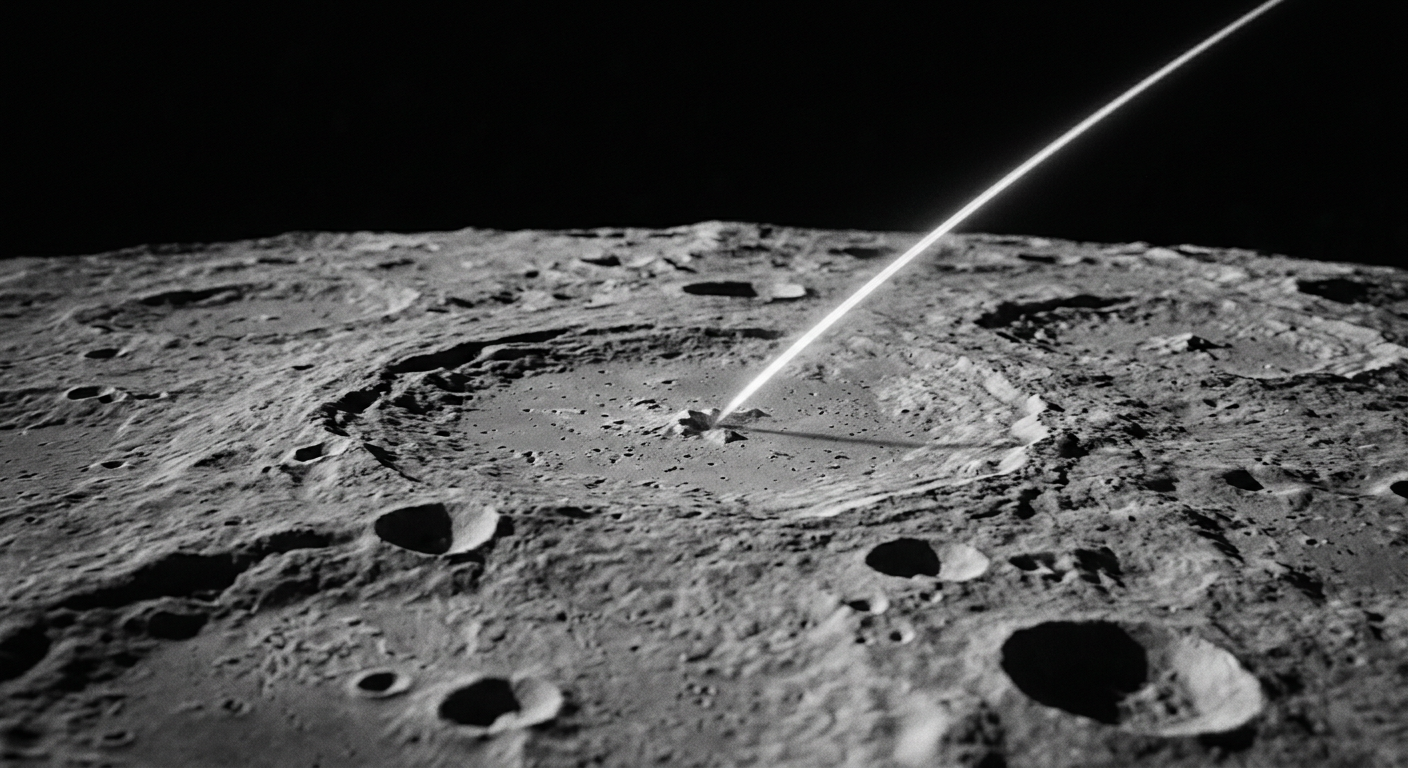
A derelict SpaceX rocket upper stage is expected to collide with the Moon on Wednesday, in what experts describe as the second recorded case of an unintended human-made object striking the lunar surface.
The hardware has been drifting since its launch in January 2025. Projections indicate it will hit near the Einstein Crater at about 8,700 kilometers per hour, according to experts cited in the source material.
Impact site, speed, and expected crater The impact is expected to release kinetic energy comparable to three tons of TNT. Based on those estimates, the collision could excavate a crater about 27 meters across and roughly 5 meters deep.
Observers on Earth are unlikely to see the initial flash from the strike because it is expected to be too faint for terrestrial viewing. However, the plume of dust and debris lofted from the surface is expected to be visible through telescopes for several minutes after the collision.
Orbiters positioned to document the aftermath
Two spacecraft are expected to play a key role in documenting the aftermath. NASA’s Lunar Reconnaissance Orbiter and South Korea’s Danuri orbiter are positioned to capture observations of the impact area after the event, officials said.
Post-impact imaging can help confirm the precise location and measure the size and shape of the newly formed crater. The same observations can also support assessments of how material disperses across the surface immediately after a high-speed strike.
Debris management and risks for future lunar activity
The incident is being cited as another sign of rising congestion from human-made objects in space and the complications that can follow when hardware is left to drift. Experts noted that the collision could have been prevented if the rocket stage had been steered into a solar orbit rather than remaining on a trajectory that ultimately intersects the Moon.
Researchers expect the data associated with this impact to inform future planning for lunar missions. The is to better quantify how debris-related hazards could affect spacecraft operations, landing-zone safety, and longer-term surface infrastructure.
While the strike is projected for Wednesday, the exact visibility and immediate observational outcomes will depend on how the dust plume behaves and what the orbiters are able to capture in the hours and days that follow.