Delta says small LAX lounge can reshape premium airline procurement margins
Delta’s corporate blog says Phase 1 of its second Delta One Lounge at LAX is a 4,000-square-foot space designed for 75 guests.
Edward Mullen ·
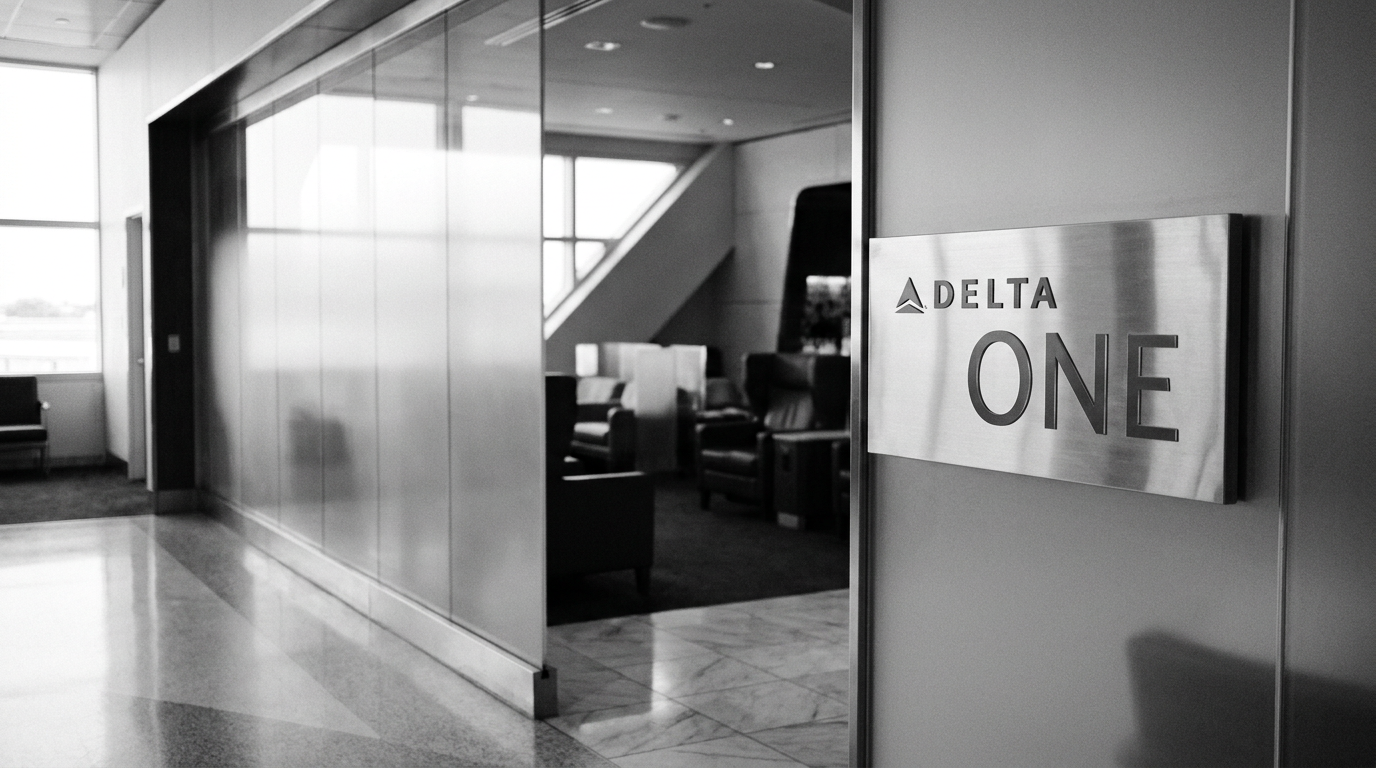
Industry consensus often dictates that larger footprints and increased capacity are the primary metrics for premium airport lounge investments. However, Delta Air Lines's new LAX Delta One Lounge defies this expectation with an "intimate" 4,000-square-foot space built for just 75 guests. This counter-intuitive move suggests that the procurement of high-end lounge experiences is no longer solely about square footage.
Delta is selling intimacy, not just airport real estate The basic fact pattern is narrow. Delta Air Lines’ [corporate blog](https://news.delta.com/delta-deepens-investment-lax-phase-1-second-delta-one-lounge-now-open) says the carrier has opened Phase 1 of its second Delta One Lounge at LAX Terminal 2.
The source summary says the expansion is “part of a strategic investment to significantly grow Delta's,” but the available packet cuts off before giving the full scope of that investment. That matters: the only verifiable numbers in the packet are Phase 1, second Delta One Lounge, 4,000-square-foot, and 75 guests, which means any broader claim about the economics of Delta’s lounge network has to be treated as company framing rather than an established market fact.
The phrasing Delta uses is still telling. A 4,000-square-foot room designed for 75 guests is not being positioned, at least in the summary available here, as a mass-throughput answer to premium-travel crowding.
It is being described as “intimate.” In procurement terms, that adjective does work: it moves the buying conversation away from a pure facilities problem — more seats, more food service, more square footage — and toward a hospitality bundle where design, staffing model, location, exclusivity, and brand perception are part of the product being purchased.
The square-foot signal is smaller than the brand signal The consensus read on a lounge opening is simple: premium passengers want more space, so airlines build more lounges. That reading may be directionally true and still miss the margin shift.
If Delta wanted the headline to be only about capacity, the most important facts would be total network expansion, aggregate seating, and relief at congested terminals. In the packet we have, the emphasized unit is instead a specific small room at LAX Terminal 2, designed for 75 guests and framed as part of Delta One, the airline’s highest-end branded lounge product.
That changes the vendor map. A large undifferentiated lounge rewards airport real-estate execution, standardized food-and-beverage procurement, janitorial scale, and staffing coverage.
A smaller premium venue rewards suppliers that can make a constrained space feel scarce rather than cramped. The margin, in that model, is less likely to sit with whoever can build the most square footage and more likely to move to the firms that can deliver bespoke comfort, controlled access, and location-specific service without making the operating cost look like a private club grafted onto an airport terminal.
The counter-read is that Phase 1 may be unfinished capacity not strategy The obvious objection is that Phase 1 may simply mean the project is incomplete. A 4,000-square-foot space designed for 75 guests could be a temporary first step before Delta opens a larger final product, making “intimate” less a strategic choice than a launch-stage constraint.
The source packet does not say how Phase 1 relates to later phases, whether the 75-guest design is meant to remain the defining feature, or whether the economics improve once more space is added. That is the strongest counter-read, and the company blog summary does not answer it.
There is also no financial spine in the available source. Delta does not disclose, in the packet provided, the financial arrangements behind the lounge, the operating-cost assumptions, the partner structure, or how the space contributes to revenue beyond brand perception and passenger loyalty.
Without those details, the case for a margin-structure shift rests on a product-design signal rather than hard procurement data. The claim is therefore weaker than an earnings-call disclosure, a filing, or a contract announcement would be.
The omitted contract terms are the real story
The most important missing line is not the décor. It is who gets paid, and for what.
If high-end lounges are procured as premium square footage, the contracting center of gravity sits with airport construction, facilities operations, food service, and access control. If they are procured as location-specific experiences, the budget can fragment across design partners, hospitality specialists, loyalty teams, and service operators whose value is measured less by capacity than by perceived exclusivity.
Delta’s blog summary does not identify those suppliers or describe those contracts.
That omission matters for work inside the airline as much as for vendors outside it. A capacity-led lounge strategy is mostly a real-estate and operations problem.
An experience-led lounge strategy pulls in brand, loyalty, airport operations, procurement, and frontline service design earlier in the process. The work shifts from managing a standardized airport amenity to continuously tuning a premium environment for a narrow customer segment.
That does not eliminate facilities work; it changes which internal teams have pricing power in the business case.
Implications: premium travel work gets more cross-functional Analysis: If this Delta One Lounge is a template rather than a one-off, the next procurement fight inside airlines will be over the definition of value. The old metric is easier to defend: more square footage and more guest capacity are visible to executives and passengers.
The newer metric is harder: fewer guests in a more controlled environment can be more valuable if it improves loyalty, comfort, and willingness to buy premium products, but the packet provides no evidence that Delta has quantified that return.
The beneficiaries would be vendors and internal teams that can make small premium spaces feel deliberately designed rather than underbuilt. The exposed group would be suppliers whose pitch depends mainly on scale — bigger rooms, more seats, standardized service, and lower per-square-foot operating cost.
The under-noticed middle is airport operations: these teams would have to make a high-touch, low-capacity room work inside a terminal environment still governed by passenger flow, staffing constraints, security boundaries, and irregular operations. The corporate blog does not discuss those trade-offs.
The falsifiable signals are straightforward. If Delta’s future lounge communications keep emphasizing small-footprint premium spaces, named partner experiences, and comfort language over raw capacity, the procurement thesis gets stronger.
If the next updates shift back to large rooms, aggregate seating, and undifferentiated expansion, this opening looks more like a transitional real-estate milestone than a margin shift. The most important missing confirmation would be any disclosure of the financial or partnership model behind the “intimate” lounge format, because that is where the procurement margin would actually move.