DDOT’s 2018 Small‑Cell Presentation: How D.C. Planned for 5G in the Public Right‑of‑Way
A September 25, 2018 District Department of Transportation presentation outlined D.C.
Sophie McAlister ·
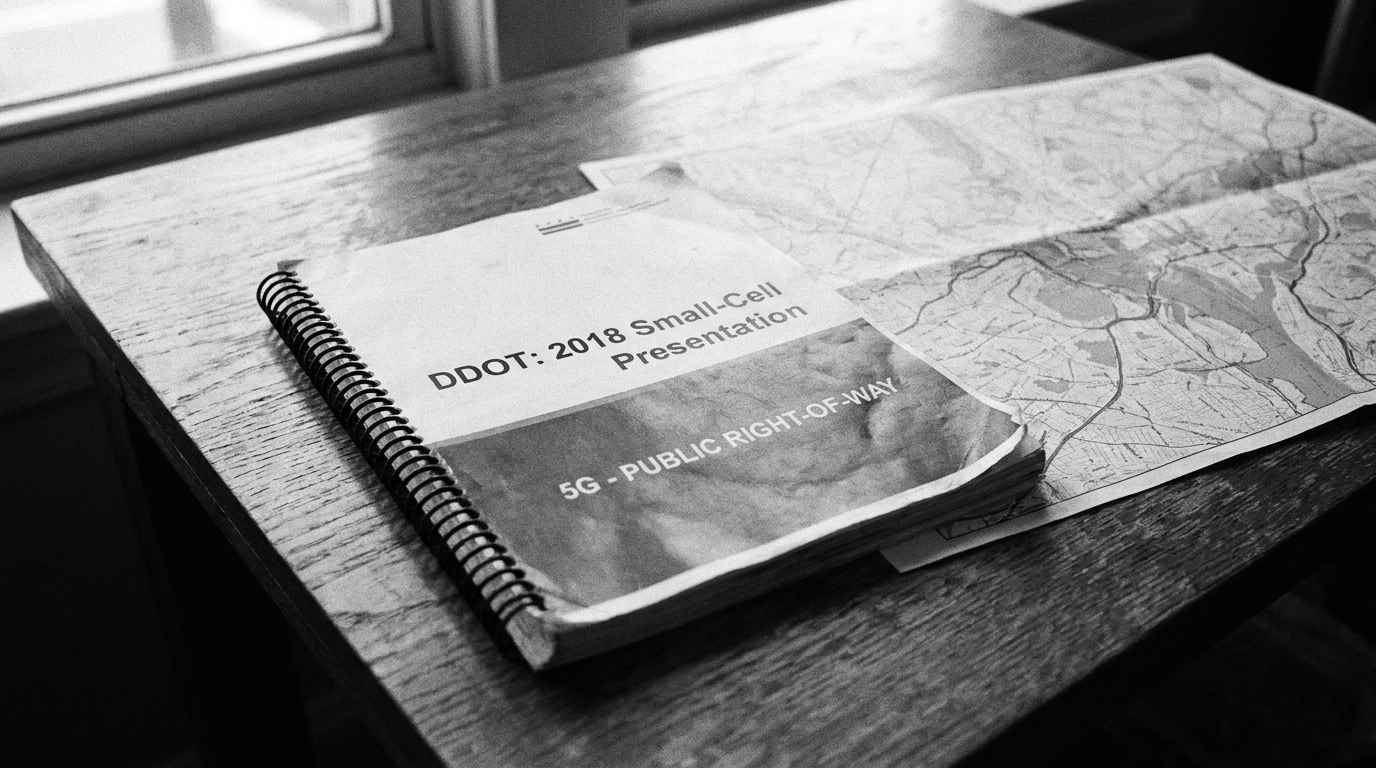
The District Department of Transportation delivered a public presentation on September 25, 2018 that laid out the agency’s approach to small‑cell wireless infrastructure in the city’s public right‑of‑way. The document addressed how small‑cell antennas, support poles, and related equipment would be permitted, sited and reviewed inside the District. The briefing is part of the municipal response to expanding small‑cell deployments tied to mobile network upgrades.
The presentation framed small cells as compact wireless nodes — distinct from larger macro towers — that carriers planned to install on utility poles, street lights and other street furniture. It reviewed the range of siting locations that fall under DDOT’s jurisdiction and flagged aesthetic and safety considerations the agency uses when evaluating proposals. The material made clear DDOT views the right‑of‑way as a managed public asset requiring rules for new wireless infrastructure.
Permitting, design and the public right‑of‑way
The DDOT slides described permitting as a core mechanism for controlling where and how small‑cell equipment is installed. The presentation covered application steps that applicants must complete to gain approval to use the public right‑of‑way and referenced design expectations for minimizing visual impact. It emphasized coordination between applicants and city staff on mount types, concealment techniques and placement to limit interference with sidewalks, trees and other street uses.
DDOT also identified different hardware types and mounting options that applicants might propose, noting that some installations can be collocated on existing poles while others require new poles or ground‑level cabinets. The briefing discussed clearance requirements and how equipment interacts with pedestrian paths and other street infrastructure that the agency manages.
Neighborhoods and the practical effects
Street‑level deployments of small cells raise policy questions for neighborhoods across D.C., from dense downtown corridors to residential blocks with tree canopy and historic streetscapes. The presentation highlighted the tradeoffs the agency weighs: accelerating wireless upgrades while preserving sidewalk access, neighborhood character and public safety. The briefing aimed to provide a consistent framework for reviewing individual permits so decisions across wards follow shared standards.
While the 2018 material focused on DDOT’s internal approach, it also signaled the need for applicants to engage with community stakeholders and comply with conditions tied to location and appearance. That combination of technical review and community sensitivity is now a standard part of municipal small‑cell programs nationwide.
DDOT’s presentation sits against wider federal and industry moves to accelerate small‑cell deployment for mobile service upgrades. For city officials, those external pressures make clear lines and clear processes for right‑of‑way management are essential for predictable siting and timely builds.
Looking ahead, the key changes to monitor are updates to DDOT’s permit rules, any citywide design standards adopted since the 2018 briefing, and how future applications balance service expansion with neighborhood concerns.