

D.C. robotaxi bill caps fleets at 800 before 2028
The measure would move D.C. beyond human-supervised testing while adding labor, crash-protection and accessibility rules for autonomous vehicle operators.
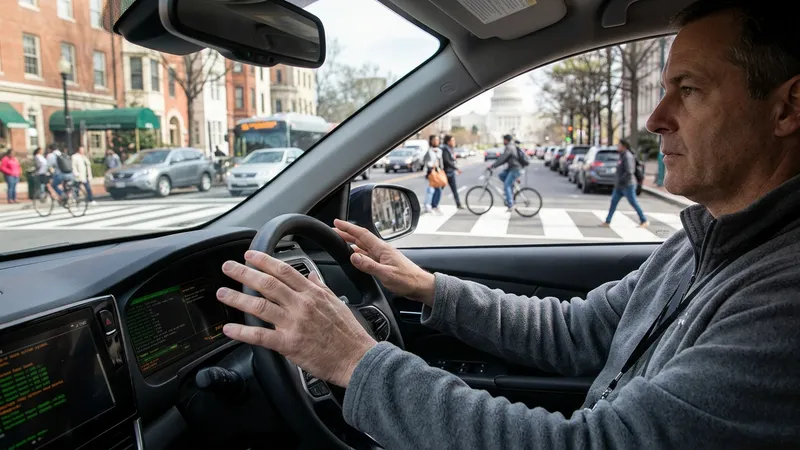
D.C. Councilmember Charles Allen released updated legislation ahead of a Thursday committee vote that would allow driverless rideshare service in the District by 2028, with a citywide cap of 800 autonomous vehicles.
For residents, the bill would move the city beyond its current human-supervised testing rules while setting limits before passenger service begins; Waymo said in July it had driven more than 300,000 test miles in D.C. over two years.
The Autonomous Vehicle Deployment Authorization Amendment Act of 2026 is scheduled for a vote in the D.C. Council’s Committee on Transportation and Environment. If approved, it would create a permit system through the District Department of Transportation for companies seeking to operate autonomous rideshare vehicles.
Current D.C. law allows autonomous vehicle testing only with a human safety driver behind the wheel. The new bill would permit driverless testing, with the goal of allowing limited passenger service later.
Allen framed the proposal as an attempt to set rules before the technology becomes widespread on District streets. “If you believe autonomous vehicles will eventually become common on our roads, as I do, then it makes sense to regulate them on our terms,” he said.
The bill would require operators to submit safety information and meet conditions for communicating with emergency services before vehicles operate without a driver. It also includes requirements for disability accessibility and protections for people involved in crashes with autonomous vehicles.
Allen said the District should avoid repeating the early rollout of app-based rideshare services. “We can correct the mistake that the District and other cities made when rideshare companies like Uber and Lyft entered the market without any regulations in place by limiting drivers avoiding specific neighborhoods or customers, preventing congestion, and generating new sources of revenue for the District,” he said.
Supporters of the proposal, including Allen, argue that autonomous vehicles could reduce unsafe driving because they can be programmed to obey traffic laws and do not drive impaired or distracted. “The guiding principle for allowing an AV to operate in the District is safety, in particular for pedestrians,” Allen said.
The proposal also reaches beyond vehicle permitting. It would grant organizing rights to rideshare drivers and workers at maintenance facilities used by autonomous vehicle companies. Allen said those workers are typically unable to organize under federal law.
“This bill addresses that imbalance and provides a right no other independent contractor in the District has,” Allen said.
Labor groups have raised concerns that driverless rideshare service could reduce work for taxi and rideshare drivers. During an October protest, some union officials said they were not opposing the technology itself but wanted protections for workers who could be displaced.
The committee vote is the next formal step for a proposal that would shape how autonomous vehicles move through D.C.’s streets, from downtown corridors to residential neighborhoods.
Source: proposed D.C. bill and Councilmember Charles Allen’s office, Nov. 12.
More stories
- Residents press D.C. on LeDroit Park after 33 arrests
- DC judge orders 30-day competency exam in stabbing case
- Brown avoids prison in fatal Northwest hospital crash
- Trump's DC projects face roadblocks after 8-4 arch vote
- Janeese Lewis George wins D.C. mayor race, faces budget gap
- Trump arch faces lawsuit as Washington panel readies vote