Data center buyers may push utilities toward local power, Baillie Gifford argues
Baillie Gifford’s research note frames AI as both a new source of electricity demand and a possible tool for climate efficiency.
Edward Mullen ·
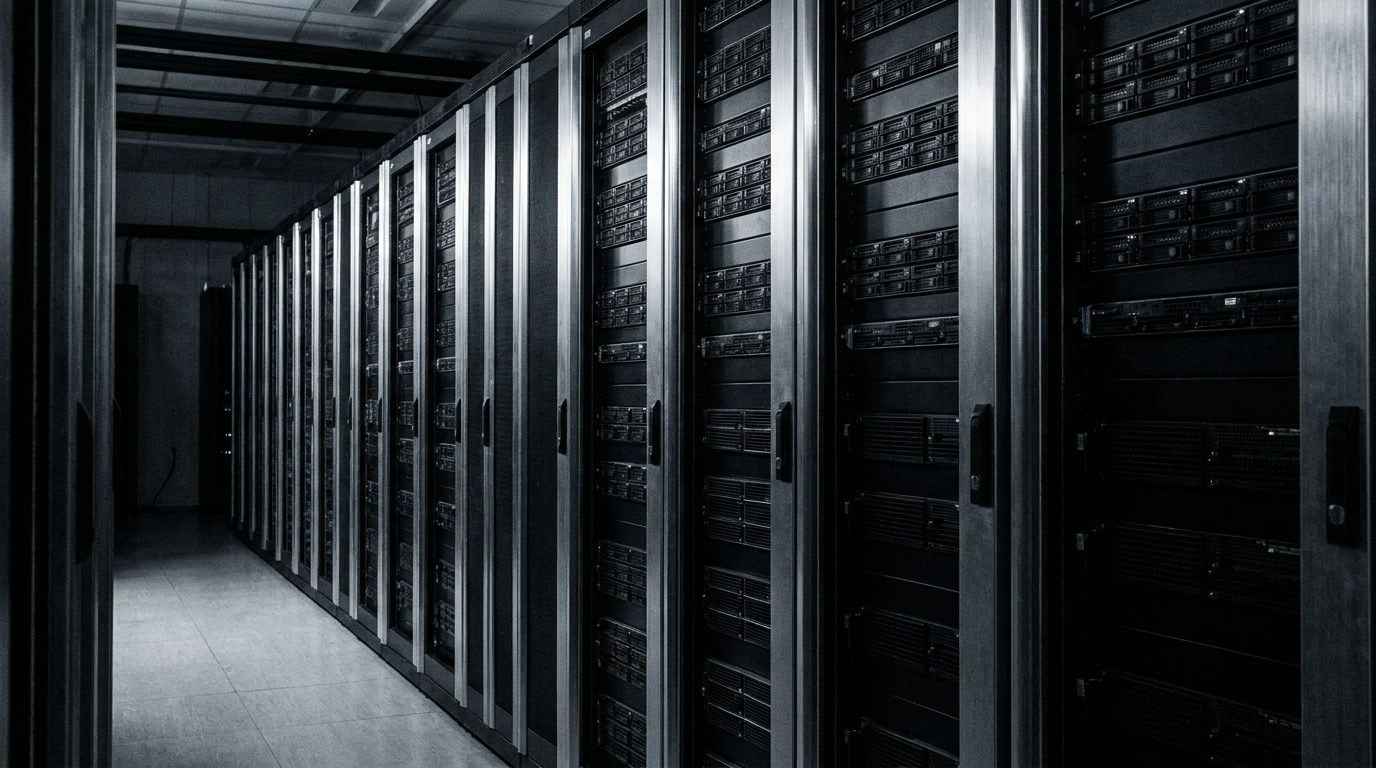
The prevailing wisdom suggests that powering the AI boom will simply require more centralized grid investment and larger renewable plants. However, this perspective overlooks a crucial element: the unique operational demands of AI compute itself, which are beginning to reshape the fundamental architecture of power delivery.
Baillie Gifford puts the energy burden before the climate upside Baillie Gifford’s [Official Research](https://www.bailliegifford.com/en/usa/institutional-investor/insights/ic-article/2026-q3-the-ai-paradox-10063780) frames artificial intelligence as “currently a net driver of energy demand” while holding “the potential to become a catalyst for climate efficiency” when applied to grid management and industrial optimization. That is the source’s central tension: AI consumes more electricity now, but may help manage energy systems and industrial processes better later.
The source summary also says data center electricity consumption is “projected to rea...” but the reported packet does not provide the full projection, a denominator, a region, or the assumptions behind the demand curve.
That omission matters because the corporate decision is not made against a global abstraction called electricity. It is made against a queue for interconnection, a substation constraint, a site-selection memo, and a contract that says who bears the risk if power is late.
Baillie Gifford’s framing supports the broad paradox, but the supplied packet does not say whether the added demand is concentrated in a few hyperscale corridors, spread across smaller regional deployments, tied to training load, or tied to recurring inference load. Without that split, the headline climate claim cannot tell a buyer whether the bottleneck sits in generation, transmission, local distribution, or operations.
The consensus answer assumes the grid remains the default platform The conventional reading of the AI-power problem is straightforward: data centers need more electricity, so utilities and developers will build more large renewable projects and reinforce centralized grids. That answer is plausible, and the Baillie Gifford note’s emphasis on grid management fits it. If AI improves forecasting, dispatch, and industrial energy efficiency, the centralized grid could become both the source of the problem and the place where the efficiency dividend is realized.
The counter-read is that the compute load does not behave like ordinary demand growth. A data center buyer is not just purchasing electrons; it is buying certainty about uptime, latency, and expansion timing.
If those buyers increasingly conclude that centralized upgrades arrive too slowly for their deployment schedules, the investment path can bend toward behind-the-meter generation, storage, and local microgrids. That is not a claim the Baillie Gifford packet proves; it is the second-order consequence the packet leaves open when it treats AI demand and AI-enabled efficiency at a high level rather than following the actual power delivery chain.
The missing metric is not consumption, but controllability The source’s climate-dividend premise depends on AI being useful in grid management and industrial optimization. But the packet does not say how those applications are measured: against what baseline, in which grid conditions, at what level of automation, or with what failure modes.
A model that improves dispatch under normal operating conditions is different from a system trusted to manage volatility during a heatwave, an outage, or a sudden compute ramp. The paper’s own headline tension therefore needs a harder test: not whether AI can optimize something in principle, but whether it can reduce real energy waste while its own compute footprint is expanding.
There is also a procurement asymmetry. Data center operators can sign for capacity faster than utilities can always deliver physical infrastructure, while industrial firms may have existing sites where energy optimization produces near-term savings without new large loads.
That makes the middle of the market more interesting than the largest AI campuses: manufacturers, logistics networks, campuses, and process-heavy companies may use AI to reduce energy waste even as hyperscale compute forces new local power arrangements. Baillie Gifford names industrial optimization as part of the dividend, but the packet does not separate those savings from the data center demand that creates the paradox.
The work shifts from cloud buying to power choreography For corporate AI buyers, the labor consequence is indirect but material. The people who decide AI capacity are no longer only cloud architects and finance teams comparing model performance and subscription terms.
Facilities, energy procurement, legal, sustainability, and risk teams move closer to the AI roadmap because power availability can determine where workloads run and when capacity comes online. That changes the org chart around AI from a software procurement exercise into a coordination problem between compute planning and physical infrastructure.
This is where the Baillie Gifford note’s
broad optimism becomes operationally narrow.
If the climate dividend comes from better grid management and industrial optimization, companies need people who understand both the workload and the asset being optimized. A plant manager evaluating AI for energy efficiency is asking a different question from a CTO buying model access: whether the system can change a process, a schedule, or a control setting without creating safety, reliability, or compliance exposure.
The future-of-work story is therefore not simply more AI skills; it is the growth of hybrid roles that can translate compute demand into energy decisions and energy constraints back into AI deployment plans.
The skeptic’s case is that local power is still too hard The strongest objection is that decentralized generation and microgrids may be overread as a strategic answer. Centralized infrastructure has scale advantages, utility planning already exists, and local power projects can face permitting, financing, land, maintenance, and emissions questions of their own.
The Baillie Gifford packet does not provide evidence that local systems are cheaper, cleaner, or faster than centralized grid upgrades, and it does not show that data center buyers will accept the operational complexity of owning or contracting for more of their power stack.
That objection should keep this thesis provisional. The observable signals are straightforward: if large grid-connected renewable projects dominate new data center power announcements, if utility transmission and distribution spending in AI-heavy regions grows faster than localized generation and storage, and if the largest cloud operators say little about direct grid-independent supply, the centralized-grid consensus will have held.
If instead power purchase announcements increasingly bundle local generation, batteries, and control software near compute sites, Baillie Gifford’s “AI paradox” will look less like a climate accounting debate and more like the start of a different infrastructure buying pattern.