Dangote refinery’s 4.1bn-share IPO targets November trading, France24 reports
Aliko Dangote has launched Africa’s largest-ever share sale for his Lagos refinery. This "people’s IPO" aims to widen Nigerian ownership by November.
Hannah Vogel ·
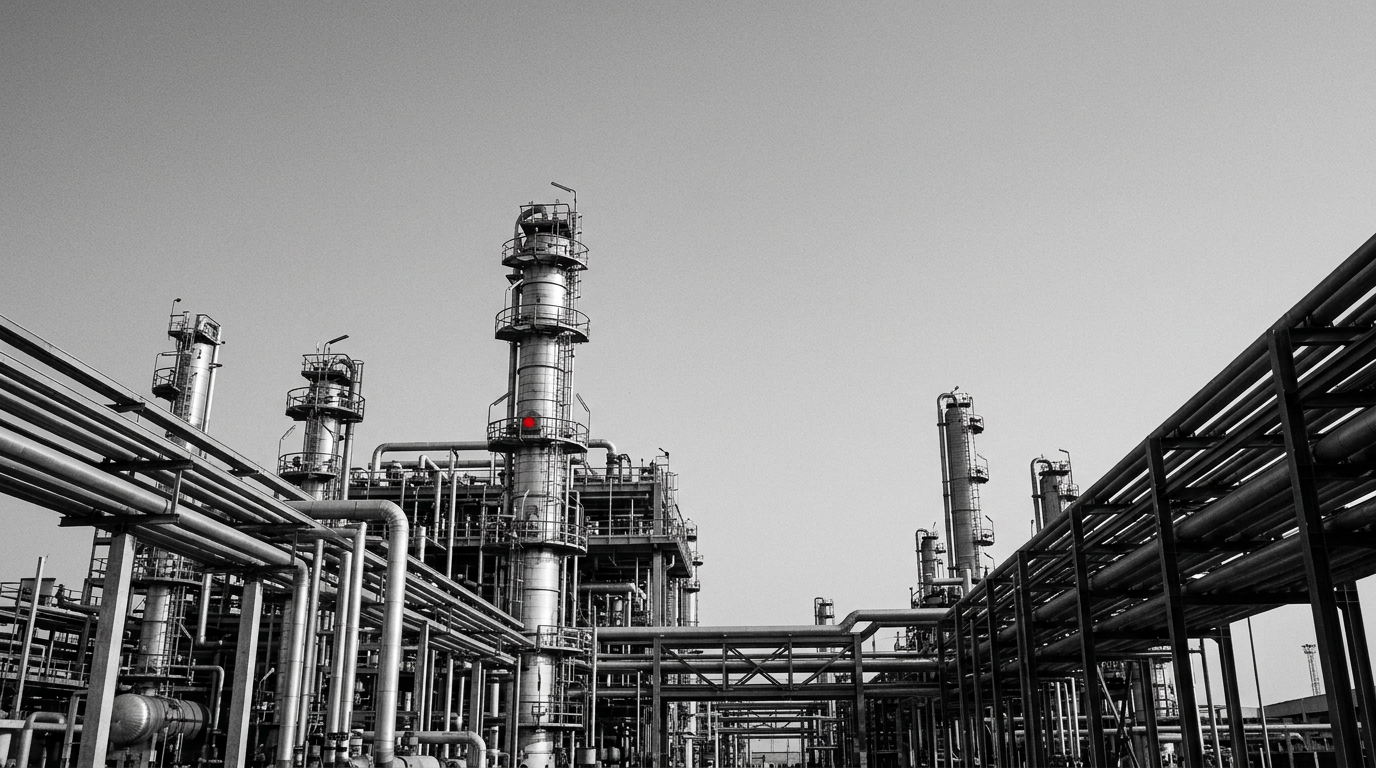
In a France24 segment dated 14 September 2026, Nigerian billionaire Aliko Dangote launched a share offering for his Lagos refinery, listing 4.1 billion shares on the local stock exchange with trading expected to start in November. France24 described it as the continent’s biggest-ever share sale, and quoted Dangote calling it a “people’s IPO” designed to let Nigerians share in the refinery’s potential. The broadcast also noted that global oil prices were climbing as Houthi attacks prompted Saudi Arabia to shut its East–West pipeline. This is, so far, single-source — France24 only, with no independent confirmation of terms beyond the share count and targeted start month.
The offer size is clear; pricing, allocation and timetable are not
The France24 report names two hard facts: a 4.1 billion-share listing and an expectation of November trading. It does not state an offer price, a valuation, or how many of those shares will be sold versus simply admitted to trading, nor does it identify underwriters, a bookbuild window, or the proportion reserved for retail buyers versus institutions. Those omissions matter more than the headline magnitude. Without price guidance and allocation mechanics, it is impossible to infer the raise proceeds, the free float on day one, or the likely index inclusion path that often anchors institutional demand. The “biggest-ever” label is directional but not an operating metric for investors who must budget cash, FX, and risk limits against a timetable that remains general.
A ‘people’s IPO’ is a distribution strategy, not just a slogan
Calling this a “people’s IPO” signals an intent to court domestic retail, but the distribution logic will live or die on infrastructure: broker onboarding capacity, payment rails for applications, and the mechanics of allotment, refund, and settlement. The France24 segment does not specify whether retail will have priority tranches, price discounts, or minimum guaranteed allocations. If broad retail participation is a genuine goal, the issuer and its advisers will need to make the process legible and low-friction for first-time investors — from KYC throughput at brokers to clear timelines for application funds. Absent that plumbing, a “people’s IPO” risks becoming a marketing line that institutions arbitrage. Conversely, if retail is meaningfully prioritized, book quality, aftermarket stability, and governance expectations can look different — boards tend to hear from a different constituency when the shareholder register is dispersed and domestic.
What this could change for fuel buyers and distributors inside Nigeria
An equity listing in itself does not refine a single barrel. But if this offering improves the refinery’s balance-sheet flexibility — for example, by lowering financing costs relative to private funding and deepening access to working capital — downstream buyers could see behavior change over time. They will look for steadier supply, clearer payment terms, and contracts less tethered to volatile import schedules. The France24 report does not provide any production, contract, or pricing details, so nothing in the current packet substantiates operational changes. Yet the procurement heads at fuel marketers and industrial buyers will watch the capital raise’s execution closely: a well-subscribed offer often precedes a push to formalize longer-term offtake terms, while a messy one can slow investment in ancillary logistics that customers depend on. For CFOs balancing FX exposure and inventory, the sequencing matters as much as the headline.
Oil’s geopolitics may set the mood music for the bookbuild
France24 paired the IPO news with a market backdrop of rising oil prices amid a shutdown of Saudi Arabia’s East–West pipeline following Houthi attacks. That macro context is not a detail for an energy IPO; it informs both investor risk appetite and operating economics. Higher crude prices can improve nominal revenue potential for refined products but can also compress margins if feedstock cost rises faster than realizations. For equity buyers weighing refinery exposure, volatility in crude and product spreads typically drives demands for a larger discount at pricing, or for more conservative leverage and dividend policies post-listing. If the bookbuild coincides with tighter or more volatile markets, the issuer may face a sharper trade-off between targeting broad retail participation and securing a stable, price-sensitive institutional base. The France24 piece does not claim any hedging posture or margin guidance, so these remain analytic considerations rather than disclosed facts.
Governance and FX risk will decide whether institutions buy in
Beyond price, two practical risk buckets will weigh on institutional participation: governance signals and currency exposure. A public listing brings reporting obligations and scrutiny of related-party transactions, capital allocation, and board composition. The France24 segment does not detail any governance framework or intended dividend policy. On currency, the functional cash flows of a Nigerian refinery and the equity’s trading currency will be watched by investors managing FX limits; deep local retail participation can help liquidity, but foreign institutions often seek reassurance on convertibility and exit. None of this is addressed in the single-source packet, which is why many buy-side teams will likely treat the coming weeks — between now and the first trade — as a diligence gap to be closed by a formal offer document and exchange notices.
What to watch between now and the first trade
Operators and investors should expect several practical markers if November trading is the goal. First, a formal listing timetable and admission notice from the exchange will tell the market when cash must move and when allocations settle. Second, offer documentation should clarify price range, use of proceeds (if any), and allocation mechanics for retail versus institutions — the key to translating “people’s IPO” from rhetoric into process. Third, intermediaries’ readiness will be visible in retail broker communications: application windows, funding instructions, and KYC workflows that either congest or run clean. And finally, the oil market context France24 flagged — pipeline outages and price gains — may shift again before pricing; any swings will influence the tone of conversations with institutions anchoring the book. If those signals land cleanly and on time, November trading is plausible. Slippage on disclosures or infrastructure would push the timeline or shrink the effective free float on day one, dulling the impact of what France24 called Africa’s largest-ever share sale.
This remains a single-outlet report. The numbers that will govern how this IPO actually lands — price, allocation, book composition, and the first day of trading — are not yet public in the France24 segment. Until those appear, the move looks less like a fully baked financing event and more like a positioning statement with a retail-friendly headline. That does not reduce its significance; it simply defines the work still to do for the issuer, its advisers, and the investors they hope to persuade.