Cowboys Restructure Clark Deal, Boost Cap Space
The Dallas Cowboys restructured defensive tackle Kenny Clark's contract, converting an $11 million bonus to generate $8.8 million in cap space.
Mehmet Şahinoğlu ·
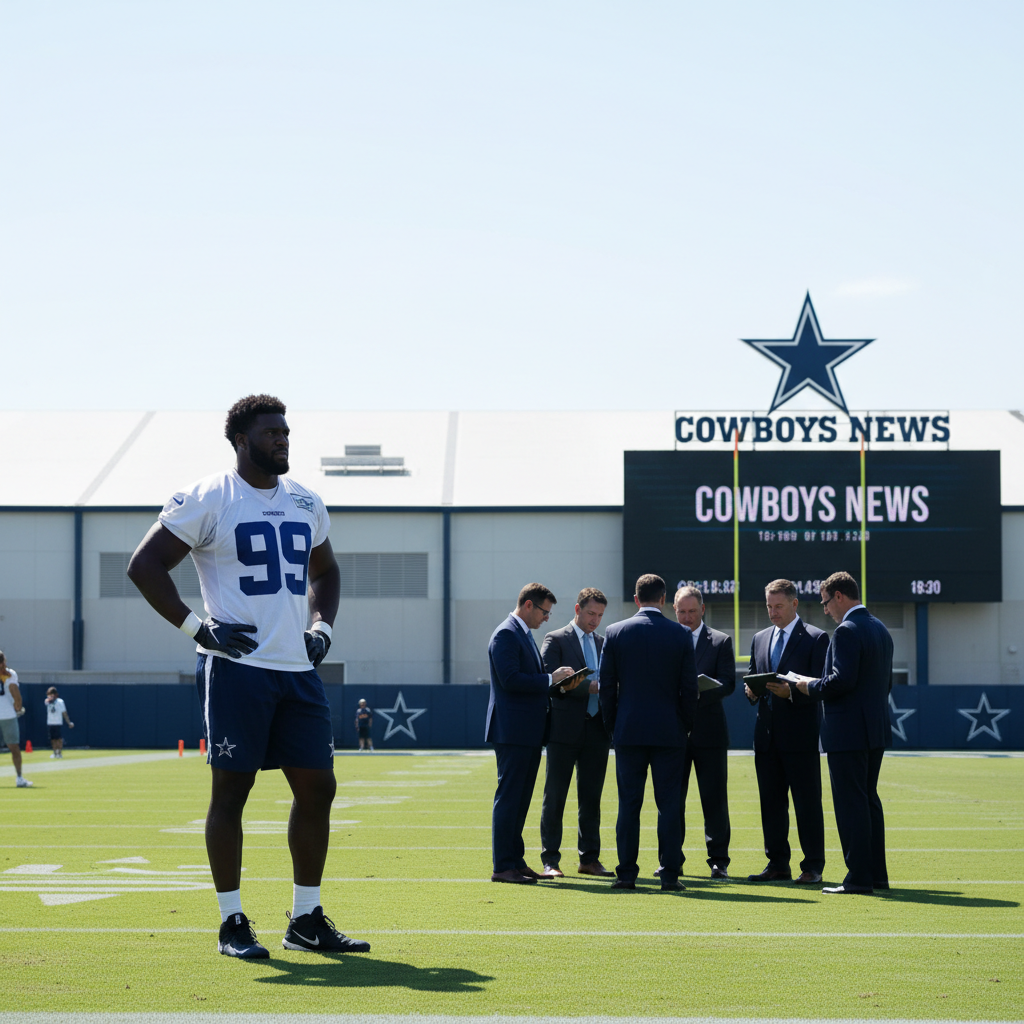
The Dallas Cowboys executed a significant financial maneuver on Tuesday, restructuring the contract of defensive tackle Kenny Clark. This action involved converting an $11 million roster bonus into a signing bonus, a common strategy employed by National Football League (NFL) teams to manage their salary cap obligations. The immediate effect of this restructuring is the creation of approximately $8.8 million in additional cap space for the team.
This strategic financial adjustment occurred just ahead of the new NFL league year, which officially began on Wednesday. The timing is crucial, as it provides the Cowboys with enhanced financial flexibility as the free agency period commences. Teams often utilize such mechanisms to free up funds for signing new players or extending existing contracts.
Strategic Financial Management
NFL teams operate under a strict salary cap, which limits the total amount of money they can spend on player salaries in a given year. Restructuring contracts, particularly by converting roster bonuses into signing bonuses, allows teams to spread the financial impact of a player's compensation over several years. This reduces the immediate cap hit, providing short-term financial relief.
Kenny Clark, a key defensive player for the Cowboys, had an $11 million roster bonus due. By reclassifying this as a signing bonus, the team can prorate that amount over the remaining years of his contract. This accounting method is a standard practice across the league, enabling franchises to remain competitive within the salary cap framework.
Implications for Free Agency
The newly acquired $8.8 million in cap space significantly enhances the Cowboys' ability to participate in the competitive free agency market. This period is critical for teams looking to address roster deficiencies, acquire veteran talent, or retain their own key free agents. Without sufficient cap space, a team's options in free agency are severely limited.
Historically, the Cowboys have been active in managing their cap to facilitate player movement. This latest move with Clark's contract aligns with a broader strategy to optimize their financial position ahead of crucial roster-building phases. The additional funds could be allocated towards signing a high-profile free agent, securing multiple depth players, or providing extensions for other core members of the team.
Outlook for the Upcoming Season
The financial flexibility gained through this restructuring is expected to directly influence the team's roster composition for the upcoming season. With the new league year underway, teams are actively negotiating with free agents and preparing for the NFL Draft. The Cowboys' increased cap space positions them to be more aggressive in these endeavors, potentially strengthening their squad in key areas.
The impact of this financial maneuver will become clearer as the team makes its free agency acquisitions in the coming weeks.
Implications
Country Impact: The financial maneuver is specific to the U.S. professional sports market, particularly the NFL, and does not have direct national economic implications.
Industry Impact: This action reflects standard financial management practices within the professional sports industry, specifically the NFL, demonstrating how teams navigate salary cap restrictions to build competitive rosters.
Market Impact: The increased cap space allows the Dallas Cowboys to be more active in the NFL's player free agency market, potentially influencing player salaries and team compositions across the league.