Copper up 50% as geopolitics and demand tighten
Copper prices are up about 50%, with S&P Global citing geopolitics, electrification policy and AI-linked demand; focus turns to Aug. 31, 2026 data.
Mateo Fernandez ·
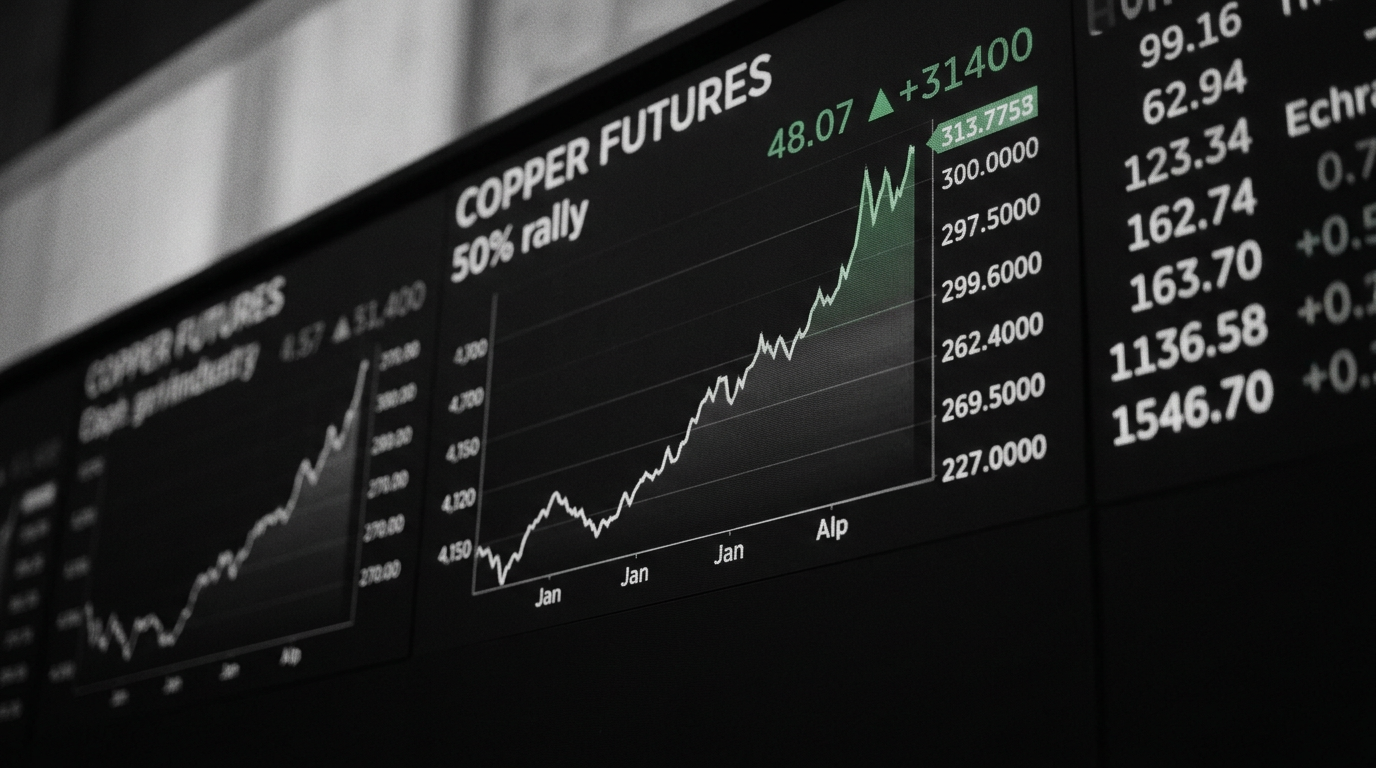
Copper prices have climbed by roughly 50% recently, a move S&P Global linked to a combination of geopolitical strains, tighter policy conditions, and rising demand tied to artificial intelligence-related build-outs.
In its assessment, S&P Global said the rally is being supported by changes on both sides of the market: constraints affecting supply development and logistics, alongside stronger near-term consumption tied to electrification and new infrastructure projects.
Geopolitical and policy pressures reshape supply and demand
S&P Global said geopolitical tensions have weighed on mine investment and complicated logistics, limiting how quickly additional production can be developed and moved to market. The firm also pointed to tighter policy conditions as part of the backdrop, while noting that policy shifts toward electrification have increased near-term demand for copper.
According to S&P Global, these forces have worked together to reduce available inventories, helping to underpin higher prices. The firm presented inventories as a key transmission channel, arguing that reduced stock availability has reinforced the upward momentum in pricing.
AI-linked build-outs raise copper intensity per project
S&P Global said the build-out of data centers and electrified infrastructure has lifted copper intensity per project, improving copper’s demand outlook relative to other metals. The firm described this as part of a broader trend in which the material requirements of modern energy and digital infrastructure are boosting consumption expectations.
It added that ongoing demand linked to green energy and transport is reinforcing the price move, rather than the rally being driven by a single, short-lived shock. In that framing, the price rise reflects a longer-running transition in end-use demand rather than a brief dislocation.
Why the next supply signals and inventories matter
S&P Global characterized the rally as a medium-term structural story rather than an immediate commodity-market squeeze. It said price momentum will depend on whether the pace of new mine approvals and project timelines accelerates enough to meet higher consumption.
Markets will be watching whether inventories and indicators of new supply begin to ease the tightening by August 31, 2026, a milestone S&P Global highlighted for third-quarter supply and demand data. The firm positioned that date as a key checkpoint for evaluating whether the market is moving toward balance or remaining constrained.
For now, S&P Global’s view centers on the interaction between constrained investment and logistics on the supply side, and rising copper intensity in data centers and electrified infrastructure on the demand side. How quickly additional supply can be approved and delivered remains the main uncertainty the firm emphasized.